Choosing the Right Headband for Your Natural Texture
Understanding Fabric Options and Friction
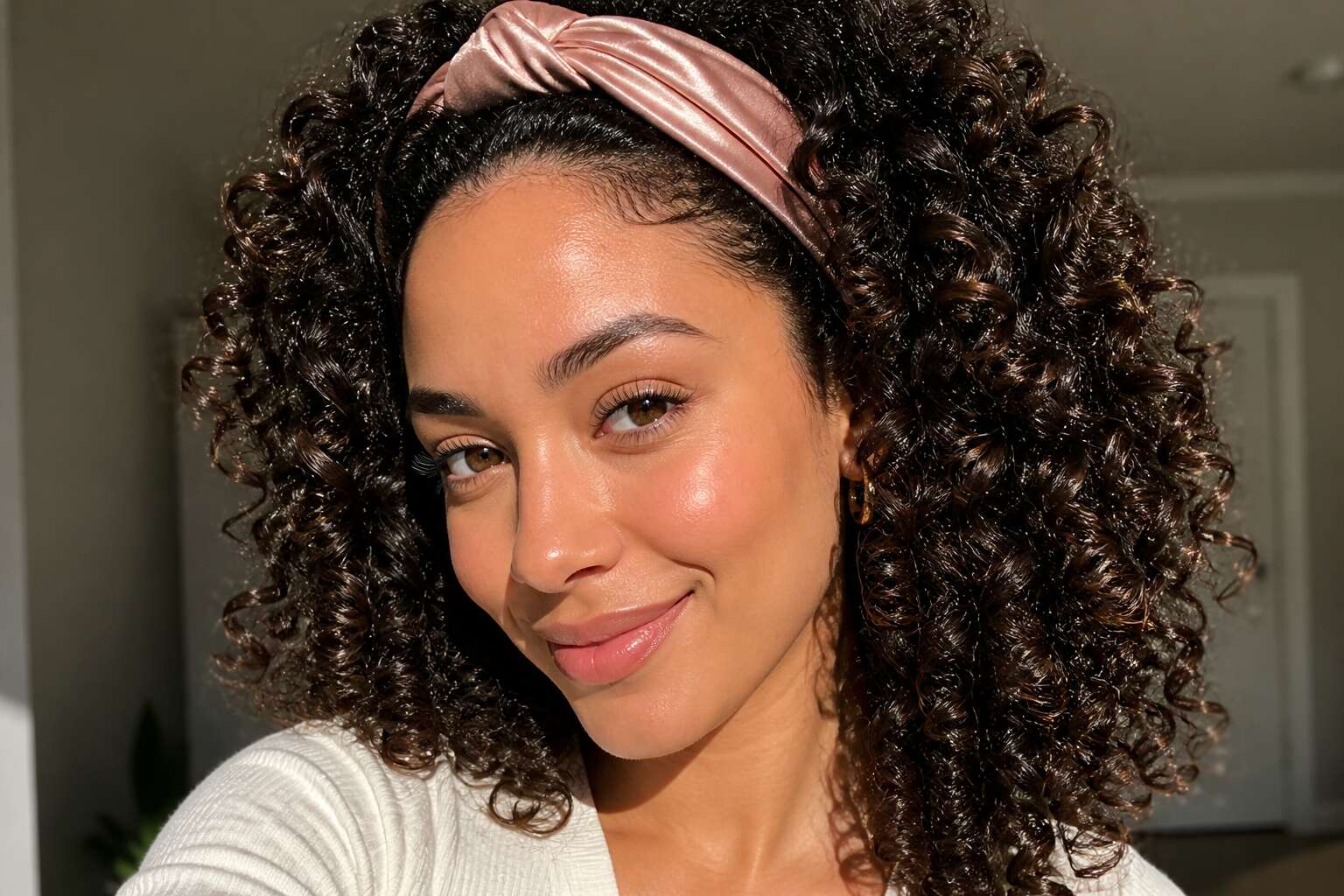
For curly hair, a headband can work well. A wide velvet band does not pull. It sits loosely over the roots. Natural curls need space to spring. Tight edges flatten them. A smooth underside prevents creases.
The band rests behind the forehead. It avoids gripping the scalp. Curls bounce freely above and below. The interior avoids pressure points. Many styles exist with different widths. The right fit feels nearly unnoticeable.
Snag-Free Materials That Protect Delicate Strands
Choosing a headband for curly hair often feels like navigating a botanical maze. The hard plastic styles that look cute on the shelf can quickly become instruments of torture. For those of us with delicate spirals, the woven band serves as the ultimate ally. It provides a firm grip without snagging individual strands, allowing your natural texture to remain defined. A wide velvet band is ideal for a glamorous evening look, while a simple terrycloth option works wonders for a lazy Sunday.
The secret lies in the width and the fit. A band that sits loosely over the roots will prevent headaches and unwanted creases. It is a common mistake to choose one that squeezes too tightly. Instead, select a style that mimics a gentle embrace. When you have thick hair, the softer, airy materials are your best friends. You can also opt for a design that allows you to tuck the ends underneath, which protects the delicate ends of your hair. This method ensures your coils remain bouncy and hydrated throughout the day.
Headbands That Accommodate Volume and Length
Pairing curly hair and headband choices is an exercise in geometry. The volume at your roots changes how a band grips. A 10 centimetre width spreads pressure evenly across the skull, while a narrow strip lets long curls drag it downward. In Durban’s humidity I learned this quickly: only a wide style survived the first block.
- The crown contact absorbs the initial weight.
- The temple curve stops sideways shifting.
- The nape anchor prevents backward sliding.
If the band’s inner curve does not match the skull’s line, it becomes a lever, not a support. For curly hair and headband pairings, this is where the real battle begins.
Step-by-Step Styling Techniques With Headbands
Creating a Voluminous Pineapple Puff
The pineapple puff is a small act of architecture, a quiet ceremony performed in the dark hours. The curls gain their volume when you fold each coil upward. The band of silk or velvet sits as an unseen support. I press my chin to my chest, and the hair falls forward.
- Bend at the waist and allow the whole mane to hang.
- Set the band around the hairline, just above the ears.
- Scoop each coil upward over the band, gather, do not twist.
- Lift the head slowly so the puff settles on the band.
Overnight, the cloth holds this gathering intact. In the morning, the union of curly hair and headband reveals a dense volume with every strand in place. That is a night well spent!
The Classic Half-Up Headband Twist for Curls
The classic half-up twist is an elegant way to manage curly hair and headband styles simultaneously. It creates a structured crown while leaving your length free to bounce. Begin by placing a soft, knotted headband around your neck.
- Section the top half of your hair from ear to ear.
- Twist this section into a firm coil, allowing natural texture to guide the shape.
- Bring the twisted coil up and over the headband, pulling it towards the nape.
- Loop the ends under the band to lock the twist in place.
Adjust the headband to sit comfortably behind the ears. Fluff the loose curls to frame your face. This method avoids heavy clips and reduces breakage. It delivers a polished look that works for both a work day and an evening out. You retain volume without the weight of a full pineapple, making this an ideal daily solution for your natural texture.
How to Achieve a Sleek Root With a Headband
The roots of curly hair crave tension. The ends crave release. A headband mediates this divide, provided you position it across the crown rather than behind the ears.
Place a wide velvet band over your head, above the brow. With your palms flat, press the hair against the skull from the nape toward the forehead. This palm smoothing trains the roots to lie flat while the band holds them in place. Release gradually. The lower curls remain untouched, keeping their volume and coil pattern. What a difference those few seconds of pressure make!
The contrast between a smooth crown and free falling spirals is why curly hair and headband styling works on humid days. In Durban’s humidity, I rely on this technique for a polished hairline without a single hot pass. The ritual, seconds of palm pressure and release, is the quiet skill behind every curly hair and headband routine in South Africa’s coastal cities.
Styling Curly Bangs With a Headband for Face Framing
So, the curly fringe. That glorious, chaotic, and entirely unpredictable patch of hair that has ended more mornings than I care to count. But the curly hair and headband pairing offers a solution that does not involve a flat iron, a prayer, or both.
My technique is less about fighting the curl and more about negotiating with it. Position the band as you normally would, but then adjust it forward to the very edge of your hairline, just above the brow. Take the front few curls and gently lay them over the band’s edge, letting them maypole around the fabric. It is a deliberate act of framing, a way to showcase the shape without demanding obedience.
For those with tighter coils, a slightly more involved process is needed. Here is my method for taming the most rebellious of fringe:
– Tuck the ends of the bangs under the band’s lower edge.
– Pull a few face-framing strands down for a soft, wispy effect.
– Use a drop of water to reactivate the curl pattern for definition.
The result is a romantic, considered look that turns a simple accessory into an architectural marvel. This is not about hiding the hair. It is about giving the curls a stage, a defined perimeter from which to perform. It is the quiet art of the curly hair and headband.
Exploring the Curly Faux Hawk With a Statement Band
The roar of a thousand curls can feel like a rebellion, but a statement band turns that uprising into architecture. For the faux hawk, you need a thick, sculptural headband, something with presence that can hold its own against your volume.
Begin by misting your dry curls with a touch of water to awaken their memory. Slide the headband over your crown, letting it rest just behind your hairline. Now, gather the sections at your temples and tuck them firmly beneath the band’s edge, working inch by inch. Leave the top mane free to stand proud. For tighter coils, use a fine-tooth comb to smooth the sides before tucking. The result is a silhouette that is sharp, ancient, and utterly modern. Your curly hair becomes the crest; the headband, the frame. It is a look that whispers of wildness, yet speaks with deliberate control.
Using Headbands for Overnight Curl Preservation
According to a 2023 texture survey, nearly 70% of curlies sleep with their hair loose. That invites tangles by morning. I use a wide velvet headband as both a styling anchor and a preservation shield.
For morning styling with a headband, work in three moves:
- Dampen your hair with water mixed with leave in conditioner.
- Place the headband at your natural hairline.
- Twist front sections around the band, tucking the ends underneath.
At night, flip your head upside down and gather curls into a loose pineapple. Slide the headband over the gathered mass, just behind the hairline, so the band holds the roots without crushing the lengths. This is where curly hair and headband care merge into one motion. The band keeps your pattern intact and reduces friction against your pillowcase.
Protecting Your Curls While Wearing Headbands
Preventing Tension Headaches and Hairline Stress
The ache behind your eyes after a long day is not a requirement of the style. That dull throb is a signal from your scalp, a warning against the silent pressure you have accepted as normal. When you pull a band tight to secure the perfect puff, you are trading long term hairline health for a fleeting aesthetic. The relentless pulling forces the delicate follicles at your forehead to release their grip, a condition that can lead to permanent shedding if ignored.
You must treat the tension like a warning sign. The goal is to create a barrier that holds the hair without strangling it. A headband should sit like a crown, not a vice. Secure it behind the ears instead of directly against the temporal arteries, which are the primary culprits for those headaches that escalate by mid afternoon. Give your hairline a break by repositioning the band every few hours. Combine this with a loose twist to lift the bulk off the neck. This simple adjustment redistributes the weight and reduces the strain on the roots.
Consider adopting a rotation strategy to keep the pressure points fresh.
– Use a wider band to spread the pull across a larger surface area.
– Alternate your part line daily to avoid consistent traction on one section.
– Anchor the band with bobby pins at the base of the skull rather than pulling it tight over the crown.
These steps prevent the micro trauma that leads to breakage. Your curly hair and headband relationship should be a partnership, not a hostage situation. If the fit feels too snug, it is wrong. Always opt for the loosest setting that still holds the style, allowing your curls to breathe and your mind to stay clear.
Adjusting Headband Placement to Avoid Creases
They say a crease in your curl pattern is like a topographical map of your bad decisions. The evidence, however, is not etched in stone but pressed into your strands like a bureaucratic stamp on a passport. It is the souvenir nobody asked for. The secret to protecting your curls while wearing headbands is not to avoid the accessory entirely, but to outsmart the physics of the pressure point.
Adjusting headband placement to avoid creases means rethinking where you park the band. The instinct is to slide it down to the brow, but that locks the hair against the skull. The better move is to position the band further back, resting on the parietal ridge instead of the forehead. This stops the fabric from pinching the delicate hairline and allows the front curls to remain free.
– Slide the band over the crown, not the hairline.
– Tuck the ends behind the ears to shift the tension.
– Use a silk scarf as a buffer between the band and your roots.
The result is a style that holds without leaving a permanent record of its presence. A relaxed fit makes a difference. The relationship between curly hair and headband should end with you walking away, not with your curls paying the price for hours of negotiation.
Strategies for Refreshing Second-Day Curls
Second-day curls are fragile territory, and the headband you grab in a rush could be undoing your careful work. The difference between a style that lasts and one that deflates lies in a few deliberate choices that keep your curly hair defined while wearing this classic accessory.
- Satin or silk fabric minimizes friction, whereas cotton drags on your strands.
- Wider bands spread pressure evenly, while thinner options concentrate it.
- Moisture levels alter the outcome: drier curls are more vulnerable to distortion, and a light refresh before placing the band changes the equation.
Together, these choices allow you to wear a headband without sacrificing your curl pattern’s integrity. The result is a style that holds its own from morning to night.
Versatile Looks for Work, Play, and Formal Occasions
Professional Styles That Keep Curls Tamed
Nearly 70% of women with natural texture report that styling for professional environments takes twice as long as their straight-haired counterparts. Yet the humble headband remains the most underutilised tool in the curly arsenal. It bridges the gap between the boardroom and the braai without demanding a full reset of your curl pattern.
For the workday, consider a wide band that sweeps your hair back while allowing your natural texture to spill forward. This keeps the hair off your face, which signals focus and competence. As the sun sets and you transition to evening plans, adjust the band to sit lower on the forehead, letting more curl volume escape. One accessory, two distinct attitudes. Formal occasions, however, demand a different approach entirely.
Opt for a velvet or silk-wrapped band in a deep jewel tone. Tuck the front sections behind your ears and let the remaining curls cascade down your back. The contrast between the structured band and your voluminous texture creates a striking visual tension. For a more polished silhouette, gather your hair into a low bun and place the headband just behind the hairline. This method keeps the sleek front intact while the back remains softly romantic.
The true mastery of curly hair and headband combinations lies in the unexpected pivot. What reads as effortless at a garden wedding becomes a bold statement at a gallery opening. The key is in the manipulation of volume. Professional styles that keep curls tamed often rely on the band to press down the crown, creating a smooth dome. This works exceptionally well with tighter coils, which naturally spring upward. The band acts as a gentle anchor, allowing you to control the narrative of your hair without the damage of heat tools or the stiffness of gel.
Weekend Casual Outfits With Retro Headbands
The curly hair and headband shifts with your intention. On a Sunday morning, a retro tortoiseshell band grounds a messy bun for market runs. By noon, flip it forward to crown a high puff for lunch with friends. For weekday meetings, a slim silk band holds back the front while coils stay loose. That same accessory, swapped for a beaded vintage find, carries you through evening cocktails without a mirror.
Your weekend casual outfits with retro headbands come alive through contrast. Let the back bounce freely while the band sits low, almost lazy. Formal occasions ask for the reverse: a deep burgundy velvet band pressed behind the hairline, with curls swept over one shoulder.
Choose your mood:
– Wide cotton band for a garden braai
– Velvet band for late dinner reservations
– Metal chain band for gallery walks
The curly hair and headband remains the least demanding styling tool. One accessory, every part of your life, with zero heat damage.
Elegant Updos for Weddings and Celebrations
One accessory carries you through a full day without a single pin. For work, a padded headband tucks behind the ears while curls fall in a low twist. Play calls for a terry band that grips during a coastal walk. Formal evenings demand a crystal-studded piece that catches the light. The curly hair and headband adapts because it never fights your natural texture.
Weddings ask for more structure. A low chignon with a velvet band keeps curls off the neck during the ceremony. For a reception, gather the crown into a soft pouf and slide a pearl band forward. Bridesmaids can match without losing their individuality. Each updo takes under five minutes, which matters when the champagne flows.
Consider these celebration-ready options:
- A side-swept bun with a satin band for garden nuptials
- A high twist with a metallic chain for evening receptions
- A loose halo braid with a floral band for beach vows
Bohemian Headband Looks for Festivals and Outdoor Events
The terry band that anchored your coastal walk transforms for the office with a simple shift in placement. Tuck it behind the ears and let your curls fall into a low twist, as if the boardroom never happened. For play, pull it forward to grip the hairline while you chase the tide. The curly hair and headband pairing does not demand a fresh routine, it simply adjusts to the energy of the hour.
Festivals call for a looser hand. A knotted scarf band worn low on the forehead keeps hair off the face during a dusty set, while a braided leather piece adds texture without overwhelming the curls themselves. The bohemian look lies in the balance: a wide band that covers the crown, curls left to spiral freely beneath. This works because the accessory carries the visual weight, so your natural pattern does the talking.
– A suede band with a bronze buckle for a sunset market.
– A crochet band for a morning yoga session under the oaks.
– A velvet ribbon wrapped twice for an evening open-air screening.
The same curly hair and headband approach holds up across settings where structure meets spontaneity. At a vineyard lunch, a thin gold chain band sits above the ears while curls brush the shoulders. By evening, a satin wrap keeps the hair back as the temperature drops. The accessory bends to the occasion, not the other way around. For a beach ceremony, a floral band woven through a loose halo braid catches the breeze without fighting the curl pattern. No pins, no fuss. This is the resilience of the curly hair and headband combination, it moves when you do.
Essential Products and Care Routines for Headband Styling
Pre-Styling Creams and Gels for Hold and Definition
Styling curly hair and headband combinations demands careful product selection. A rich, botanical curl cream acts as the foundation, locking in moisture and coaxing each coil into its natural pattern. This prevents the dryness that often leads to frizz when fabric rubs against the hair.
For enduring hold and definition, a flexible gel is your second essential partner. Unlike stiff formulas that leave curls crunchy, a gel with a medium hold lets your curls move while keeping the shape intact beneath the headband. In South Africa’s humid climate, this balance is critical to avoid droop.
- The cream is massaged into wet sections to encourage curl formation.
- A gel is then smoothed over the surface to lock in the definition.
- The headband is placed only after the hair has set.
This pairing ensures your curly hair and headband style remains defined from morning to evening, without the frizz that disrupts the clean lines of the accessory.
Taming Flyaways and Edges Without Flattening Curls
Headbands and curly hair can be a match made in heaven, but only if you approach the pairing with intention. The right routine keeps your volume intact while banishing flyaways that ruin a polished look. Start by applying a lightweight leave-in conditioner to damp strands, then seal with a curl cream that offers flexible hold. Let your curls air-dry completely before even thinking about the headband.
When placing the band, choose one with a velvet or silk interior to reduce friction. Wrap it loosely around your crown, then gently tug a few front curls forward to frame your face. For stubborn edges, use a small amount of gel on a toothbrush to smooth them down without crushing the rest of your pattern.
- Refresh second-day curls with a water mist before re-positioning the headband.
- Sleep with a satin scarf over your band to preserve shape overnight.
- Switch to a wide, padded band for high-volume styles that need extra support.
In South Africa’s humid weather, a humidity-resistant finishing spray is non-negotiable. It locks in definition while keeping flyaways at bay. Remember: the headband should hug, never squeeze. Too tight, and you’ll flatten your roots; too loose, and it slips. Find that sweet spot, and your curly hair will stay sculpted from morning coffee to sunset braai.
Cleaning and Maintaining Your Headbands for Longevity
Most people wash their headband only after visible grime appears. By then, oils and curl cream have already seeped into the weave, and that residue transfers straight back onto your strands. I clean my bands every two weeks, before they show wear. Hand wash with a sulphate free shampoo in lukewarm water, then press the band between towels to absorb moisture. Never wring it out. Lay it flat to dry so the structure holds.
For velvet styles, run a fabric shaver over the nap once a month to remove pilling. A smooth surface matters because friction is the enemy of definition. Between washes, spritz a dry shampoo onto the inner lining to absorb sweat and oil. Rotate two bands each week so the elastic fibres rest and recover. That small habit extends their lifespan and keeps your curly hair and headband routine consistent.
Matching Headbands to Your Hair Density and Texture
A dense coil of kinky curls will sag a thin elastic band after a hundred meters in the Cape heat. Matching starts with the diameter of your hair mass, not the width of the band. For fine curly hair and headband styling, use a tapered satin edge. For coarse textures, choose a padded base that sits past the occipital bone. A band that fits loosely over the crown is a failure before the first gentle step.
- Wavy texture: a 10mm cotton band with a bonded satin underlayer.
- Kinky curls: a full knit band with a ventricular grip.
- High volume: a 30mm padded unit with a rounded interior seam.
The essential product set is a texturising spray and a structural oil. Spray the texturiser onto the lining, not the strand, and it creates just enough static to anchor the band. Use a pea sized oil on the band’s rim, applied before placement, to prevent snagging. A saturated curl resists a heavy band. Match the band’s tensile strength to the hair’s own spring and your curly hair and headband goes silent.


0 Comments