Nourishing Hair Masks for Curly Hair
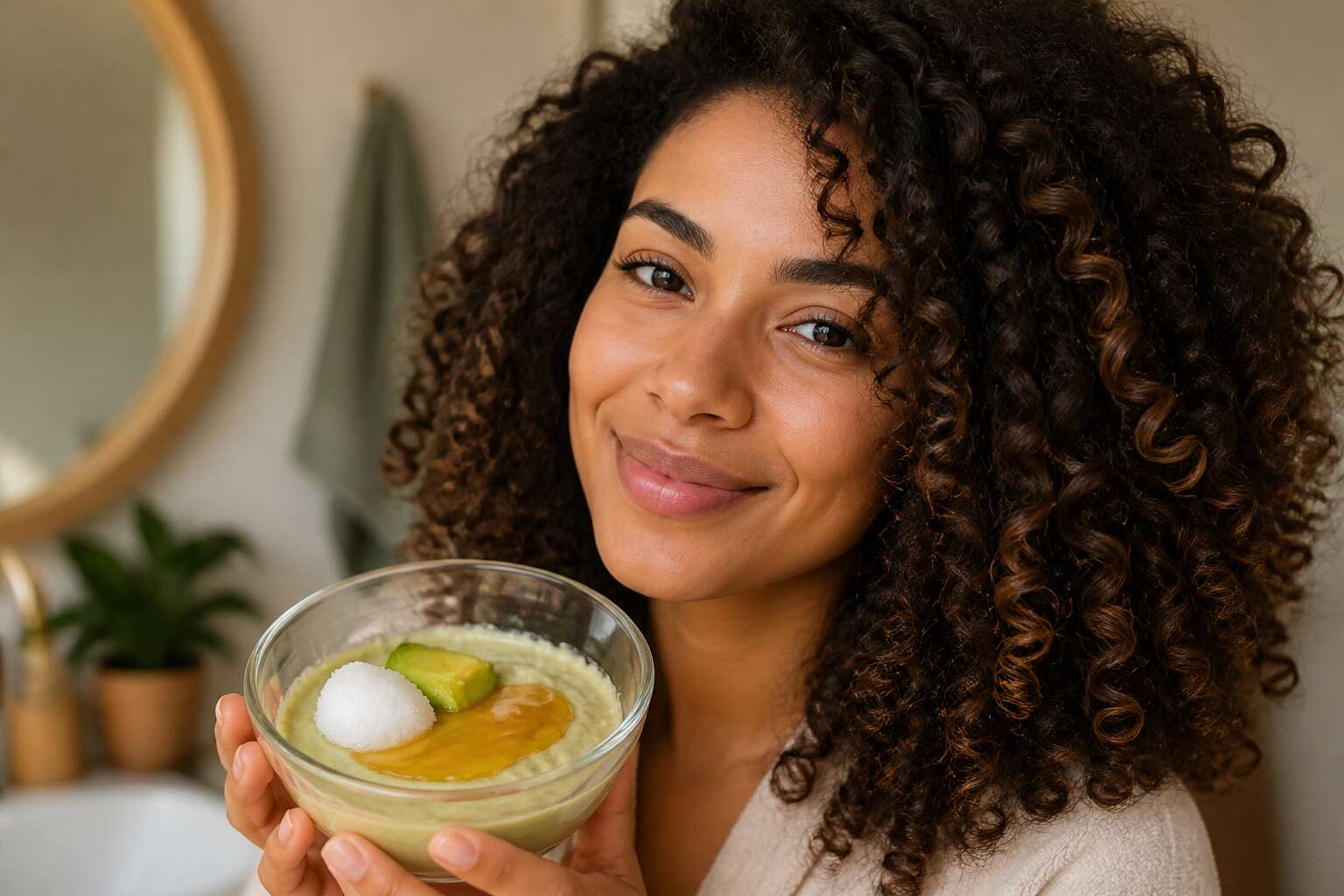
Avocado and Banana Deep Conditioning Mask
There is a peculiar social contract in the Cape Town summer: your curls must look effortless, even as the ocean air conspires against them. Enter the avocado and banana deep conditioning mask, a humble yet potent ally in home remedies curly hair.
Mash one ripe avocado with half a banana. The avocado supplies monounsaturated lipids, the banana contributes silica and potassium. This pairing relaxes the cuticle and seals moisture into each strand.
- Avocado restores protein flexibility
- Banana smooths the hair shaft
- Both diminish surface frizz
Apply the mask to damp hair, leave for twenty minutes, then rinse with cool water. The result is a soft, defined curl that holds through the afternoon.
Coconut Milk and Honey Hydration Mask
The Cape Town southeaster tests every curl’s patience. Coconut milk and honey offer a different kind of rescue for home remedies curly hair. Coconut milk carries lauric acid, which penetrates the strand where heavier oils fail, while raw honey acts as a humectant, pulling moisture from the air into the cortex.
This mask does not sit on the surface. It works from the inside, rebuilding the lipid layer that the sun and salt strip away. The process is simple enough for a lazy Sunday:
1. Warm half a cup of coconut milk, do not boil it.
2. Stir in one tablespoon of raw honey until fully dissolved.
3. Apply to dry hair in sections, focusing on the ends.
4. Cover with a shower cap for thirty minutes.
Rinse with lukewarm water, then cold. The cold seals the cuticle without shocking the curl pattern. In this climate, protection means retaining the natural oils your scalp produces, not adding more product. This mask respects that balance. It leaves the hair soft, never heavy, and ready for the humidity that arrives with the afternoon clouds.
Aloe Vera and Yogurt Soothing Mask
The Cape sun does not negotiate. It beats down on unprotected curls, leaving the scalp tight and the lengths brittle. Aloe vera and yogurt offer a soothing mask that addresses this specific damage. In the landscape of home remedies curly hair, this one focuses on the scalp rather than the strand. The combination works in three ways:
- Proteolytic enzymes in aloe repair damaged scalp cells.
- Lactic acid in yogurt gently exfoliates the cuticle.
- Cooling compounds reduce heat irritation from UV exposure.
Applied to damp hair and worked into the roots, the mask sits for twenty minutes. The sensation is immediate! Cooling relief spreads across the skin. Aloe vera and yogurt belong in the home remedies curly hair toolkit because they target the scalp directly. After rinsing with cool water, the scalp feels calm, the curls regain their bounce, and the mask washes out clean without stripping natural oils.
Egg and Olive Oil Protein Mask
Nourishing Hair Masks for Curly Hair: Egg and Olive Oil Protein Mask
Curls lose protein faster than they lose moisture. The Cape wind and harsh mineral water strip the hair shaft, leaving gaps along the cuticle. When you run a finger down a strand and it feels rough, that is protein loss speaking. An egg and olive oil mask answers this specific call, rebuilding the core of the strand from the inside out.
The magic lies in the chemical tension between two living ingredients. Egg yolk is rich in lecithin, which softens the hair fiber, while the whites carry albumin, a protein that binds directly to the damaged cortex. Olive oil acts as the transport medium. It penetrates the hair shaft more effectively than lighter oils because its fatty acid chain is long enough to slip past the cuticle’s natural barriers.
This mask works in three distinct frames of strength:
- Albumin fills the gaps in the medulla, giving the strand immediate internal support.
- Lecithin coats the outer layer, preventing further moisture loss during the mask’s action time.
- Oleic acid from the olive oil seals the cuticle flat, restoring that smooth, uniform surface curls need to clump properly.
Apply this mask to clean, damp hair. The heat from a warm shower opens the pores of the strand, allowing the protein to slide in deeper. Let the mixture sit for thirty minutes. You will feel the hair stiffen slightly as the protein sets. This is not a sign of damage, but a sign of bonding. Rinse with lukewarm water, never hot, as heat will cook the egg into the hair.
For home remedies curly hair, this is the only mask you need when your curls snap like dry twigs. The result is immediate structural change. Hair feels heavier, stronger, and less prone to splitting. For South African hair, battered by sun and seasonal swings, this mask delivers the resilience that creams and butters cannot. Olive trees grow right here in the Western Cape, making this remedy local, abundant, and honest in its efficiency.
Shea Butter and Argan Oil Sealing Mask
Shea butter and argan oil form a barrier that plain water cannot penetrate. When the Karoo wind has left your curls feeling like straw, this mask works to lock in every drop of moisture your hair managed to keep. Shea butter carries a dense concentration of vitamins A and E, which repair the outer cuticle layer where split ends begin. Argan oil, pressed from Moroccan kernels, slides into the hair shaft with a lightness that shea butter alone cannot achieve.
The two ingredients balance each other. Shea butter stays put, coating each strand like a farmer’s waxed canvas jacket against a storm. Argan oil sinks deeper, carrying fatty acids to the cortex where the real damage hides. This combination works for home remedies curly hair because it addresses both surface roughness and internal brittleness at once.
– Melt one tablespoon of raw shea butter between your palms until it turns translucent.
– Add five drops of argan oil and work the blend through the mid-lengths and ends of damp hair.
– Leave the mixture for twenty minutes before rinsing with cool water.
The result is not instant softness but something more lasting. Curls gain a weight that holds their shape through humid afternoons and dry evenings. For those living where the sun beats down without mercy, this mask creates a protective casing that survives the week. The scent stays faint, like earth after rain, never competing with your daily products.
Natural Cleansing and Co-Washing Rituals
Apple Cider Vinegar Clarifying Rinse
Cape water carries a mineral load that curls sense instantly. The first step in home remedies curly hair is cleansing without surrender. Co-washing, or washing with conditioner only, lets each strand drink deeply while preserving the oils that define a spiral. The practice is a quiet patience.
Then the apple cider vinegar clarifying rinse arrives monthly. Combine one part vinegar with three parts cool water. This mixture dissolves the pale film that heavy butters leave behind. The scent vanishes before your hair dries. Look for these signals before reaching for the bottle:
- Tangles that ignore wide tooth combs
- A flat crown after a fresh wash
- Dullness that no oil can lift
These home remedies curly hair ask for stillness, not expense. South African curls respond when washing honours moisture and clarity.
Rice Water Strengthening Rinse
Rice water holds a secret that industrial conditioners cannot replicate. The cloudy liquid left after soaking rice contains inositol, a compound that penetrates the hair shaft and works from within. For curly textures in Cape Town’s humidity, this rinse creates a protective barrier that survives the week.
The process demands only what you already own. Rinse one cup of rice, soak it in two cups of water for thirty minutes, and strain. The liquid should feel silky, never sticky. Apply after cleansing, let it rest for ten minutes, then cool water seals the cuticle.
Some strands respond better than others. Watch for:
- Definition that lasts past day three
- Reduced frizz at the hairline
- Less breakage during detangling
Curly hair absorbs this treatment when done weekly. The starch coats each strand lightly, preventing moisture loss without weighing down the pattern. South African curls need this kind of targeted strength, especially when transitioning between seasons.
Home remedies curly hair work because they respect what nature already provides. Rice water does not fight the curl. It reinforces the structure underneath.
Herbal Tea Infusion Rinse
The co-washing method deserves attention. Conditioner alone cleanses the scalp without stripping oils. South African water hardness alters how curls respond to traditional shampoos, so many Capetonians have switched to this gentler path.
Herbal tea infusions extend the practice. Rooibos, grown locally in the Cederberg, contains alpha hydroxy acid that smooths the cuticle. Chamomile brightens while peppermint stimulates the follicle. These brews work as a final rinse after co-washing.
A typical session includes:
– Saturating strands with a lightweight conditioner
– Massaging the scalp with fingertips
– Rinsing with lukewarm water
– Pouring cooled tea over the hair
Home remedies curly hair depend on consistency. The tea binds to the hair shaft, leaving a shine that commercial conditioners cannot replicate. Curls hold their shape without product buildup.
Bentonite Clay Detox Wash
Bentonite clay detox wash provides the occasional deep clean that co-washing alone cannot refresh. This volcanic ash, when mixed with water or apple cider vinegar, carries a negative ionic charge that binds to metals and buildup. For Capetonians dealing with mineral deposits from municipal water, this ritual addresses what conditioner cannot.
The process demands attention to non-reactive tools. Use wooden or plastic spoons, never metal. The clay swells into a paste that should rest on damp hair for ten minutes, then rinse thoroughly with lukewarm water.
- Mix bentonite clay with filtered water until smooth
- Apply to saturated strands, avoiding the scalp if sensitive
- Rinse with warm water before co-washing
Home remedies curly hair gain credibility when the clay masks restore bounce without stripping natural oils. Finish with a lightweight conditioner to seal the cuticle.
Honey Gentle Cleanser
After the clay’s deep pull, the scalp yearns for something softer. Raw honey, with its gentle enzymatic action, dissolves the day’s residue without the aggression of surfactants. In Cape Town’s hard water, a honey cleanser offers a reprieve, leaving curls supple and quiet.
For home remedies curly hair, this method relies on patience. Dilute a tablespoon of honey in lukewarm water, then massage it through damp strands. A three minute rest allows the enzymes to work. Rinse thoroughly, then co-wash to seal the cuticle. Honey carries antibacterial properties, calming the scalp while it cleanses. No foam, no squeak, just a softness that lingers.
Rhassoul Clay and Lavender Wash
Rhassoul clay has been used in North African hammams for centuries, yet most curly hair routines ignore it. Mined from Morocco’s Atlas Mountains, it behaves differently from bentonite, drawing out sebum without stripping the follicle’s natural moisture. Mixed with lavender hydrosol, it becomes a gentle wash for curls that lean oily at the root but dry at the tips. For those exploring home remedies curly hair routines, this wash suits Cape Town’s hard water, where mineral buildup dulls the strand within days.
Lavender does more than scent the paste. Its antifungal properties keep the scalp balanced between washes. I apply the mixture section by section, letting it sit for four minutes. The clay tightens slightly, a sign it’s lifting impurities.
- Use a glass bowl, never metal, to preserve the clay’s ionic charge.
- Add distilled water if the hydrosol feels too fragrant.
Rinse with cool water, then co-wash with a silicone free conditioner to close the cuticle.
DIY Leave-In Treatments and Curl Refreshers
Flaxseed Gel for Defined Curls
Flaxseed gel is the quiet achiever of natural haircare. Simmer one part seeds in three parts water until the liquid thickens, then strain it through a stocking. The resulting gel works as both a leave-in treatment and a curl refresher. On damp hair, it smooths and defines without weighing curls down. To revive second-day curls, thin a pea-sized amount with water in your palms and glide it over dry sections. The result is pliable, defined shape.
Here is why it performs so well:
- It echoes the effect of premium stylers at a fraction of the cost.
- The gel forms a flexible film that resists humidity, a relief for coastal South African weather.
Among home remedies curly hair devotees, few alternatives match this straightforward recipe.
Aloe Vera Juice and Glycerin Spray
Wet curls stretch almost a third longer than their resting spiral. That elastic memory explains why a simple spray can outperform heavy creams in the Cape’s dry winds! For those practicing home remedies curly hair, aloe vera juice and glycerin form a direct solution. Aloe penetrates the cortex. Glycerin attracts ambient moisture to the shaft. Together, they hold definition without residue.
Mix in a clean spray bottle:
- Four parts pure aloe vera juice.
- One part vegetable glycerin.
- Five parts filtered water.
Shake before each use. On damp hair, the spray smooths the cuticle and encourages even clumping. On second day curls, a light mist revives the pattern without soaking strands. Balance is essential. Excessive glycerin lets the air steal moisture. Insufficient aloe weakens the hold. South African summers require this precision.
Coconut Water and Essential Oil Mist
Coconut water deserves a permanent spot in your curl arsenal. It hydrates like a dream without the greasy aftermath. For those exploring home remedies curly hair, this mist acts as both leave-in conditioner and refresher. The electrolytes in coconut water mimic your scalp’s natural moisture balance, so strands drink it up willingly.
Add a few drops of essential oil to elevate the mix. Lavender calms frizz. Rosemary stimulates follicles. Peppermint wakes up sleepy curls. Choose one, not all. Combine two cups of coconut water with five drops of oil in a spray bottle. Shake well before every use.
- Spritz on dry curls to revive definition.
- Mist damp hair to seal the cuticle.
- Store in the fridge for up to five days.
Cape Town’s sun demands caution. Skip citrus oils, they increase photosensitivity. Your curls will respond with a bouncier coil pattern and a noticeable sheen. No heavy creams required.
Scalp Health and Growth Stimulating Remedies
Peppermint Oil and Jojoba Scalp Massage
Curly hair begins at the scalp, not the strand. In Cape Town’s dry winds, a neglected scalp leads to brittle curls and stalled growth. Peppermint oil and jojoba offer a potent, at-home remedy. Peppermint increases circulation to hair follicles, while jojoba mimics natural sebum to balance oil production. This combination turns a simple massage into a growth-stimulating ritual.
- Warm two tablespoons of jojoba oil with three drops of peppermint oil.
- Part your hair and apply the blend directly to the scalp.
- Use fingertips to massage in small circles for five minutes.
This weekly practice, among other home remedies curly hair, encourages thicker, longer locks. I have seen remarkable improvement in clients who neglect this step. The sensation is cool and invigorating, a clear sign that blood flow is waking up the follicles.
Onion Juice and Honey Hair Tonic
Onion juice and honey form a potent tonic. Sulphur from onion supports collagen, which strengthens the follicle. Honey seals moisture into the scalp. Together, they revive sluggish growth. In my experience, this works faster than many store products. The pungent odour can be tempered with lemon.
Apply it correctly:
- Extract juice from half an onion.
- Stir in one teaspoon of honey.
- Rub onto the scalp in small sections.
- Rinse after twenty minutes.
Home remedies curly hair enthusiasts use this tonic to target the underlying issue of stunted growth. It costs little and delivers visible density. I recommend this for dry, high-porosity curls!
Rosemary and Olive Oil Weekly Scalp Mask
For curls that refuse to grow past a stubborn length, a weekly rosemary and olive oil scalp mask offers a practical fix. Rosemary improves circulation to the scalp, while olive oil seals in moisture without clogging pores. This combination stands as a trusted option in home remedies curly hair communities.
Here is why this mask earns its place in your Sunday routine:
- Rosemary boosts microcirculation to stimulate dormant follicles.
- Olive oil softens the scalp’s surface and reduces flakiness.
- Together, they soothe irritation and support steady growth.
I have noticed clearer, more responsive roots after three weeks of consistent use. The key is regular application and a light touch.
Green Tea and Lemongrass Rinse
Scalp health is often overlooked in favour of curl definition, yet it affects every strand. A green tea and lemongrass rinse removes buildup without disturbing the delicate pH balance that coiled hair relies on. I have found this simple addition to home remedies curly hair routines reduces itchiness and encourages new growth.
Green tea delivers catechins that calm inflammation at the follicle. Lemongrass acts as a mild astringent to tighten the scalp’s surface. Together, they create a clean foundation for curls to thrive.
- Reduces residue that weighs down curl patterns.
- Calms irritated follicles for steadier growth.
- Adds shine without leaving a greasy film.
Within two weeks, I noticed less flaking and lighter roots. This rinse works best as a weekly refresh!
Protective Styling and Daily Care Habits
Switching to a Satin Pillowcase for Frizz-Free Sleep
Cotton pillowcases absorb moisture from each curl strand overnight. Satin, with its smooth weave, lets hair glide rather than tug, preserving the natural pattern of your ringlets. For those exploring home remedies curly hair, this switch often delivers steadier results than any weekly mask.
Your nightly habits influence curl health more than any single product. When you sleep on satin, you reduce split ends, retain essential oils, and wake to curls that require less styling. Consider these practical changes:
- Choose a satin case made from 100% polyester.
- Pineapple your hair with a loose scrunchie before bed.
The routine builds definition without extra product. Your morning curls will simply hold their shape longer!
Microfiber Towel or Cotton T-Shirt Drying
The true culprit behind frizzy curls often lurks in the bathroom. A rough terry towel acts like a thousand tiny thieves, stripping moisture and fighting every natural ringlet. For home remedies curly hair, the solution lies in swapping to a microfiber towel or an old cotton T-shirt. These softer surfaces absorb water without aggression. I press, never rub, letting each coil settle into its own rhythm.
This drying habit requires little ceremony:
- Wrap the hair in a T-shirt for ten minutes.
- Use a microfiber towel to plop over the sink.
- Squeeze gently from ends upward.
Daily protection reduces friction, prevents breakage, and preserves the curl pattern. Your hair keeps its shape and shine without extra product. That is a change you can feel overnight.
The Pineapple Updo to Preserve Curls Overnight
Sleeping on your curls without a plan creates a flat, tangled morning. The pineapple updo saves your pattern. Gather your hair high on your crown, loose enough to avoid tension, and secure with a scrunchie. This move keeps your coils intact while you sleep.
Protective styling goes beyond sleep. During the day, your curls face friction from collars, car seats, and the Cape Town wind. Tuck ends away or twist loosely. These habits reduce manipulation.
- Use a silk scarf for extra hold
- Rotate your pineapple position weekly
- Refresh with water spray in the morning
Home remedies curly hair often skip the overnight game, but that is where the real benefit lies. A consistent routine delivers results.
Wide-Tooth Comb Detangling Without Breakage
Wide-tooth comb detangling without breakage is the first rule of curly hair custody. You do not yank! You hold the section firmly, spray some water, and glide the comb from tip to root. This ritual prevents snapped strands and split ends. Stubborn knots require a little slip, but harsh pulling is forbidden.
- Bottom first, never the scalp
- Damp hair is required
- Small sections work best
Protective styling and daily care habits go hand in hand. Loose twists or tucked ends defend against bag straps and car headrests. In my experience, home remedies curly hair rely on consistent handling. There is no shortcut. A two minute detangle saves hours of frustration.
Reading Labels to Avoid Sulfates and Silicones
Protective styling and daily care habits are the quiet guardians of your curl pattern. Loose twists and tucked ends shield your strands from the relentless friction of handbags, car headrests, and even the wind that whips through the Highveld. This defensive approach is where home remedies curly hair truly shine, because the best potions fail when the cuticle is constantly abraded. Consistent, gentle handling creates the foundation upon which natural treatments can actually work their magic.
Reading labels to avoid sulfates and silicones is non-negotiable. Harsh detergents strip away the very oils that keep your coils supple, while certain plastics coat the hair in a deceptive shine that eventually leads to dryness and dullness. You are building a relationship with your hair, and you must know what you are introducing to it. A product that promises instant slip might be hiding a polymer that seals out the moisture you just applied. For a regimen steeped in natural care, avoiding these synthetics is key:
- Sodium lauryl sulfate (SLS) and its relatives
- Dimethicone and other plastic-like sealants
- Mineral oil and petroleum derivatives
When you skip these ingredients, your hair responds with a lasting resilience, absorbing the nutrients from your masks and rinses instead of repelling them. This vigilance ensures that every drop of your homemade mixture penetrates deeply, making each treatment far more effective.



0 Comments