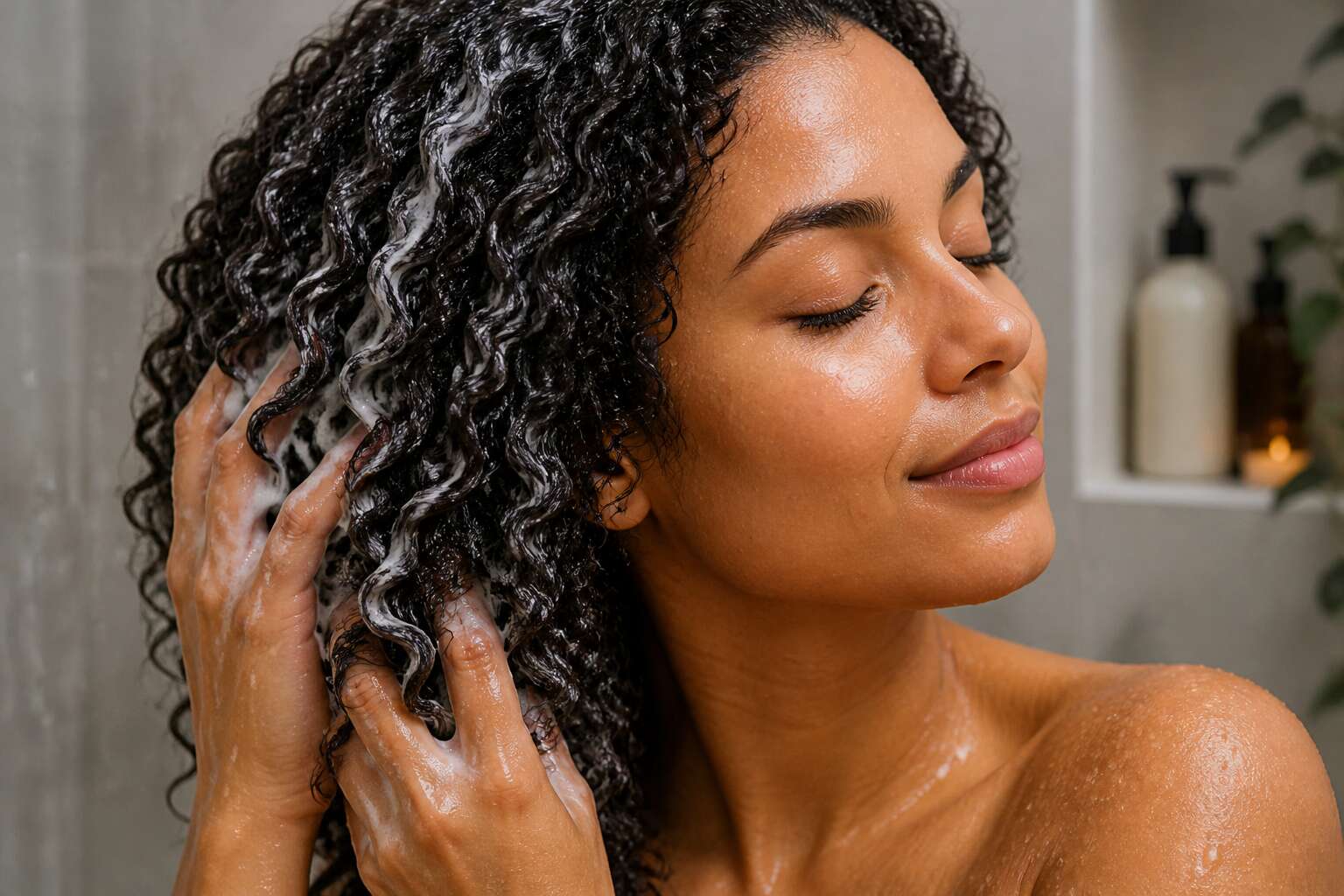
Understanding Conditioner Washing for Natural Curls
What Does It Mean to Wash Curly Hair With Conditioner?
Shampoo strips. Conditioner restores. Somewhere between those actions sits a gentler ritual. To co wash curly hair means replacing the foaming cleanser with a rich, slippery cream that dissolves the day’s accumulation without stripping the cuticle. The term itself, conditioner washing, sounds contradictory, yet for natural curls it is a form of honesty. You concede that your hair does not need to squeak to be clean.
For many Capetonians facing hard water and strong sun, this method keeps moisture locked where it belongs. The list of choices matters:
- The cleanser must be free of sulfates.
- It should glide through tangles without removing natural oils.
- Your scalp still needs attention, so massage every section.
There is a quiet admission in this practice, a recognition that maintenance is not punishment. I have seen it change how people touch their own hair.
Why Traditional Shampoos Can Strip Curly Textures
Around 40% of a curly strand’s mass is protein, and its lipid layer is delicate. Traditional shampoos, engineered with anionic surfactants, are blunt instruments. They target sebum with a force that curls, with their twisted architecture and slow oil travel, cannot withstand. The result is a clean that feels like a loss. Water alone cannot rehydrate what aggressive cleansing has stripped away, leaving the fibre porous and prone to breakage. This is the core argument for the alternative method: the co wash curly hair movement that prioritises the lipid barrier over a squeaky clean sensation.
The harsh chemistry in conventional formulas often includes more than just cleansing agents. They strip the natural moisture and alter the pH balance of the scalp. For a textured pattern, this translates into frizz that resembles a halo of static. Conditioner washing, by contrast, uses cationic surfactants. These molecules deposit a thin, conditioning film. They do not foam aggressively, but they do lift sweat and daily grime. The ingredients in a true cleansing conditioner must be scrutinised. For those with high porosity strands, the method requires a formulation without heavy waxes that could cause buildup. The act of massaging the product into the roots mimics the mechanical cleaning of a shampoo, but with a far greater margin for error and a much higher ceiling for hydration retention.
The Difference Between Cleansing Conditioners and Regular Conditioners
Half the battle is reading the label correctly. A cleansing conditioner carries cationic surfactants, positively charged molecules that cling to the hair’s negative surface. They lift grime and sweat while forming a thin conditioning film. A regular conditioner holds no such surfactants. It exists purely to soften and detangle, never to clean. That is the fundamental difference.
For high porosity strands, a cleansing conditioner without heavy waxes works best. The mechanical massage does the cleaning, not the foam. I have seen too many people mistake a deep conditioner for a cleanser! In South Africa’s humid climate, the wrong choice shows itself within a day.
- Cleansing conditioners use mild surfactants such as behentrimonium chloride.
- Regular conditioners rely on oils and cationic polymers only.
Co wash curly hair demands the former. A regular conditioner coats the strand and leaves the scalp unwashed, which leads to buildup.
Which Curl Types Benefit Most From This Method
Not every curl pattern responds to conditioner washing with equal enthusiasm. Fine, wavy strands tend to feel weighed down by lingering moisture. They need the deeper lift a sulfate-free shampoo provides. Dense, kinky coils and tight zigzag patterns absorb hydration readily and retain it well. These textures flourish when you co wash curly hair instead of reaching for a cleanser.
Low porosity hair, with its tightly bound cuticle, also benefits, provided you use warm water to open the shaft. High porosity hair, which loses moisture quickly, gains a protective barrier from those gentle surfactants. The deciding factor is porosity, not curl size.
- Tight coils (Type 4) thrive on frequent co-washing
- Loose curls (Type 2 and 3) often need a weekly shampoo
In Johannesburg’s dry winters, a weekly co wash curly hair routine prevents the brittle snap that comes from over-cleansing. My 3B curls survive on this method alone most of the year!
Key Benefits and Potential Drawbacks
How Co-Washing Hydrates and Softens Curly Strands
Co wash curly hair and you give the strands something traditional shampoos often take away: moisture. The cleansing conditioner lifts dirt while depositing hydration into the hair shaft. For many curly textures, this single change improves softness and curl definition within weeks.
But there is a tradeoff. Conditioners are not designed to remove heavy product buildup or hard water minerals. Over time, residue can sit on the scalp and weigh down fine or low porosity curls. The hair may feel coated, and the roots may lose their lift.
Watch for these warnings:
- Persistent itchiness or flaking
- Curls that feel heavier after each wash
- A visible film on the scalp
Reducing Frizz and Preserving Natural Oils
Co wash curly hair to tame the frizz that appears when sulphates strip sebum from the strand. The conditioner’s emollients smooth the cuticle, sealing moisture where it belongs. Natural oils remain undisturbed, giving each curl a supple weight and a polished sheen.
Yet this method has limits. The absence of a surfactant allows residue to accumulate, and fine curls may droop into limpness. The scalp can feel congested and heavy.
- Frizz diminishes quickly
- Oils stay balanced
- Heavy buildup often follows
- Curls lose their spring
This dual nature defines the practice. Frizz control will eventually demand a clarifying session.
Preventing Over-Drying and Breakage
The curl community often treats breakage as an inevitability, but it is a mechanical failure that co wash curly hair can prevent. Without sulphates, the cuticle never experiences the sudden swelling and collapse that leads to fissures. Conditioner acts as a slip agent, letting fingers and combs glide through tangles without snapping fragile strands. This matters most for high porosity curls, which lose moisture rapidly and break at the slightest tension.
Yet the method carries a drawback. When you co wash curly hair exclusively, moisture can accumulate beyond what the hair protein matrix supports. The strand swells, weakens, and eventually snaps. Low porosity types may feel this as a greasy coating that blocks water. The absence of clarifying surfactants means that both benefit and risk come from the same habit.
When Co-Washing Might Not Be the Best Choice
Cape Town’s hard water changes the stakes. One benefit of co wash curly hair is that it prevents mineral salt deposition from stripping colour. However, the same routine traps those minerals beneath a soft film. When to skip it? If your curls feel heavy before midweek, that is a chemical signal. An ordered list clarifies:
- When sweat and sunscreen dominate your summer routine
- When you use protein treatments weekly
In humid regions, co wash curly hair can invite fungal overgrowth on the scalp. Your own brushing patterns decide whether the trade works.
Step-by-Step Guide to Conditioner Washing for Curls
Prepping Your Hair With a Thorough Detangle Session
The ritual begins long before water touches your strands. Saturation is the first act. Run lukewarm water through your hair until every curl hangs heavy and sodden. Water is the ultimate precursor to slip, and slip is the key to gentle detangling. Dry or damp curls resist manipulation fiercely, but drenched curls surrender.
A thorough detangle session is your foundation. Without it, cleansing becomes a battle against knots. Apply a generous amount of your chosen co wash curly hair product as a prelude. Focus on the mid-lengths and ends, where tangles congregate like stubborn guests. Work the conditioner through with your fingers, using wide, deliberate motions to separate each curl clump.
Consider these steps for an effective detangle:
– Divide hair into four distinct quadrants using clips
– Start at the nape of the neck, working upward through each section
– Use a wide-tooth comb, beginning at the tips and slowly advancing toward the scalp
– Keep the hair saturated throughout the entire process to maintain slip
This preparatory phase transforms the wash from a simple cleanse into a nourishing treatment. The conditioner softens the cuticle, preparing strands for the gentle massage of the cleansing process. Your curls should now feel pliable and organised, a canvas ready for the next stage of your co wash curly hair routine.
Applying the Cleansing Conditioner From Roots to Ends
The real artistry begins with the sectioned application, a technique that separates a simple rinse from a deliberate ritual. Work with the four quadrants you established during your detangle, tackling one at a time to ensure every strand receives equal attention. This methodical approach prevents the common error of overloading the crown while neglecting the thirsty ends.
Start at the roots, pressing the conditioner into the scalp with your fingertips. The motion should be a gentle massage, not a vigorous scrub, as the friction from aggressive rubbing can disturb the cuticle and invite frizz. Allow the product to sit for a moment, letting the emollients soften the day’s accumulation of oils and grime.
Then, slide the conditioner down the length of the hair shaft. You will feel the difference immediately, the slip returning as the product coats each curl. The mid-lengths and ends, which are often more porous and prone to dryness, require a slightly heavier hand here.
– Glide the product down each clump to seal the cuticle.
– Use the “squish to condish” motion to encourage curl formation.
– Ensure the hair remains saturated to maintain even distribution.
– Repeat this pattern for each of the four sections.
This method of layering, from the root to the tip, ensures the co wash curly hair process is an even cleanse, a uniform treatment that leaves no section neglected. The result is a balanced foundation, where every curl is prepared for the final rinse that will seal in the moisture.
Massaging the Scalp With Gentle Fingertip Motions
The scalp is an ecosystem, not a battlefield. Many curly-haired individuals treat this sensitive terrain with aggressive scrubbing, a habit that leads to inflammation and compromised follicles. Gentle, deliberate motions are the cornerstone of a successful co wash curly hair routine, and this massage phase is your moment to reconnect with your roots. Use the pads of your fingertips, not your nails, to create small, circular movements that stimulate circulation without causing friction. This pressure encourages the cleansing conditioner to lift impurities from the follicle, allowing the formula to do its work.
The motion should be slow and methodical, tracing the hairline and the nape of the neck where buildup often hides. Resist the urge to rush, as the sensation should be soothing rather than abrasive. The goal is to soften the debris, not to scrape it away. As you work, you will notice a shift in texture, a sign that the product is dissolving the day’s residue. This ritual primes the scalp for optimal hydration, ensuring that your co wash curly hair session delivers a thorough yet gentle cleanse.
– Focus on the crown and temples, where oil production is highest.
– Use a lifting motion with your fingertips to encourage blood flow.
– Spend at least two minutes on this stage to allow the product to activate.
Your fingertips become the conduit for this quiet transformation. This deliberate attention to pressure and placement ensures that the cleansing conditioner penetrates deeply, creating a clean slate for your curls to thrive.
Rinsing and Squeezing the Hair Without Roughing It Up
After the scalp massage, shift to the rinse. Use lukewarm water and let it flow through the strands. Lean your head back to avoid piling the hair upward, which creates tangles and friction. The water should carry away the conditioner residue while leaving a silkiness behind. You will know it is complete when the stream runs clear.
Now comes the squeeze. Cup your palms around sections of your curls and press gently, pushing water downward. Do not twist, wring, or rub. The cuticle is pliable after cleansing, and rough movements invite frizz. Work from the roots to the ends, releasing moisture in a steady rhythm. This method removes excess water while keeping the curl clumps intact. A careful rinse and squeeze are the unsung heroes of a successful co wash curly hair session. They seal in the hydration your conditioner just delivered.
Sealing in Moisture With a Leave-In or Curl Cream
There is a moment after the final squeeze where your curls hold the promise of the next few days. This is where sealing becomes a ritual. Water alone will evaporate, taking the hydration from your conditioner with it. On hair that is still damp, not dripping, apply a small amount of leave-in conditioner. Rub it between your palms to warm it.
Work it through the mid-lengths and ends, where porosity is highest. Then, if your strands crave definition, top it with a curl cream. Emulsify a pea-sized amount and scrunch it gently upward toward your scalp, without disturbing the curl clumps. The goal is to create a barrier. Some stylists follow a particular sequence for the best results:
1. Section the hair into four quadrants for even coating
2. Apply the leave-in first, from ends to roots
3. Follow with curl cream, using a scrunching motion
4. Allow the hair to air dry or diffuse with a low heat setting
Your climate here in South Africa plays a role. Humidity in Durban may require a lighter cream, while the dry Highveld air of Johannesburg demands a richer formula. A co wash curly hair routine depends on this final step to lock in the work already done. The right product choices vary by individual, so the focus remains on learning what your hair needs.
Customizing Your Co-Wash Frequency Based on Hair Porosity
Conditioner washing follows a simple sequence, but execution matters. Start with thoroughly saturated hair, then apply the cleansing conditioner in generous sections. Use your palms to smooth the product over each clump, never a comb. Rinse with cool water to seal the cuticle, then gently press the curls upward. This mirrors the co wash curly hair method without introducing friction.
Porosity dictates how often you should practice co wash curly hair. Low porosity hair resists moisture and builds up quickly, so two or three times a week suffices. High porosity strands drink water but lose it just as fast, meaning you can co wash every other day. Fine curls need less product, while dense waves might require extra conditioner to stay defined.
Popular schedules include:
- Fine, low porosity curls: twice weekly
- Dense, high porosity curls: four times weekly
- Normal porosity: alternate with a low-poo cleanser
Selecting the Perfect Co-Wash Products for Curly Hair
What Ingredients to Look for in a Cleansing Conditioner
Choosing the right product for co wash curly hair is the first step. Many curlies assume any conditioner will work, but that is rarely true. The formulation is what makes or breaks the experience. You are looking for a cleansing conditioner that offers slip while effectively lifting buildup from the scalp, all without stripping the hair shaft.
The ideal ingredients for this task include lightweight oils like argan or jojoba, which mimic the natural lipid barrier. Also, look for humectants such as glycerin or panthenol, which draw moisture into the strand. The label should list cetyl or cetrimonium compounds early, as these provide the slip necessary to prevent breakage during the wash.
– Fatty alcohols. They soften the cuticle and provide the glide needed for detangling.
– Aloe vera or oat milk. These soothe the scalp and reduce inflammation.
– Citric acid. It adjusts pH levels, smoothing the cuticle and enhancing shine.
Sometimes, your water supply in South Africa is hard and mineral laden. If you reside in an area like Johannesburg or Pretoria, look for a cleanser with chelating agents like sodium phytate. This ingredient helps to remove metal ions that can cause dryness. The right co wash curly hair product should feel substantial in your hands, not watery. It should coat the strands like a rich balm, holding the moisture where it belongs so that once you rinse, the pattern remains intact and resilient.
Avoiding Heavy Silicones, Sulfates, and Drying Alcohols
Choosing the right product for co wash curly hair means reading the label with suspicion. Heavy silicones can coat the strand, creating a false smoothness that eventually traps buildup and dulls the pattern. Sulfates, even in small doses, strip the very oils you aim to preserve.
Drying alcohols like SD alcohol or isopropyl alcohol pull moisture from the cortex, leaving curls brittle. Instead, scan for water-soluble emollients and botanical extracts. The best cleaning conditioners rely on gentle surfactants or none at all.
- Avoid ingredients ending in “cone” unless they are water-soluble.
- Skip anything with sodium lauryl sulfate or its relatives.
- Reject products listing ethanol high on the label.
Your co wash curly hair routine depends on this vigilance. A product that feels luxurious in hand can still betray your curls if it hides these culprits.
Budget-Friendly Options vs. Premium Curl Brands
Budget friendly cleansers and premium curl brands differ in price, yet the label matters most. In South African stores, a low cost option may rely on simple emollients like glycerin and citric acid, while a luxury import might contain fermented rice water or shea peptides. Both can support a co wash curly hair routine effectively.
- Budget lines prioritise slip and hydration.
- Premium brands focus on scalp microbiome balance and reparative complexes.
I have seen a supermarket conditioner outperform an expensive cream that leaves a film. The price tag often reflects marketing budgets, not moisture retention.
How to Alternate Between Co-Wash and Low-Poo Products
Choosing the right co wash curly hair products in South Africa starts with the label, not the price. A cleanser that works in Durban’s humidity may fail in Johannesburg’s dry winters. A supermarket conditioner often outperforms a luxury import because the cost reflects marketing, not moisture retention.
Alternating between co-wash and low-poo prevents buildup while maintaining hydration. Co-wash delivers moisture; low-poo removes residue. I follow a simple rotation:
- Co-wash twice a week for soft, defined curls.
- Low-poo every other week for scalp clarity.
- Increase co-wash frequency when the air turns dry.
The rhythm depends on your environment and your hair’s response. Co wash curly hair routines should adapt, not remain fixed.
DIY Conditioner Blends for Extra Nourishment
Selecting the perfect co wash curly hair products feels intimate. It is a conversation between your strands and the ingredients they crave. The selection process should never rely on fragrance alone, because scent does not equal hydration. I have observed many curl enthusiasts in Cape Town chasing a particular aroma, only to find their hair drier and more brittle after a week.
The most effective strategy involves reading the ingredient list with a critical lens. Look for water-soluble emollients and humectants like glycerin or aloe vera. These attract moisture. In contrast, the DIY-conditioner route offers a level of customization that supermarket shelves rarely provide. You control the depth of nourishment by infusing your base product with specific botanical extracts.
When crafting your own blend, consider the balance of weight versus hydration. A heavy butter can flatten fine curls, while a watery gel leaves them parched.
– Add a few drops of jojoba oil to mimic scalp sebum.
– Mix in a spoonful of honey for hygroscopic humectant power.
– Blend in a crushed avocado for a potent vitamin E boost.
These additions transform a basic cleanser into a targeted treatment. In my experience, the DIY approach works best when you treat the base conditioner as a blank canvas. You are not merely washing hair. You are layering nourishment that survives the rinse, which is the true purpose of co wash curly hair routines.
Common Mistakes, Myths, and Routine Adjustments
The Myth That Curly Hair Never Needs a Clarifying Wash
Many people assume that once they switch to co wash curly hair, they can abandon every other cleansing method for good. That assumption creates a different problem. Conditioner alone cannot dissolve mineral deposits, product residue, and sebum that accumulate on the scalp. The hair feels heavy, the curls lose their bounce, and no amount of extra conditioner fixes it. I have seen this dullness happen time and again.
A clarifying wash every three to four weeks resets the hair. It removes what co-washing leaves behind. Choose a gentle clarifying shampoo without harsh sulfates, then follow with a deep conditioning session.
Signs that your hair needs this reset:
– Curls feel coated or sticky even after co-washing
– Your scalp itches or looks flaky
– Products stop absorbing the way they used to
Skipping the occasional clarify does not protect your hair. It simply allows buildup to undermine moisture. Co wash curly hair works best as part of a broader routine, not a replacement for every other step.
Over-Co-Washing and Its Impact on Scalp Health
The scalp holds the first evidence of over-co-washing. What begins as a gentle cleansing habit turns into a buildup problem when conditioner is applied too often. Dead skin cells mix with sebum and product residue, creating a film that blocks the scalp’s natural functions. This flakiness comes from trapped debris, not dryness.
Signs that co-washing has gone too far:
- Scalp tenderness after washing
- Itchiness that intensifies between sessions
- Roots that look greasy while ends remain parched
The myth that co wash curly hair requires daily repetition keeps many stuck in this cycle. A sustainable routine spaces out co-wash sessions, allowing the scalp to restore its natural oil balance.
Skipping the Final Cool Rinse to Close the Cuticle
The final cold rinse is the step everyone loves to skip. Warm water opens the cuticle to cleanse, but it leaves the door ajar. A quick blast of cool water shuts it tight, locking in moisture and sealing the strand’s surface for a smoother reflection of light. Think of it as the handshake at the end of a good meeting. It only takes ten seconds.
Many routines stumble on the myth that this method is a daily requirement. It is not. It is a hydrating cleanse, not a daily ritual. If your scalp feels tender or your roots look greasy while the ends stay parched, you have pushed the balance too far.
– Forgetting to detangle before the wash
– Using a heavy conditioner on fine hair
– Skipping the cool rinse to save time
These three errors pile up quietly. The fix is simple: adjust the frequency to what your hair actually asks for. Co wash curly hair needs a schedule, not a habit.
Using Too Much Product and Weighing Down the Curl Pattern
Heavy, drooping curls are the telltale sign of overload. Many assume that more product equals more definition. In reality, the opposite holds true. When you co wash curly hair, the conditioner itself is the primary source of slip and moisture. Piling on additional creams and butters during the same session creates a suffocating layer.
The hair shaft becomes coated, and the natural curl pattern collapses under the weight. The result is stringy, flat sections that lack bounce. This often happens because the routine fails to account for hair porosity. A fine, low porosity strand requires a fraction of the product that a thick, high porosity mane needs.
Routine adjustments start with measuring. If your curls feel heavy before they even dry, you have used too much. The signs are obvious after the fact:
– Curls stretch out and lose their coil shape
– Hair takes an unusually long time to air dry
– A greasy film remains on the scalp despite cleansing
The fix is to halve the amount of product. Apply the cleansing conditioner and rinse thoroughly, then use a single, pea sized amount of leave in. For many, this is the missing step. A successful co wash curly hair routine prioritises wash day technique over quantity. The product should enhance the natural pattern, not drown it. Your hair will signal its preference through its spring and shape. Listen to that signal and adjust accordingly.
Pairing Co-Washing With Styling Techniques Like Plopping and Diffusing
Frustration often peaks when pairing a co wash curly hair routine with styling tools. Plopping and diffusing are not shortcuts, they are technique heavy. The first myth is that plopping works for every hair type. It does not. The second is that diffusing on high heat speeds up drying without consequences. It does have consequences!
- Plopping while the hair is soaking wet, which traps excess water and flattens roots
- Diffusing with a bouncing motion that roughs up the cuticle
- Skipping the cool shot to set the curl memory
The routine adjustment revolves around timing both techniques. Ten minutes of plopping, then diffusing on low speed and low heat with the nozzle angled downward. The sequence depends on curl density. Fine strands require less plop time, while thick strands require longer. Observation beats habit.
Adjusting Your Conditioner Washing Routine by Season or Climate
Cape Town’s winter dampness has a talent for turning a faithful co wash curly hair routine into a muddled affair. The common mistake is treating July like January, clinging to the same rich conditioner that felt divine in summer. Humidity already coats the strand; adding more moisture invites limpness.
The myth that climate only affects styling forgets that water behaviour changes with air pressure. A saturated curl in Durban’s coastal air behaves differently than one in Gauteng’s dry Highveld. Some hair requires a lighter rinse-out in humid months, others crave heavier creams during winter’s chill.
- Using summer products during monsoon-like weeks
- Ignoring hard water shifts that alter conditioner performance
- Keeping the same rinse temperature as seasons flip
These small oversights quietly undermine the entire co wash curly hair philosophy, yet they are easily corrected with a bit of seasonal observation.



0 Comments