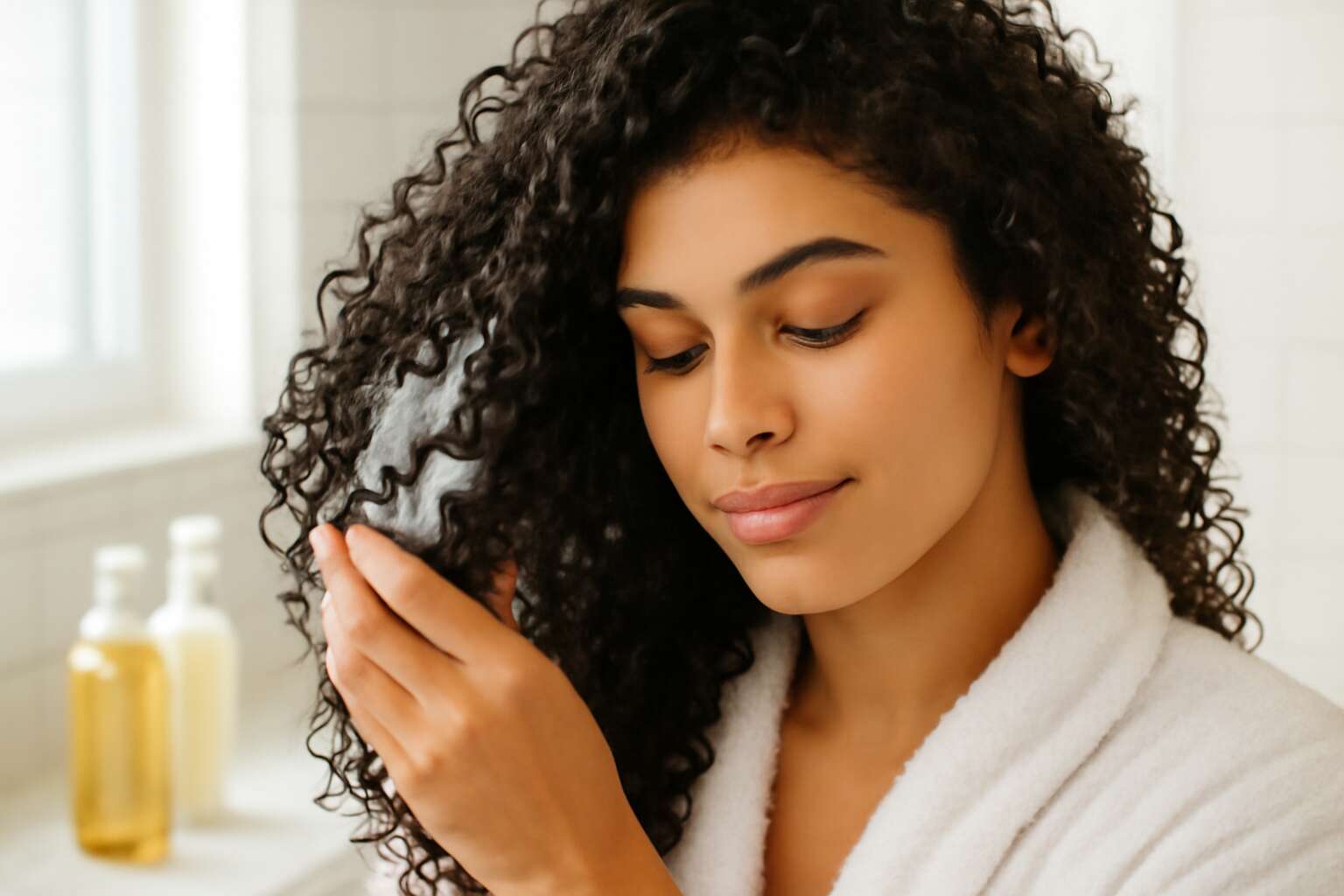
Understanding Curly Hair Needs
Curls types and textures
“Curly hair isn’t a problem to fix—it’s texture to understand,” a stylist once told me, and the sentiment sticks in South Africa’s humid mornings. Understanding curly hair needs means recognizing that curls vary—from loose waves to tight spirals—each with its own demands on moisture and movement.
Identifying your curl type helps shape a gentle, respectful routine. Consider these broad categories:
- Loose waves and spirals
- Classic to tight curls
- Coils and kinks
From there, the texture’s porosity and scalp health steer choices in hair treatment for curly hair. I’ve learned that a one-size routine rarely fits all, so the focus stays on balance—avoiding heavy overlaps that weigh the curl down.
Common curly hair concerns
‘Curls aren’t unruly; they’re asking for patience and moisture,’ a Cape Town stylist told me, and the sentiment sticks like sea spray on humid mornings. In South Africa, 80% of curly-haired clients report humidity triggers frizz and texture shifts, underscoring the need for a tuned understanding of needs.
Common concerns map to dryness, porosity, and scalp health, each changing how curls respond to the day. A gentle balance of hydration plus controlled protein keeps bounce without weigh-down.
- Moisture balance aligned with porosity
- Healthy scalp without buildup
- Protective routines that respect movement
Understanding these needs guides hair treatment for curly hair—nurturing texture with care and honoring the unique rhythm of every coil in South Africa’s climate.
Hydration and moisture balance for curls
Cape Town humidity isn’t just weather—it’s a daily test for coils, a weather report with a turbo button. In South Africa, 80% of curly-haired clients report humidity triggers frizz and texture shifts, a reminder that listening to your curls is a climate-aware business.
Understanding curly needs starts with hydration and the right moisture balance. Dryness, porosity, and scalp health shape how a coil drinks water and holds on to it. A gentle balance of hydration plus controlled protein keeps bounce without weigh-down.
Three anchors keep curls content in a humid climate:
- Moisture balance tuned to porosity
- Healthy scalp without buildup
- Protective routines that respect movement
When treated with care, this approach underpins hair treatment for curly hair, weaving hydration with texture-preserving routines that stand up to SA’s humidity and still look delightfully defined.
Scalp health and curl health
Across South Africa, 8 in 10 curly clients report scalp sensitivities when humidity climbs. That statistic isn’t a scare story; it’s a signal from the scalp’s quiet kingdom, inviting a gentler approach to care.
Healthy scalp is the first stage where curls draw their breath; sebum and moisture trade secrets at the root, shaping texture long before a single strand meets its moisture needs. hair treatment for curly hair hinges on this shared vitality.
Three pillars guide the balance without losing movement.
- Scalp health free of buildup and irritation
- Moisture balance tuned to porosity
- Protective routines that honor curl mobility
Under Cape Town skies and Johannesburg breezes alike, this weave of scalp and curl health becomes fertile ground where hair treatment for curly hair can truly flourish, even as humidity stirs the air.
Protein versus moisture balance
Curls whisper a quiet arithmetic: balance of protein and moisture writes the curl’s destiny. Too much protein can harden the lattice; too little leaves strands thirsty and brittle. This balance guides hair treatment for curly hair, a choreography of strength and softness that honors porosity and climate.
When nourishment meets the horizon of your curl, a thoughtful cadence emerges:
- Hydrolyzed proteins that reinforce without weighing down
- Moisture-rich humectants to coax curl clump and bounce
- Seals that lock in moisture with light oils or butters
In Cape Town or Jo’burg, daily humidity reminds the curl to stay balanced—fragile yet resilient.
Cleansing and Conditioning for Curly Hair
Sulfate-free shampoo selection
In the shower, a quiet mystery unfolds as curls reveal their mood. A simple switch to a sulfate-free cleanse can unlock bounce and definition you’ve been chasing, especially in South Africa’s climate. This hair treatment for curly hair thrives on gentleness and respect for your scalp’s rhythm!
Cleansing and conditioning should be gentle: look for a sulfate-free shampoo with mild surfactants, and pair with a rich conditioner that locks in moisture. For hair treatment for curly hair, choosing a sulfate-free shampoo matters.
- Mild sulfate-free surfactants that cleanse without stripping oils
- Botanical humectants to lock in moisture
- Detangling-friendly formulas for easy styling
- Fragrance-conscious options for sensitive scalps
Beyond cleansing, consider how you apply the product—squish-to-condition, avoid rough rubbing, and let your curls air-dry when possible for best definition.
Co-washing: when and how
Curls crave moisture, and in South Africa’s sun-scorched climate, gentle cleansing is a form of respect. “Gentle cleansing is a form of respect,” a seasoned stylist likes to say, and that sentiment sticks.
Co-washing offers a softer path than traditional shampoos, balancing oils while preserving bounce. For hair treatment for curly hair, it centers hydration and minimizes frizz, a whisper of luxury on muggy days.
- After chlorine exposure
- On non-wash days when curls feel dry
- When humidity spikes and you want to refresh moisture
In South Africa, this approach keeps curls defined without weighing them down.
Conditioning strategies: rinse-out, leave-in, and deep conditioning
Moisture is the backbone of healthy curls. A seasoned stylist says, “Curls remember what they’re asked to drink,” and in South Africa that reminder lands with bite. In this hair treatment for curly hair, cleansing and conditioning begin with intention, inviting bounce.
Rinse-out conditioner follows a shampoo to seal the cuticle and ease detangling; leave-in conditioner keeps a light veil of moisture through the day; and deep conditioning acts as a restorative retreat for strands craving resilience. Each choice plays a role in the ongoing dialogue between hydration and texture.
- Rinse-out conditioner: seals cuticles, eases combing, and sets a smooth base
- Leave-in conditioner: provides light, daily moisture and frizz control
- Deep conditioning: weekly treatment that rekindles moisture bonding and strength
In humid mornings and dry spells alike, these conditioning strategies keep curls balanced, offering definition without stiffness—a whisper of luxury in South Africa’s climate.
Detangling best practices for curly hair
Humidity can turn curls into corkscrews, and 70% of South African curlies report detangling drama on humid mornings. “Curls remember what they’re asked to drink,” says a seasoned stylist, so this hair treatment for curly hair starts with cleansing and conditioning that set a hydrated tone. Hydration, people, is non-negotiable!
Cleansing isn’t just washing; it’s priming. Choose a sulfate-free shampoo or a gentle co-wash, and massage the scalp with slow, circular motions. Rinse with cool or tepid water to help seal the cuticle and reduce frizz right from the start.
Detangling best practices lean on moisture and patience: detangle with conditioner on damp hair to reduce friction, glide with fingers or a wide-tooth comb, start at the ends and work upward, and keep sections loose to minimize breakage.
That careful approach keeps the routine balanced, with definition and bounce—no stiffness, just swagger.
Clarifying routines without stripping moisture
Humidity robs curls of calm, but in South Africa, 68% report that frizz spikes on muggy mornings. That figure isn’t doom—it’s a signal to rethink cleansing and conditioning! This hair treatment for curly hair begins with a primed, hydrated foundation, because hydration isn’t luxe, it’s non-negotiable.
Cleansing isn’t merely washing; it’s priming. A sulfate-free shampoo or gentle co-wash, applied with slow, circular scalp massages, helps prepare hair for what follows. Rinse with a cool touch to help seal the cuticle, setting the tone for moisture retention.
- Sulfate-free formulas to respect curl texture
- Cool rinses to help seal the cuticle
- Hydrating conditioners that smooth without heaviness
On the conditioning side, a clarifying routine can be a safety valve—removing buildup without stripping moisture when balanced products are chosen. The aim is a clean slate that lets curls drink again. This approach is designed to protect curl health—delicate, not punitive.
Moisture and Leave-In Treatments
Humectants, emollients, and occlusives explained
Humidity is not just a backdrop for curls—it’s a co-conspirator. In fact, 68% of curl enthusiasts report moisture management changing the overall look of their hair at least once a week. The right balance keeps coils defined and soft.
Humectants pull moisture from the air; emollients soften and smooth; occlusives seal moisture into the cuticle. In South Africa’s varying climates, these players behave differently, so pairing them thoughtfully is key for a reliable hair treatment for curly hair.
- Humectants: glycerin, propanediol, aloe vera
- Emollients: shea butter, argan oil, caprylic/capric triglyceride
- Occlusives: petrolatum, beeswax, silicone derivatives
Leave-in treatments are the frontline allies here, acting as a lightweight buffer that maintains that trio’s benefits while steering clear of heavy buildup. The result is sustained moisture without weighing curls down.
Leave-in conditioners: how to choose
Moisture is not a luxury; it’s a structural ally for curls. In South Africa’s climate shifts—from sunlit dryness to humid afternoons—the right leave-in acts like a soft raincoat for coils. This is a cornerstone of hair treatment for curly hair, delivering sustained hydration without weighing the curl down and maintaining bounce.
Choosing a leave-in conditioner becomes a study in balance: a lightweight formula that supports hydration, sealing. Consider these factors as you evaluate products for your curls in this diverse landscape:
- Base matters: water-based formulas feel lighter and absorb quickly.
- Balance of moisture agents: drier seasons favor emollients; muggy months benefit humectants.
- Finish: aim for a soft, non-greasy finish with curl-friendly sheen.
Foundationally, a leave-in that respects your curl pattern and climate can be a quiet revolution—supporting definition and comfort without stealing the show.
Serums and oils for curly hair
Humidity in South Africa can turn a neatly defined coil into a fuzzy sculpture faster than you can say ‘snoek.’ Sixty percent of SA curlies report frizz on muggy days, so moisture is not a luxury—it’s a structural ally. Enter serums and lightweight oils: they deliver slip, lock in hydration, and give curls a soft, healthy sheen without weighing them down. In the realm of hair treatment for curly hair, this duo acts like a quiet raincoat for coils, offering definition and comfort in equal measure.
Here are some natural allies you’ll find in rands and routines: For hair treatment for curly hair, these options let you tailor the moisture seal to SA’s changing climate:
- Argan oil for shine and softness
- Marula oil for quick absorption and anti-frizz
- Squalane- or grapeseed-based serums for a feather-light finish
Used on damp strands, they support curl pattern without heaviness.
Gel and cream layering for hold and definition
Humidity in Cape Town’s mornings can loosen a crisp coil into a soft sculpture, reminding us moisture is a compass, not a compromise. In the art of hair treatment for curly hair, I trust the quiet mathematics of layering: a light leave-in for slip, a gel for control, a cream to seal.
On damp strands, these layers act as a velvet map, guiding curls through their weather. Here’s how to weave them with grace:
- Leave-in on damp strands provides slip and moisture retention.
- Defining gel or gel–cream hybrids offer hold and bounce without heaviness.
- Creams or sheer oils seal ends, adding softness without weighing curls down.
Together, they translate SA’s temperamental climate into sculpted, comfortable definition.
Styling Techniques for Defined Curls
Curl-enhancing methods: wash-and-go and finger-coiling
In the realm of curls, definition is a treasure that shines brightest when the elements cooperate. A fresh morning in South Africa brings both a challenge and a promise of bouncy, well-formed spirals. This is where a thoughtful hair treatment for curly hair becomes more than routine; it’s a careful rite of texture and tone.
Styling techniques for defined curls unfold in two gentle constellations:
- Wash-and-go: a pattern where curls settle into their natural shape with a delicate veil of hold, requiring minimal interference.
- Finger-coiling: a moment of attention to pattern, letting each curl define its own crisp arc.
When the day brightens, these methods feel like a whispered spell, turning every strand into a story the scalp can smile about.
Diffusing vs air-drying: pros and cons
Morning light in Cape Town finds curls negotiating the day with a quiet flourish. Diffusing and air-drying rise as two polite options for defined curls, each offering a distinct arc: heat-assisted control versus patient, gravity-led shaping. The result can feel as curated as a salon chair—yet more intimate, and certainly more SA-friendly!
- Diffusing: dries faster and boosts curl definition with less manipulation; risk of heat damage if heat is cranked up too high.
- Air-drying: preserves moisture and a natural texture; but longer drying time and potential frizz in humid mornings.
- In South Africa’s varied climates, humidity and airflow can tilt the outcome between a springy coil and a soft wave.
Whichever path you choose, it becomes part of hair treatment for curly hair—an ongoing negotiation with climate and texture that keeps the crown dignified and lively.
Frizz control strategies
Humidity is not a foe so much as a daily stylist. In Cape Town and beyond, curls wake to weather with a quiet flourish—and a stubborn frizz at the kitchen window. A recent SA salon poll found that two-thirds of curl wearers feel definition slips as humidity climbs.
Styling techniques for defined curls read like social etiquette: respectful, patient, and well-placed product. Observers notice how nearly invisible cream and gel coax the curl to define itself, while a brief cool air moment seems to settle the crowd.
For many South Africans, this ongoing journey is part of hair treatment for curly hair—a balancing act between moisture, texture, and climate.
Humour helps; a silk pillowcase and a bite of sunset light can make the crown feel civilized rather than weather-beaten.
Plopping and scrunching techniques for shine
Two-thirds of curl wearers report definition slips as humidity climbs, a fact that keeps Cape Town salons buzzing and curl lovers on their toes! It’s hair treatment for curly hair in motion—an intimate performance where texture meets weather and patience yields a glossier crown.
Plopping and scrunching are the two acts that polish defined curls without weighing them down, guiding moisture and texture toward a glossy, controlled crown.
The result? A disciplined shine that survives Cape Town mornings, with a whisper of mystery in every curl.
Heat styling: risks and how to minimize damage
Two-thirds of curl wearers report definition slips as humidity climbs, a truth that makes SA salons hum with debate. Heat styling promises sleek control, yet it can strip moisture and steal elasticity from a living curl, turning springy coils into brittle threads. This is hair treatment for curly hair as a tense performance between weather and will—a pursuit of definition without surrender.
Riskiest acts in heat styling are the sudden bursts of heat that linger at the cuticle, and the quiet erosion of shine when moisture is evacuated. To minimize damage, the conversation leans toward restraint and intention—honoring the curl’s texture by balancing heat with moisture, and recognizing protection as part of the ritual rather than a mere afterthought. The goal remains defined curls with resilience, a crown that carries its own quiet light into each Cape Town morning.
Maintenance, Routines, and Scalp Health
Weekly curl routine checklist
Consistency is the quiet engine behind vibrant curls,” a Cape Town stylist likes to say, and it holds true in every season. In the world of hair treatment for curly hair, a weekly cadence respects the scalp, preserves bounce, and honors the curl’s memory.
A simple weekly curl routine checklist keeps your scalp harmonized and curls sealed.
- Scalp health: observe shine, flaking, and irritation
- Hydration check: note moisture feel and adjust products
- Texture refresh: spritz and seal to maintain curl definition
In SA’s diverse climate, this measured regimen supports curls across coastal and inland zones, preserving individuality.
Nighttime protection to prevent frizz
In the realm of hair treatment for curly hair, nightly rituals become the quiet guardians of bounce, especially as Cape winds shift.
Maintenance means consistent cleansing and moisture balance, not harsh scrubbing. Monitor scalp health—shine, flaking, irritation—and adapt products. A gentle cadence keeps sebum even and curls defined, honoring memory across seasons.
- Silk pillowcase or satin bonnet
- Light conditioner or oil to seal
- Avoid cotton contact on pillow surfaces
Nighttime protection is the quiet spell that keeps your curls smooth through the night and into morning. In SA’s climate, such rituals guard memory and minimize frizz, whether coastal gusts or inland dryness. Consider these nightly choices:
Seasonal care adjustments for curls
Maintenance in the realm of hair treatment for curly hair is a quiet discipline: cleansing with purpose, moisture balance kept delicate, never abrasive. I watch the scalp for shine, flaking, or irritation and adjust the products to the season’s mood. A steady cadence preserves curl memory across the year.
Routines unfold like a careful ritual, with micro-adjustments that honor texture and climate. I lean into lighter cleansing intervals, brief refreshes, and a gentle seal to preserve gloss as the day’s humidity shifts.
- Coastal humidity heightens frizz; choose lighter oils and humectants to sustain bounce.
- Inland dryness nudges you toward deeper moisture and occlusives, mindful of buildup.
- Sun exposure invites UV protection to defend elasticity and tone.
Scalp health remains the quiet barometer; seasonal care adjustments for curls reveal shifts in oiliness, sensitivity, or flakes as winds travel over SA. Non-irritating cleansers, subtle scalp stimulants, and steady routines honor the scalp as the foundation of every curl’s radiance.
Protective styles to reduce breakage
Maintenance for curly hair, as a stylist once quipped, “curls remember the weather.” In South Africa’s muggy mornings and cool evenings, intention matters: a sulfate-free cleanse, light conditioning, and a careful detangler keep strands buoyant. This is hair treatment for curly hair, a philosophy as much as a routine.
Routines unfold like a quiet ritual; shorter wash intervals, gentle refreshes, and a memory-preserving seal keep curls lively as seasons shift.
Scalp health speaks softly here; the scalp is the foundation of radiance. Protecting it with non-irritating cleansers and gentle oils supports growth and reduces friction.
- low-tension styles that reduce manipulation
- satin or silk pillowcase contact at night
- loose, breathable updos minimize friction


0 Comments