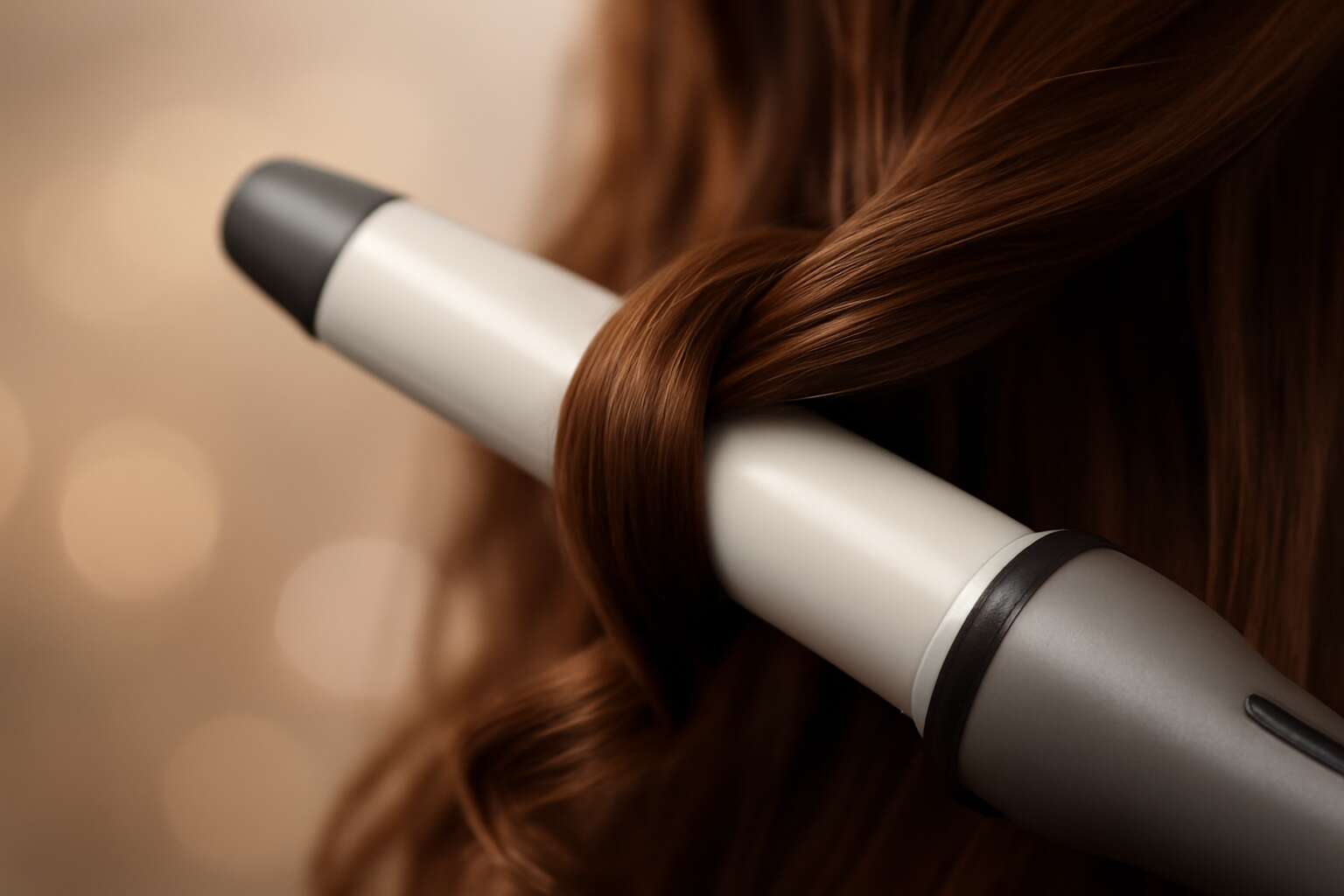
Choosing the Right Curling Tool for Curly Hair
Understanding Your Curl Pattern
In South Africa, pattern is king. A recent pulse study shows 7 in 10 curl patterns respond better when tools respect texture, porosity, and diameter. A good curling routine starts with understanding your curl pattern—the tiny details dictate how heat lands and how long the hold lasts.
Choosing the Right Curling Tool for Curly Hair Understanding Your Curl Pattern means looking beyond length or color. A curly hair iron can be a reliable ally when aligned with your waves, coils, and bounce!
- Heat stability and range
- Barrel size that matches your curl type
- Glide and coating that minimize snag
Materials and design shape outcomes as much as technique. When the tool respects your curl pattern, shine stays longer and frizz stays down—without turning your morning routine into a battle.
Heat Settings and What They Mean
Heat settings aren’t just numbers; they decide whether your curls spring to life or sigh back into frizz. In South Africa, the right dial on a curly hair iron can turn a morning routine into a ritual of control and confidence.
Lower heat (roughly 150°C and below) is kinder to damaged or fine textures, mid-range (150–180°C) suits most patterns, while high heat (180–210°C) locks in hold for dense coils. Understanding these ranges helps tailor the curl-friendly routine.
- Low range preserves moisture and minimizes snag
- Mid range offers balance between bend and shine
- High range delivers a strong, lasting set for thick curls
With a curl-friendly build—smooth glide, ceramic or tourmaline coating, and a precise temperature readout—your curly hair iron becomes a partner, not a weapon, in the daily routine.
Barrel Size and Its Effect on Curls
Size matters: the barrel on your curly hair iron is the tiny dictator of curl personality. The right diameter can turn a rushed morning into a polished moment.
Small barrels (16–19 mm) craft tight ringlets; mid-size (25–32 mm) deliver a balanced bend and shine; large barrels (38–40 mm) loosen the form into waves.
- 16–19 mm: tight spirals with defined pattern
- 25–32 mm: versatile bends and gentle bounce
- 38–40 mm: carefree waves and lift
A curling tool with smooth glide and a ceramic or tourmaline coating keeps moisture in and promotes even heat distribution.
Top Types of Curling Irons for Defined Curls
Classic Curling Irons vs. Wands
In a world of humidity and weekend-wig chaos, the right curly hair iron can turn frizz into defined, bouncy curls. A recent SA poll found 68% of South Africans with curly hair swear their best definition comes from the tool they trust most. When it comes to top types, two stand out: classic curling irons and wands.
Here are quick distinctions to guide your choice:
- Classic curling irons grip the strand with a clamp, delivering uniform spirals that hold in humidity-rich SA days.
- Wands skip the clamp, letting you wrap freely for looser or more natural curls and faster styling.
Both options bring distinct vibes—classic irons for precise spirals and wands for free-flowing texture—letting you choose a look for every mood.
Clamp vs. Clip-Free Designs
In South Africa’s humidity-driven climate, a reliable curly hair iron becomes your weatherproofing charm—defining curls when wind tries to undo them. A recent SA poll shows 68% of curlists swear their best definition comes from the tool they trust most. I personally reach for the clamp when I want precise spirals, while clip-free designs promise looser texture.
Clamp designs grip the strand and deliver uniform spirals that stand firm in humidity and busy weekends.
Clip-free designs skip the clamp, letting you wrap freely for looser textures and quicker styling.
- Clamp irons provide precise, camera-ready spirals with consistent hold.
- Clip-free wands foster a natural, tousled texture and speedy routine.
Where your mood leads, the right tool follows—a passport to defined curls and carefree bounce.
Choosing the Right Barrel Size for Hair Length
In SA, 68% of curlists swear their best definition comes from the curly hair iron they trust most. That devotion mirrors balance: heat that glides and a barrel that shapes without sacrificing texture.
Top types for defined curls balance precision and personality. Traditional barrel irons with ceramic or tourmaline give even heat and shine; Marcel irons yield classic spirals; wand designs with tapered barrels offer versatility.
- Traditional barrel irons with ceramic or tourmaline
- Marcel irons for classic spirals
- Wand designs with tapered barrels
Barrel size tunes curls to length. Short and fine textures respond to 25–32mm; medium length to 32–38mm; long hair loves 38–40mm.
- Short hair and fine textures: 25–32mm
- Medium length for balanced curls: 32–38mm
- Long locks for soft waves: 38–40mm
With the right tool, mornings in South Africa shimmer with defined curls and carefree bounce. The curly hair iron anchors that dream long after the curtain falls!
Tourmaline, Ceramic, and Titanium Coatings: Pros and Cons
In SA, 68% of curlists swear their best definition comes from the curly hair iron they trust most—a beacon where heat glides and texture keeps its sparkle, even after the curtain falls.
Three coatings offer distinct stories. Tourmaline, ceramic, and titanium each spark a different balance of glow and grip in your curl.
- Tourmaline-coated irons: Pros — emits negative ions, reduces frizz, and provides a velvety glide; Cons — can be pricier and coatings wear with heavy use.
- Ceramic-coated irons: Pros — even heat, gentle on strands, quick heat-up; Cons — durability can lag under rough handling.
- Titanium-coated irons: Pros — ultra-durable, heats rapidly, ideal for thick curls; Cons — may be too intense for fine hair and commands a higher price.
Let the coating guide your choice; the right curly hair iron becomes a morning muse, turning routine into a shimmer of defined curls and bounce.
How to Use a Curling Iron Safely on Curly Hair
Prepping Hair: Heat Protectants and Dryness Check
One in three curl enthusiasts report heat-related frizz when prep is skipped, a quiet tragedy of the comb. The curl’s architecture rewards reverence: warmth arrives not as a foe but as a sculptor, coaxing spirals into coherent coils that catch light.
Prepping hair begins with a dialogue between science and memory. Heat protectants create a breathable shield, preserving elasticity, while a dryness check reveals whether the strand holds dampness or surrenders to humidity. A well-tempered curly hair iron remains an instrument of control.
- Silicone-based serums or silicone-rich sprays that slip the cuticle into place
- Thermal sprays that form a protective veil without weighing hair down
- Leave-in conditioners that hydrate while keeping frizz at bay
These protections, woven with moisture, give curls a chance to respond to heat with a quiet kiss rather than a jagged edge, and the curly hair iron becomes a partner in that delicate conversation.
Technique Tips for Uniform Curls
Heat is a compass, not a weapon. Nearly two in three curl lovers see crisper definition when heat meets intent. The curly hair iron, used with care, can turn frizz into uniform coils that catch light instead of glare.
Safety and technique sit together. Dry, detangled hair, a light grip, and steady motion keep curls cohesive. In South Africa’s shifting humidity, a calm finish matters more than a wild sprint with the iron.
- Even heat contact across strands
- Consistent, gentle tension for uniform coils
- Barrel size suited to curl texture
- Quick cool-down to set shape
The curly hair iron, balanced with respect, becomes a patient partner in shaping coils that hold.
Sectioning and Temperature Control for Different Curl Tightness
Heat is negotiation, not conquest. In South Africa’s humidity, a mindful routine with the curly hair iron keeps texture intact and frizz at bay. Sectioning becomes a quiet act of respect—dividing the crown into zones so heat meets intent rather than battering strands.
Sectioning is the backbone of safe heat use. It helps even heat contact and prevents hot spots. Temperature control matters: looser curl patterns tolerate lower temperatures, tighter coils require more precision, and the aim is a natural shine rather than baked stiffness. The idea is to let the curl tell you what it needs, not the other way around.
A calm finish matters more than speed; the curly hair iron should partner with patience. See the hair as a living pattern, not a project in a hurry. The result is cohesion and light-catching coils.
Common Mistakes and How to Avoid Heat Damage
Heat is a conversation, not a conquest. A well-handled curl looks as if it were breathed into life by a tool, not forced into shape. A curly hair iron deserves respect, especially in South Africa’s humidity where texture can slip without notice.
- Using excessive heat or repeatedly passing over the same section
- Rushing through curls instead of letting each strand settle
- Skipping heat protection altogether or neglecting even dryness
Stay curious about how your hair responds and resist the urge to push too hard; a calm approach yields cohesive, light-catching curls rather than frizzed ends.
Adjusting for Humidity and Weather Conditions
“Hair humidity is not the adversary but the co-author of your finish,” a Cape Town stylist might murmur. With a curly hair iron in hand, you invite your strands to flourish while the air presses pause on chaos.
Safety means listening to your hair’s weather report. The approach should be calm, deliberate, and respectful of every strand’s memory, especially when humidity teases texture.
- Humidity and dew point changing through the day
- Indoor air versus outdoor climate shifts
- Air moisture and wind that influence settling
- Coastal versus inland SA humidity patterns
Treat the moment as a conversation rather than a confrontation, and your curls will respond with ease to the moment’s mood.
Maintenance and Longevity of Your Curling Iron
Cleaning the Barrel and Preventing Buildup
A veteran stylist says, “A well-kept curling tool keeps its curve sharper.” For the curly hair iron, maintenance saves money and keeps heat even. In South Africa’s humid mornings, a clean barrel means predictable results, not excuses.
Maintenance isn’t about rituals; it’s about minimizing buildup and protecting coatings. Cleanliness supports glide, even heat transfer, and longer coating life. The goal is simple: fewer snags, fewer tuning tweaks, better curls every time.
- Product residue from styling sprays
- Mineral deposits from water on damp cloths
- Oil and heat-activated coating wear
With that in mind, store and protect the tool in a dry place. A well-tended tool remains dependable in changing weather, a small edge for every South African routine.
Storing and Protecting the Cord
Humidity-wrought mornings in South Africa demand more from a curling tool than glamour. A veteran stylist murmurs, ‘A well-kept curling iron keeps its curve sharper,’ and the logic follows: maintenance saves money and keeps heat even. When the barrel shrugs off product residue, mineral deposits, and oil wear, the curly hair iron delivers predictable coils and a steady rhythm, even under stormy skies!
- Store in a dry, ventilated space—away from steam and damp.
- Let the cord lie loose, free of twists and tight coils.
- Slip the iron into a protective sleeve when moving.
As the seasons turn, longevity becomes a quiet art—this tool stays faithful, and I honor the cord with patient cooldowns.
Troubleshooting Common Issues
South Africa’s humid dawns demand more from a curling tool than glamour. A veteran stylist swears the secret is care: a curly hair iron that keeps its curve sharp saves both time and money. When the barrel sheds product residue and mineral grit, it delivers predictable coils and a steady rhythm, rain or shine!
- Minimal buildup maintains smooth glide and even heat.
- Protect the cord from twists to extend life.
- Guard against rust by cleaning metal surfaces lightly.
Longevity is a quiet art; patient cooldowns and proper storage keep the tool faithful through every season.

0 Comments