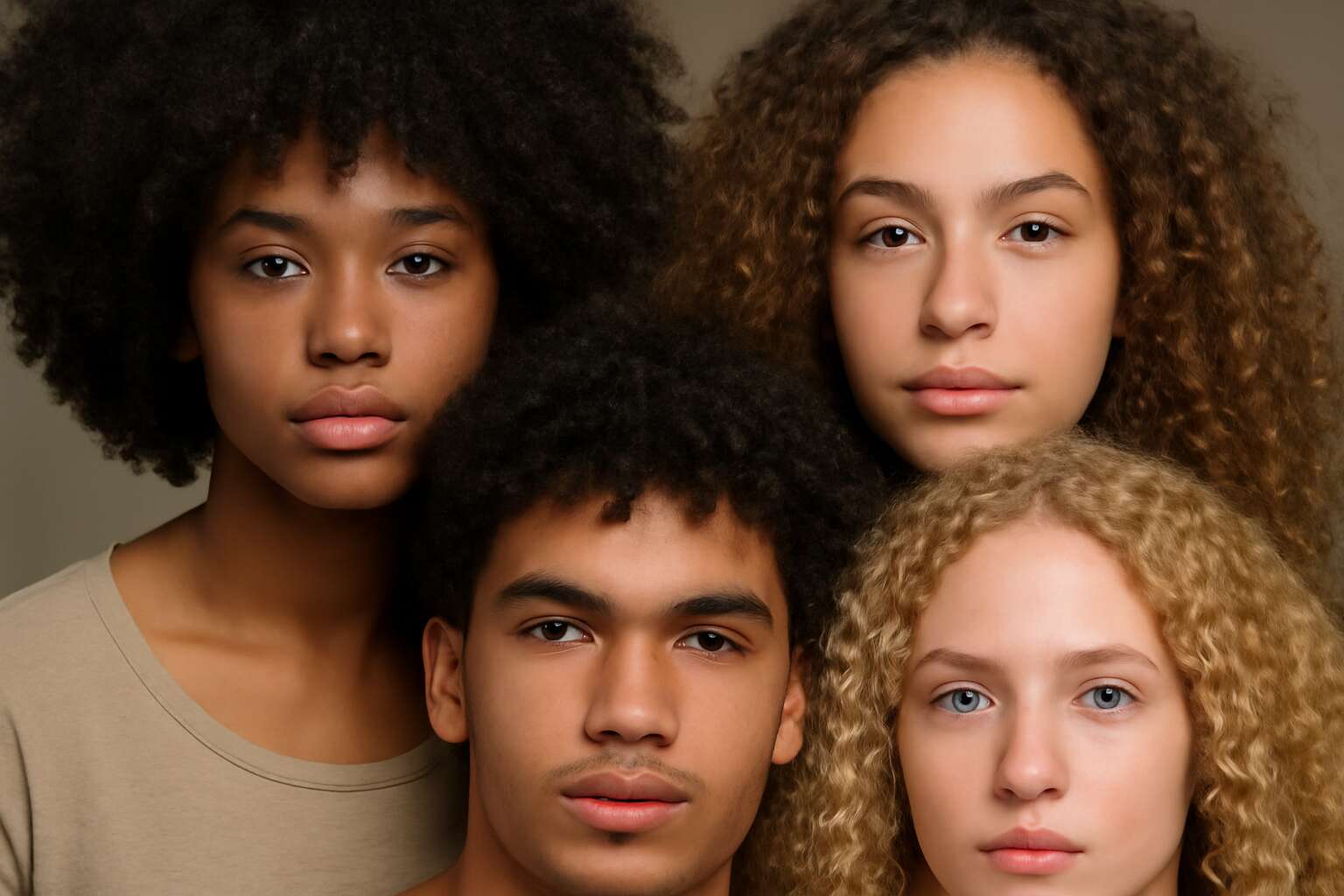
Curly Hair Rarity: A Global Perspective
What rarity means for hair texture globally
Curly hair is not a novelty but a living archive of climate, lineage, and memory. Many still wonder whether are curly hair rare, or if the spectrum simply travels with history and climate. The global map tells a more nuanced story: once-vanished textures resurface in diasporas, while uniform straightness persists in some regions due to historical grooming norms.
In South Africa, hair texture diversity mirrors the population’s richness; South Africans may see a mix of 3A to 4C curls. Here are texture threads:
- loose waves that soften the silhouette
- tightly coiled corkscrews with brilliant shine
- spiral patterns that resist definition yet glow with vitality
This variety makes the question of rarity rhetorical, inviting appreciation for the spectrum rather than a monolithic ideal.
How common are curly strands by population
Curly hair travels like a living archive, stitching climate, migration, and memory into every coil. The question—are curly hair rare—feels less about numerics and more about perception—a shifting map that redraws itself as communities move. When we view texture across continents, we see echo and recurrence, not scarcity. South Africa’s own microcosm reflects this: a spectrum shaped by history, not a single ideal.
In this part of the world, the spectrum adjusts to ancestry and climate, offering textures that resist rigid labeling.
- coils that catch light with a glassy sheen
- soft curls that frame the face with sculptural balance
- micro-tendrils that pulse with abundant volume
This is why the concept of rarity feels like a myth breathed into a singular ideal. The diaspora writes new chapters, returning textures to places where climate and memory converge, and I listen for the chorus rather than a verdict.
Key statistics on hair texture distribution around the world
Curiosity informs the chorus: are curly hair rare? Global snapshots place roughly one in three adults with some natural curl, a reminder that rarity dissolves into spectrum.
- glossy coils that shimmer in sun
- loose waves merging into curls
- tight spirals holding volume high
In South Africa, climate and ancestry convene, turning texture into a living map across Cape Town to the Karoo. The rarity idea recedes, revealing a nation of resilient, radiant curls that chart history rather than chase an ideal.
Genetic Factors Behind Curl Pattern and Rarity
Genetics of curl types and how they influence prevalence
Curl pattern is genetic couture—our hair narrates generations in tight spirals or sunlit waves. Genetic research points to dozens of variants that tip follicles toward coils, waves, or straightness. So the query are curly hair rare shifts with ancestry—it’s a moving target, not a fixed label.
Key genetic factors shaping curl types include:
- EDAR gene variants influence follicle shape, nudging curls toward tighter coils
- RSPO2 and related pathways affect how tightly hair coils form
In South Africa, this genetic tapestry plays out across diverse communities, giving a spectrum of curl patterns. The complexity helps explain why the idea of rarity shifts by region and lineage.
Hair type classifications and what makes certain textures rarer
Across South Africa’s mosaic of communities, curl pattern is more than texture—it’s a living genetic map. EDAR variants subtly shape follicle form, nudging some toward tighter coils, while RSPO2 pathways influence how stubbornly hair winds into a curl. In this light, the question of are curly hair rare becomes a shifting conversation rooted in ancestry, geography, and family history.
- EDAR and RSPO2 variants influence coil tightness
- Population history nudges which textures are uncommon
- Classification systems vary by region and research focus
In South Africa, this diversity makes rarity fluid, reminding readers that textures shift with community stories and individual heritage. The concept of rarity is a spectrum, not a verdict, and it invites a nuanced look at how our hair narrates lineage.
Inheritance patterns and rare curl combinations
Across South Africa’s mosaic of families, curl pattern reads like a living map of history. It’s less a verdict than a narrative, shaped by a web of genes that transmit down generations. Curl emerges when multiple loci contribute, so you can inherit a predominantly wavy texture from one parent and a surprisingly tight coil from another. The result is a spectrum that invites curiosity rather than exclusion.
Rare curl combinations appear where several genetic cues align, creating coils that drift into less common territory. Inheritance here behaves like a branching chorus—some branches harmonize for tight spirals, others favor looser waves, and together they paint a regional portrait of diversity. This remains a fluid label: are curly hair rare.
- polygenic influences across generations
- pedigree-driven variation in curl tightness
- regional admixture shaping texture
Myth vs data in perceiving rarity
Across South Africa, where a rainbow of communities shares a common threshold of sunlight and wind, the question lingers: are curly hair rare, or simply under-acknowledged? A seasoned elder once whispered, ‘Hair tells where the land has walked.’ Genetic factors behind curl pattern emerge as a braided chorus, not a single signal, letting a wavy parent carry a tight coil in the child.
Key influences shaping the spectrum include:
- many genes acting together across generations
- family history and heritage guiding texture
- regional mixing that paints a broader, richer range
In climate and culture, the myth vs data of rarity dissolves into ancestry and environment.
Geographic and Ethnic Trends in Curly Hair
Global distribution of curl patterns by region
The world’s curl map is a living tapestry, shifting with migration and mixed heritage. That question—are curly hair rare—lingers as a reminder that geography shapes texture. I’ve watched clients traverse continents and still find their own rivers of spirals, evidence that geography and genetics braid a shared texture across borders. In South Africa, urban studios in Cape Town and Johannesburg mirror a melting pot of curl patterns, from tight corkscrews to loose waves.
Geographically, West Africa often yields tight coils, the Americas display a broad spectrum due to diaspora, and Europe leans toward looser curls. Asia and Oceania contribute their own blends as migration threads weave newer textures into the profile.
- West Africa: tight corkscrews and dense texture
- Americas: a wide range from coils to waves
- Europe and Oceania: predominantly looser curls
Ethnic diversity and variations in hair texture
Curl textures carry history and refuse neat boxes. Across South Africa, the question are curly hair rare doesn’t rest on statistics so much as on stories of mixing—city and bush, schoolyards and studios. Heritage textures mingle in Cape Town and Joburg, turning curls into a living record of movement, policy, and pride.
Ethnic diversity carves a spectrum—from tight coils to looser waves—shaped by centuries of heritage and more recent migration.
- Migration and mixed heritage create new expressions of curl textures in urban centers
- Diaspora communities blend global curl vocabularies with local aesthetics
- Salon culture in SA reframes curls as a style and a statement, not a rarity
Textures travel. In a country marked by contrasts, the texture conversation becomes a critique of beauty politics and access—not a measurement of value.
Cultural practices shaping how curl rarity is perceived
“Curl textures refuse neat boxes,” a Cape Town stylist laughs, and the room nods. Geography and heritage fuse in South Africa, turning curl rarity into a moving story. Across Cape Town, Joburg, and the coast, the way curls are seen shifts with street markets, schools, and studios!
Geographic pockets shape how curls are celebrated or downplayed. The question are curly hair rare surfaces in conversations about identity and movement, pointing to mixed lineages where texture travels.
- Urban salon culture that honors every curl journey
- Rural and township traditions that keep ancestral styles alive
- Diaspora exchanges weaving global curl vocabularies with local aesthetics
Textures travel through cities and countryside alike, and the South African weave of studios and kitchen tables shows how cultural practices shape perception of curl rarity.
Case studies on curl prevalence in different populations
Across South Africa’s cities and rural laylines, curl prevalence traces migration and memory. People ask: are curly hair rare in this mosaic of heritage, and the answer keeps evolving with each generation.
Geographic pockets shape how curls are celebrated or downplayed, from bustling urban streets to quiet rural kitchens.
- Urban Cape Town and Joburg studios that celebrate loose spirals
- Rural and township kitchens that safeguard ancestral braid textures
- Coastal and diaspora communities weaving global curl vocabularies with local aesthetics
In urban Johannesburg and coastal towns, studios mingle global vocabularies with local textures, while rural farms keep ancestral styles alive through hands-on, kitchen-table rituals.
The geographic map of curl voices—stalls, schools, studios—reveals identity in motion, a living tapestry threaded with memory, migration, and community.
Historical migration and shifts in hair texture over time
Texture is a map of migrations, and in South Africa it tells a living story—vivid as a street mural. So, are curly hair rare? Not here! Where waves and coils ride memory across urban lanes and rural kitchens. A single strand hints at centuries of movement.
Geography and ethnicity shape texture. Coastal towns mix Indian Ocean influences with Khoisan and Indian diasporas; inland cities mirror Bantu heritage with evolving curl vocabularies. Rural farms safeguard ancestral braid textures through hands-on practice.
- Urban hubs celebrating looser spirals
- Rural kitchens guarding braids and textures
- Coastal diasporas weaving global curl vocabularies
These threads form a moving tapestry—identity in motion, memory threaded through community. The question of rarity shifts with generations, not nations.
Content Strategy: Writing and SEO About Hair Rarity
Aligning the topic with reader intent without sensationalism
South Africa’s tapestry of hair textures demands content that informs without sensationalism. A solid content strategy treats readers as partners, blending credible data with practical storytelling. For a company site, that means crisp explanations, regional nuance, and a wink of wit—enough to entertain without turning into a rumor mill. The aim: relevance that travels.
When readers ask are curly hair rare, they crave a grounded, data-informed perspective that respects lived experience. Frame the topic for South African audiences with clear boundaries, credible sources, and concrete context—history, care, and regional variation—so the answer guides rather than titillates.
- Anchor claims in local data and expert voices
- Structure content for scanning and skimming
- Keep tone respectful, precise, and free of hype
Simple, honest SEO pays off; readers stay longer and share credible insights!
SEO keyword strategy and metadata optimization
In the SA web landscape, credibility is an asset you don’t want to misplace. “Trust is the currency of the click,” a seasoned South African media strategist reminds us, and that truth shapes content about are curly hair rare. A data-informed approach invites readers to partner with you, not chase hype.
Write for scanning and skimming: short summaries, clear subheads, and metadata that signals credibility. For an article about are curly hair rare, anchor claims in local data and expert voices, and weave history, care, and regional texture into a coherent narrative.
SEO moves include a thoughtful keyword strategy and metadata optimization—without hype.
- Emphasize keyword relevance and topic coherence
- Frame metadata through regional context and respectful tone
Let the prose align with readers’ expectations, not with quick grabs.
Using visuals and data to illustrate rarity
Credibility in the SA hair narrative is earned, not claimed. A regional data lens shows curl textures distribute unevenly across climates and communities. The question are curly hair rare threads through clinics and salons alike, and the most persuasive answers rest on data-backed visuals and expert voices from SA dermatologists and trichologists.
Using visuals and data to illustrate rarity, the content leans on heat maps of regional texture, distribution histograms, and SA-specific expert quotes.
- regional curl texture heat maps
- case studies from Cape Town, Gauteng, and KwaZulu-Natal
- reader-friendly data visuals for clinics and salons
SEO moves prioritize keyword relevance and metadata signaling credibility—regional context, a respectful tone, and alignment with reader intent, avoiding hype. The narrative threads history, care, and texture into a coherent SA-focused arc.
Audience personas interested in curly hair textures
“Texture is climate in the scalp’s wardrobe,” says a SA dermatologist, and the narrative follows the regional map of curls. The question are curly hair rare threads through clinics and salons alike, and the answer lies in data, visuals, and expert voices from SA dermatologists and trichologists.
Our content strategy targets audience personas who crave texture detail—clinic managers, salon teams, curl-education readers—anchored by regional heat maps and reader-friendly visuals suited for SA clinics and salons.
- Clinic managers seeking regionally representative visuals
- Salon professionals serving Cape Town, Gauteng, and KwaZulu-Natal markets
- Educators and students tracking SA-specific curl patterns
SEO moves prioritize metadata signaling credibility, regional context, and a respectful tone that aligns with reader intent, stitching history, care, and texture into a coherent SA-focused arc.
Brand messaging and product angles around rare textures
“Texture is climate in the scalp’s wardrobe,” says a SA dermatologist. This content strategy treats are curly hair rare not as a mere curiosity but as a guiding lens—an compass for clinics and salons across Cape Town, Gauteng, and KwaZulu-Natal. Brand messaging anchors in regionally representative visuals, reader-friendly data, and expert voices, inviting readers to explore how context shapes texture, care, and culture. The goal is credibility that respects reader intent rather than sensationalism.
- Align value propositions with SA texture diversity for clinic and salon audiences
- Highlight product angles that acknowledge rarity without exaggeration
- Structure metadata and visuals to signal expertise to education-focused readers
SEO moves foreground metadata signals, regional context, and a respectful tone, weaving history, care, and texture into a coherent SA-focused arc. The narrative embraces curiosity, not sensationalism, and treats rarity as a facet of identity rather than a gimmick.




0 Comments