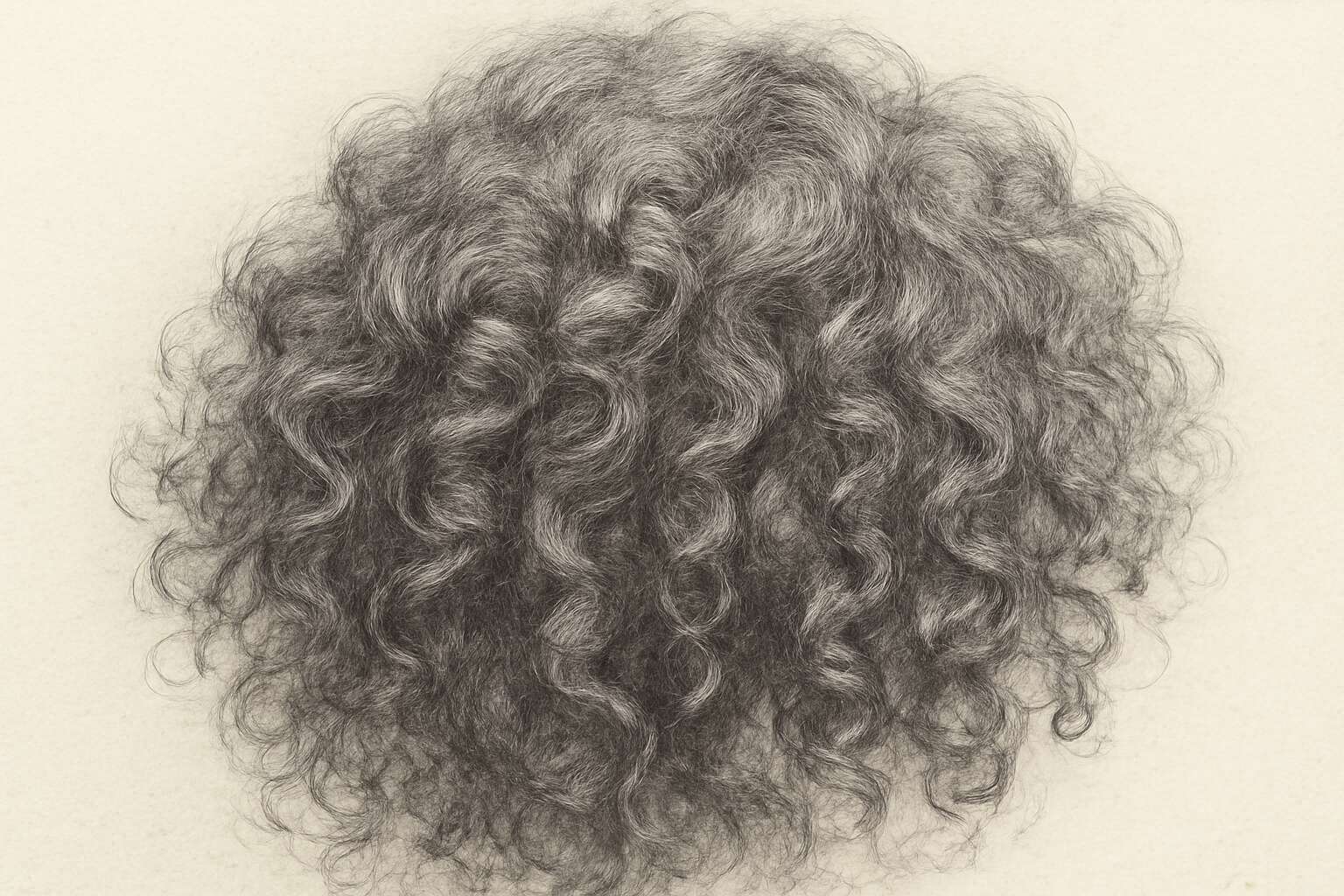
Curly Hair Illustration Techniques Outline
Section on Tools and Materials
Texture is memory,” whispers the studio light, and curly hair drawing responds to the hum of graphite with luminous spirals that seem to breathe. The tools within reach set the rhythm of every curl, translating movement into line and tone without losing their wild, wind-swept charm.
- Graphite pencils (2B–6B) for soft to bold lines
- Charcoal sticks for deep, velvety shadows
- Fine-liner pens for crisp curl definition
- Blending stumps and tortillons for glow and texture
- Kneaded eraser for lift and highlights
- Smooth, textured paper to hold graphite
In South Africa’s studios, natural light and warm timber desks turn these materials into a stage where texture and contour come alive, and every sketch carries a memory of sunlit coils and inked breath.
Section on Techniques and Styles
“Texture is memory,” whispered through the studio light. curly hair drawing becomes a dialogue between line and breath, where shadows puff and spirals coil into a living story. In South Africa’s sunlit studios, a curl is not just shape—it’s momentum, a thread that invites the eye to follow its wind-swept path!
To capture that motion, lean into rhythm and edge. Here are approaches to sculpt life into curls:
- Curves overlap in soft, rolling strokes to imply volume
- Variation in line weight creates texture and contrast
- Negative space separates clusters and suggests movement
Each line is a whisper; don’t chase realism, invite memory. From Cape Town’s coastline to the quiet glow of a studio lamp, this approach breathes.
Section on Step-by-Step Tutorials
Step-by-Step Tutorials in this section read like a slow, sunlit coastline—curly hair drawing unfurls curl by curl, not in a rush to realism but in a memory-chant of lines. A striking 85% of learners report stronger engagement when the sequence breathes with rhythm and edge. The outline treats each curl as a narrative thread, guiding readers from loose gesture to confident line while preserving spontaneity.
- Gesture-first foundation that respects curl rhythm
- Rhythm over perfect contour to imply volume
- Selective shadows and negative space to suggest movement
From Cape Town to the Karoo light, the tutorial voice emphasizes memory over mimicry, inviting the illustrator to think in curves, breaths, and pauses rather than rigid frames. This section of curly hair drawing becomes a portal for patience, where each slide invites a fresh whisper of texture and momentum.
Section on Common Mistakes and Troubleshooting
Curly hair drawing thrives on listening, not rushing. A mentor once whispered, “Let the curl tell the sentence and light be the punctuation.” In practice, the common traps reveal themselves as soft sighs of stiffness in a strand, a sign that something is trying too hard.
Many artists flatten volume by chasing perfect contours, or clump lifelessly by uniform shading. They skip the rhythm of a curl and end up with a stiff, cartoonish silhouette. Shadows become crutches instead of accents, and negative space is ignored, so the breath between curls vanishes.
Troubleshooting, in curly hair drawing, is about listening to the curl’s tempo. Let curves breathe; let light sketch the form rather than forcing it; resist filling every gap; celebrate asymmetry as a cue to motion.
From Cape Town to the Karoo light, this section invites patience and curiosity; missteps turn into texture, momentum, and memory.



0 Comments