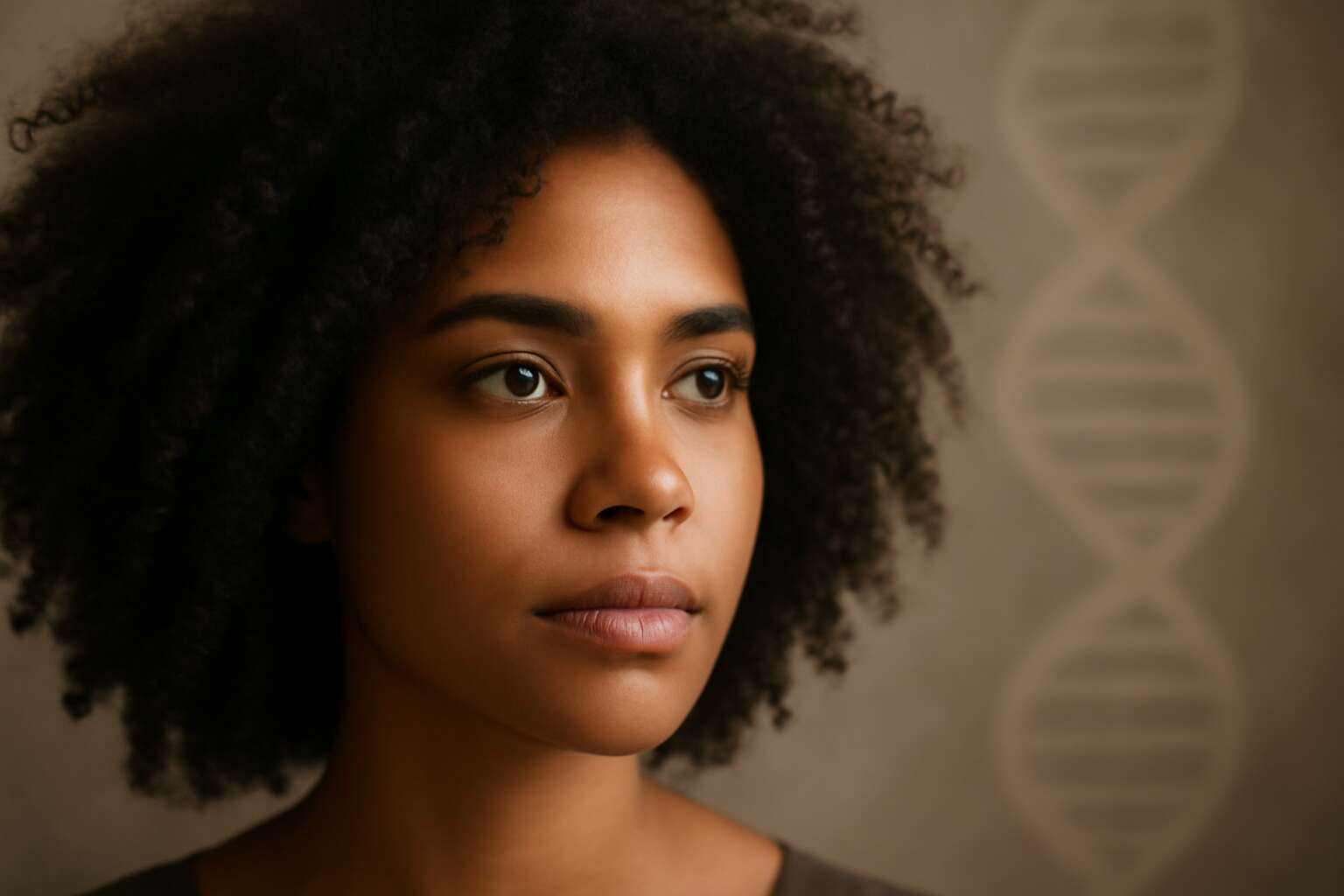
Curly hair genetics: dominance vs recessiveness explained
Key terms in curly hair genetics
Curl patterns drift through families like wind over the Cape flats—unpredictable, yet familiar. A line from a SA genetics note reads, “Hair texture is a family bookmark,” and it stirs curiosity about how curls travel from parent to child.
In simple terms, traits can be dominant or recessive. The question “curly hair is dominant or recessive” points to how a single gene can steer curliness—one copy of a dominant allele often expresses the curl, even if the other copy is straight. A recessive cue requires two copies to crystallize the curl.
Some key terms to grasp the pattern include:
- dominant allele
- recessive allele
- phenotype
- genotype
In South Africa, diverse lineages weave patterns of inheritance, and the outcome can be a blend of curls across generations. The material is a tapestry rather than a code, showing how dominance and recessiveness mingle with other genes to shape textures in families.
Dominance and recessiveness: how alleles influence curl
Hair texture travels through families like a family bookmark, a hook that lands in every generation. In South Africa, where diverse lineages mingle from Cape Town to the Karoo, the question curly hair is dominant or recessive becomes a question of patterns, not prophecies. The simple idea is that a single dominant allele can tip the curl with one copy; two copies of a recessive allele are typically required to reveal the curl.
Here’s how the mechanism reveals itself in families:
- One copy of a dominant allele can express curl
- Two copies of a recessive allele are typically required for curl to appear
The South African genetic landscape often yields blends of textures across generations, reminding readers that genes mingle with environment and history as this tapestry unfolds.
Genes and their role in curl patterns
“Genes tell stories in patterns, not prophecies.” In South Africa, where diverse lineages braid from Cape Town to the Karoo, curl is a living folklore, a memory kept in each strand and smile.
In plain terms, curly hair is dominant or recessive, and the mechanism unfurls with clarity: one copy of a dominant allele can tip the curl, while two copies of a recessive allele are typically required for curl to appear.
The South African genetic landscape yields blends of texture across generations, a reminder that environment and history mingle with genes as this tapestry unfolds.
- Cross-generational texture blends
- Environmental influence on curl expression
- Rich genetic diversity from diverse lineages
Common misconceptions about hair genetics
In South Africa’s diverse tapestry, researchers treat curl as a spectrum, not a verdict. In polygenic terms, up to 70% of texture variation arises from many small-effect genes rather than a single switch.
Common misconception: curly hair is dominant or recessive. In reality, one copy of a so-called dominant allele may tilt a curl, but multiple genes and interactions matter more; two recessive alleles rarely decide texture. From Cape Town to the Karoo, this oversimplification clashes with lived hair stories—I’ve heard these narratives echoed in salons across the country!
- Myth: curl runs in families in a single dominant gene—reality: it’s polygenic.
- Myth: environment doesn’t change genetics—habits like humidity and heat reshape curl expression.
- Myth: straight hair means no curl potential—texture sits on a spectrum with subtle curls everywhere.
When families discuss texture across generations, environment and history mingle with genes as this tapestry unfolds.
Inheritance patterns in curly hair: a closer look at dominant and recessive traits
Mendelian principles and curly hair
Across South Africa’s sunlit landscapes, family stories curl through generations like wind-worn hair. Many wonder: curly hair is dominant or recessive? Mendelian ideas offer a doorway, but real curls arise from many genes and their quiet conversations with the environment.
Inheritance here is not a single strand but a symphony. A dominant allele may sway a curl, yet patterns usually come from a constellation of genes, with interactions that blur simple labels. Variation and climate can nudge the curl into its own story.
- The classic dominant/recessive view can oversimplify curl outcomes.
- Polygenic influence means several genes contribute to curl texture.
- Environment factors can alter the visible curl across relatives.
As storytellers in South Africa’s diverse families, we learn curls carry legends of ancestors and alleles—a living myth written in keratin and kinship, where Mendelian principles meet the orchestra of genes shaping each strand.
Polygenic influence on curl texture
Across South Africa, a telling statistic links generational curls to climate and kinship: over 40% of families report visible variation in texture across siblings. The simple question: curly hair is dominant or recessive. Mendelian ideas offer a doorway, but real curls arise from many genes and their quiet conversations with the environment.
Inheritance here is a symphony, not a single strand. A dominant allele may sway a curl, yet patterns are a constellation of genes, with interactions that blur easy labels. Variation and climate nudge the curl into its own story!
- Genetic voices blend; no single note governs every strand
- Family stories and climate leave fingerprints on texture
- Individual curls become a personal myth, not a rulebook
Family history case studies in curl type
In South Africa, the tapestry of curls dances from the coast to the Karoo, and statistics mirror the dance: over 40% of families report visible variation in texture across siblings. The question: curly hair is dominant or recessive, lingers like a legend at the braai. Inheritance here is a symphony, not a single strand, and even a single curl can echo multiple voices.
Family history case studies in curl type reveal how dominant and recessive traits mingle with context. In one lineage, a parent with gentle waves passes a spectrum of textures to three children; in another, siblings share roots yet display surprising coils as climates shift.
- Sibling trio showing varied textures despite shared genes
- Generational shifts aligned with climate and lifestyle
- Each curl a personal myth, not a rule
Ultimately, the science meets storytelling, guiding professionals and families toward a kinder, richer understanding of curl heritage.
When curl patterns don’t align with simple inheritance
Across South Africa’s living rooms, the question lingers: curly hair is dominant or recessive? In truth, the story isn’t a single gene but a tapestry. In SA families, texture shifts with age, climate, and daily routines—revealing a braid of heritage where a single curl can echo several voices.
Inheritance patterns rarely settle into neat binaries. Beyond a tidy label, many families see textures that slip between siblings and generations. Context—humidity, sun, and stylists’ choices—can nudge a curl into a different personality.
- DNA interacts across loci, not in isolation
- Environment and grooming reshape visible texture
- Patterns in families can bend pedigrees, not always predictable
That mosaic view suits professionals and families alike, inviting curiosity over cliché and guiding conversations about curl heritage with a touch of warmth and wit.
Practical implications for parents and kids
In South Africa’s sunlit living rooms, a bold question lingers: curly hair is dominant or recessive? The answer isn’t a neat toggle but a living tapestry of kin and curls, evolving with every season and smile.
Inheritance rarely settles into binary boxes. Beyond a single gene, texture travels across loci, bending with age, humidity, and daily care. In practice, families often see siblings share a family look while still carrying distinct curl whispers.
- Expect variation as children grow and climates shift.
- Talk about heritage to nurture confidence and curiosity, not labels.
- Remember that texture may reflect many voices, not a single rule.
That mosaic invites curiosity and warmth, guiding conversations about curl heritage with elegance and resilience.
Interpreting curl type inheritance: genetics, modifiers, and family history
Genetic modifiers and epistasis in hair texture
Across South Africa’s mixed-race tapestry, roughly 55% of people with curly textures notice more than one curl type in the same family. That strand of truth grows more intricate as generations share patterns.
Interpreting curl type inheritance requires more than Mendel’s map. The idea that curly hair is dominant or recessive is a starting point; real life brews from many genes and their modifiers. Genetic modifiers and epistasis in hair texture can tilt a curl from corkscrew to spiral, while others can mute an effect. Family history helps tease the mosaic.
- Genetic modifiers and epistasis shape curl texture beyond single genes
- Polygenic background interacts with history to produce varied patterns
- Family history reveals nonlinear inheritance where simple rules fail
The old adage curly hair is dominant or recessive lingers in family lore.
Environmental factors affecting curl appearance
In South Africa’s diverse families, more than half of people with curly textures notice multiple curl types in one lineage, a reminder that inheritance isn’t a straight line.
Interpreting curl type inheritance means reading a mosaic: a handful of genes, with modifiers that change the curl and epistatic whispers that hide or reveal traits. Your family history acts like a weathered map, showing non-linear patterns where simple Mendel rules fall short.
Environmental forces also leave their mark. Humidity, water chemistry, heat, and even styling routines can tint a curl’s appearance, making a corkscrew look more spiral on some days than others.
- Humidity and moisture balance
- Water hardness and mineral content
- Heat exposure and products used
In the end, curly hair is dominant or recessive is a starting point; the real story unfolds as history, genetics, and environment braid together.
Population diversity and curl variation
Across South Africa’s mosaic families, more than half of people with curly textures notice multiple curl types in one lineage, a reminder that inheritance isn’t a straight line. Reading this weave feels like inspecting a living braid—where a handful of gene quirks and quiet interactions tilt a curl’s bend rather than dictate it with a single rule.
- Lineage mixing and migratory histories across regions
- Subtle DNA variations that tilt curl bend
- Local styling and environmental narratives that tint texture
Population diversity amplifies curl variation, inviting us to map how history and biology braid together under no tidy equation. Consider these threads:
Ultimately, curly hair is dominant or recessive is a starting point; the real story braids history, population diversity, and environment into a living texture.
Predictive value of a family history for curls
Interpreting curl type inheritance demands more than a simple dominant-recessive label. In South Africa’s diverse lineages, genetics mingle with modifiers—tiny changes that tilt curl bend—and a family history that might whisper of shared textures across generations. The question becomes not whether curls follow a single rule, but how a braid of factors scores the texture.
Modifiers add nuance; a family history can hint at patterns, but isn’t a guarantee.
- Patterns that persist across siblings and cousins
- Age-related shifts that reframe texture in adulthood
- Within-lineage variation that defies tidy labels
Ultimately, the phrase “curly hair is dominant or recessive” is a starting point; the predictive value of family history must be read alongside population diversity and local modifiers, weaving a fuller story of texture.
Limitations of predicting curl from genetics
Curls in South Africa aren’t locked into a single rule. Across diverse lineages, texture shifts with age and local modifiers, even within cousins’ heads. This makes interpreting curl inheritance less about labels and more about a braid of influences in real families!
Genetics provide a baseline, but tiny changes—modifiers—tilt the bend. A family history can hint at shared textures, yet it won’t guarantee the outcome.
- Genetic background sets a starting texture
- Modifiers and epistasis adjust curl without changing the core genes
The question of whether curly hair is dominant or recessive remains a simplification. Population diversity and environmental factors complicate predictions, reminding us that nothing in hair texture is fixed.
How to talk to a genetic counselor about hair traits
Common myths vs science: what really determines curl texture
Debunking myths about curls running in families
Curl texture isn’t a binary verdict; it’s a weather system in a strand, especially in South Africa’s humidity. The idea that curly hair is dominant or recessive is a tidy slogan that glosses over how genes, hormones, and environment mingle to create coils and waves.
- Myth: Curls run in families in a perfectly predictable line.
- Science: Many genes plus climate and hair care history shape curl texture.
- Myth: If one parent has tight coils, every child will follow suit.
The truth? Debunking myths about curls running in families shows that the hair you see is the result of a mosaic of inheritance and circumstance.
Interpreting genetic test results for hair type
In South Africa’s humidity, curl texture behaves like a weather system—never a single verdict, always shifting with moisture. A classic line once claimed that curly hair is dominant or recessive. The reality? Curl texture is a spectrum, and genetic tests merely hint at the forecast.
Common myths vs science: what really determines curl texture
- Myth: Curls run in families in a perfectly predictable line.
- Science: Many genes plus climate and hair care history shape curl texture.
Interpreting genetic test results for hair type shows that curly hair is dominant or recessive is an oversimplification; real life blends polygenic signals with hormonal influences and daily care.
The hair you see is a mosaic of inheritance and circumstance, a coil-by-coil diary of evolution rather than a tidy pedigree.
The role of lifestyle and environment on curl expression
Common myths tag curl texture with the tidy promise of a single yes or no—but science hums a different tune. Across South Africa’s humid mornings, the belief that curly hair is dominant or recessive persists, yet the forecast is broader: genetics mingle with climate, care history, and daily routines.
Curl texture emerges from a polygenic chorus, not a lone trait. Hormones, water content, and even the products you apply alter the coil-by-coil appearance. The myth of a straight pedigree breaks under the weight of real life, where environment bends genotype into new shapes.
Consider these real influencers of curl expression:
- Humidity, temperature, and air quality
- Daily hair-care rituals and styling products
- Nutrition, health, and hormonal changes
- Mechanical handling and protective styling
In short, the idea that one gene rules curl is a dramatic arc of myth; reality is a weather system—shifting, nuanced, and always evolving. Curiosity thrives in every strand!
Future directions in curly hair genetics research
Common myths about curl texture give tidy answers, but science prefers nuance. The notion curly hair is dominant or recessive has long haunted textbooks and salons alike, yet real determinants extend beyond a single gene. In homes and clinics, hormones, moisture, styling rituals, and daily routines all co-create the curl pattern you see in the mirror. Curl texture is a polygenic chorus, not a lone trait.
Future directions in curly hair genetics research are about mapping networks, expanding population diversity, and weaving environmental data into genetic models.
- Expand diverse genomic cohorts that reflect South Africa’s populations
- Uncover gene networks with functional genomics to explain curl spectrum
- Integrate climate, product history, and hormonal changes in longitudinal studies
In this way, the field moves toward a context-aware, predictive understanding of curl.


0 Comments