Understanding Natural Hair Types: Curls vs Frizz
What defines curl texture
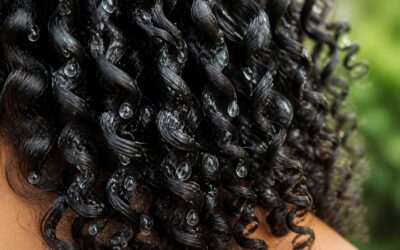
Curly hair vs frizzy hair is really a story of rhythm. In textured strands, pattern writes its own music, while frizz is the misplayed note that travels with humidity. Across South Africa, where coastal air and dry interiors meet, recognizing the difference helps you nurture generous curl definition without sacrificing shine. Curl texture is a living coil—distinct, repeatable, and beautiful—whereas frizz speaks to surface dryness and unbound moisture.
Here’s how to tell them apart in everyday life:
- Curl texture is the natural coil pattern along the shaft, repeatable and unique to each head.
- Frizz is surface dryness where cuticles lift, often spreading without your curl pattern showing true definition.
Understanding curly hair vs frizzy hair helps align products with local conditions in SA—sun, humidity, and wind—turning every strand into a story rather than a challenge.
What causes frizz
A Cape Town stylist once told me: curly hair vs frizzy hair is rhythm, not rebellion, as humidity turns the air into a tuning fork. In South Africa’s climate—coastal moisture meeting dry inland breeze—the way your hair behaves becomes a story your morning routine can read.
Frizz isn’t a sign of failure; it’s a surface drama—the cuticle lifts and moisture hunts the strand, scattering light and definition.
- Humidity spikes; moisture swells the shaft.
- Heat and friction from styling can roughen the surface.
- Chemical processing weakens protective layers of the cuticle.
Understanding this distinction helps you talk to salons and brands about products that suit SA conditions—sun, wind, and humidity—turning every strand into a confident silhouette instead of a frizz forecast.
Key differences in appearance and behavior
In the weather-woven mosaic of South Africa, curly hair vs frizzy hair reveal themselves as two constellations in the same sky. “Hair is weather’s handwriting,” a Cape Town stylist whispered, and humidity tunes every strand.
When light catches them, curly hair maintains defined geometry—spirals with steady cadence. Frizz blooms on the surface, scattering light into a soft halo. The distinction appears in three facets:
- Appearance: defined curl vs fuzzy halo
- Texture: smooth cuticle vs lifted surface
- Light: sharp reflection vs diffuse glow
In SA’s coastal-to-inland climate, curly hair vs frizzy hair respond to weather with rhythm, not rebellion. Sea breeze swells frizz, while moisture helps curls retain their character.
Understanding the distinction guides salons and brands as they tailor products to SA conditions—sun, wind, humidity—turning every strand into a confident silhouette rather than a frizz forecast.
How humidity affects each type
Humidity is hair’s weather report, and in South Africa it often reads stormy. For curly hair vs frizzy hair, the difference isn’t merely shape—it’s memory under damp air. Curls drink moisture and organize into defined spirals; frizz blooms on the surface, scattering light into a soft, halo-like glow. In our coastal-to-inland climate, the wind carries humidity in different moods, and each strand answers with a distinct signature: a confident silhouette or a diffuse, haloed outline.
Understanding how humidity affects each type helps explain why some days feel polished while others look tempest-tossed. A curl kept within a smooth cuticle holds a sharper reflection; a frizz-prone strand lifts, catching the glare in a way that reads more ethereal than crisp. The SA landscape—sun by day, sea breeze by afternoon—helps writers and stylists forecast texture, not just trends, turning climate into texture’s most honest collaborator.
Root Causes and Misconceptions
Humidity and weather effects on texture
Root causes of texture aren’t a mystery; they’re physics in disguise. In the curly hair vs frizzy hair conversation, a strand stays defined when the cuticle lies flat, while frizz blooms as lift and internal tension diverge. Subtle shifts in keratin bonds, sebum distribution, and microfibril stress decide whether hair behaves or misbehaves. It’s biology, not mood boards, and it explains why two heads in the same climate wear different textures.
Misconceptions about this topic linger: humidity isn’t the sole culprit, frizz isn’t always damage, and curl behavior isn’t identical from person to person.
Humidity and weather effects on texture in South Africa vary by coast and interior; coastal humidity swells curls and can encourage fuzz, while drier inland air deflates moisture, sharpening definition and unpredictable bounce. For readers exploring curly hair vs frizzy hair, climate becomes a partner in texture rather than a villain.
Product buildup and scalp health
Texture isn’t a mood; it’s a physiology, a ledger of moisture and friction. In the ongoing debate about curly hair vs frizzy hair, root causes sit in the cuticle and the scalp as much as in climate. Product residue and scalp health voyage hand in hand, tilting the balance toward definition or fuzz when sebum distribution falters and internal tension shifts.
- Product buildup from heavy silicones or waxes that weigh curls and lift the cuticle.
- Mineral deposits and hard water that create a scaly film, dulling shine and redefining texture.
- Scalp health factors such as dandruff, flaking, or oilier zones that alter moisture delivery to each strand.
Misconceptions linger: frizz isn’t always damage, and a smooth surface isn’t a proxy for health. When the scalp breathes and sebum is evenly distributed, curls can share space, bending rather than snapping under humidity’s pressure.
Genetics and hair structure
In the ongoing debate about curly hair vs frizzy hair, genetics largely writes the script. Experts say up to 80% of curl configuration is inherited, and hair structure shapes how that pattern plays out. The geometry of the shaft—oval for tighter curls, round for smoother hair—together with the follicle angle and cortex alignment, decides where moisture and tension land in a given day. Those roots stay hidden, yet they steer texture long before product, climate, or styling touch the strand in South Africa’s climate, from humid coastal air to arid inland breezes.
- Hair shaft shape—oval versus round—directly influences curl tightness and overall texture.
- Follicle orientation—how the strand springs from the scalp—affects the appearance of curl vs. frizz.
- Disulfide bonds and cortex organization—these internal structures govern resilience to humidity and wear.
Misconceptions abound: frizz isn’t always damage, and a smooth surface isn’t a proxy for health. When the cuticle remains intact and the cortex stays balanced, curls can unfurl with resilience rather than snap under humidity.
Common myths vs reality about curl and frizz
Root causes lie in how each strand handles moisture, cuticle health, and the curl’s own blueprint. In South Africa’s climate—from humid coastal lanes to arid inland plains—these forces shape texture long before styling begins. Moisture balance, environmental exposure, and mineral buildup create unseen tension that guides whether a strand holds its curl or yields to frizz.
Misconceptions abound.
- Myth: Frizz equals damage.
- Reality: Frizz can reflect a moisture imbalance, not automatically compromised integrity.
- Myth: A perfectly smooth surface signals health.
- Reality: Surface shine can hide internal stress; healthy curls often have a voluminous, irregular sheen.
- Myth: More washing or more product fixes everything.
- Reality: Buildup and pH shifts interact with cuticle strength and curl pattern.
In the end, curly hair vs frizzy hair becomes less a verdict and more a dialogue with moisture, geometry, and rhythm.
Care Routines and Product Picks
Cleansing strategies for different textures
Humidity in SA cities turns curly hair vs frizzy hair into a climate story, not merely a look. The cleansing routine is where that story begins—hydration and scalp vitality ripple through every strand. A seasoned stylist quips, “hydration is a strategy, not a luxury,” and that wisdom lands on muggy mornings from Johannesburg to Cape Town.
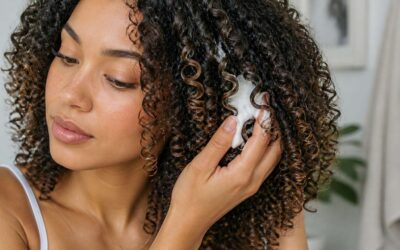
- Gentle, sulfate-free cleansers or co-washes to preserve natural oils
- Scalp-focused cleansing with a soft massage and a cool rinse to help seal the cuticle
- Finish with a lightweight leave-in for frizz-prone textures or a richer cream to define curls
Product picks lean toward balance for curly hair vs frizzy hair: hydrating yet lightweight serums for frizz-prone textures, plus richer creams for defined curls and pH-friendly cleansers that respect the scalp. In SA, texture-aware choices guide daily routines toward resilient, well-behaved strands.
Conditioning and detangling techniques
Humidity in SA isn’t simply weather—it shapes the daily reality of curly hair vs frizzy hair. The routine starts with care that sustains vitality through muggy commutes from Johannesburg to Cape Town. A seasoned stylist reminds us: “hydration is a strategy, not a luxury!”
Conditioning and detangling techniques keep strands aligned. Use a rich, slip-laden conditioner and detangle while the hair is wet. Start at the ends, work upward, and opt for finger detangling for stubborn knots. Finish with a cool rinse to help seal the cuticle.
- Detangle with conditioner in sections
- Start at the ends and ease upward
- Finger detangle for stubborn knots
- Cool rinse to seal cuticle
Product picks lean into balance: hydrating yet lightweight serums for frizz-prone textures and richer creams for defined curls, plus pH-friendly cleansers that respect the scalp. In SA, texture-aware choices guide daily routines toward resilient strands—curly hair vs frizzy hair alike.
Leave-in and styling products for moisture and hold
Humidity in SA isn’t just weather—it’s a daily conductor in the orchestra of curly hair vs frizzy hair. The care routine leans on leave-in moisture and gentle hold, a balance that survives muggy commutes from Johannesburg to the coast. “Hydration is a strategy, not a luxury!” echoes through salons as a reminder to choose products that nourish without weighing down the strand.
Care routines pair leave-in moisturisers with styling products for lasting resilience. The aim is moisture plus hold, a duet that keeps coils defined yet soft in high humidity. Consider these product picks:
- Leave-in hydrating spray or milk for deep moisture
- Lightweight anti-frizz serum for texture-prone hair
- Rich curling cream for definition and memory
In this landscape, SA textures respond to pH-balanced cleansers and formulas that don’t build up. The result echoes the contrast of curly hair vs frizzy hair—each finding its rhythm when nourished and protected.
Heat safety and tool usage guidelines
Hydration is not a luxury—it’s the conductor in the orchestra of curly hair vs frizzy hair, especially when heat and humidity collide. A steady routine pairs a heat-protectant spray with a low-to-medium setting to keep coils defined without scorching moisture out. In SA, a quick air-dry followed by a gentle diffused finishing pass can lock in bounce rather than frizz.
Care routines emphasize product picks that shield and shape. Let texture-prone strands rest between heat sessions and add moisture-rich styling creams after cooling to preserve memory and reduce crunchy edges. Consistency and gentle manipulation are the quiet anchors in this realm of heat and texture.
Sleep routines to minimize frizz
Humidity isn’t just weather—it’s a character in every South African bathroom, and 70% of mornings tilt the curl in the curly hair vs frizzy hair debate toward frizz.
Care routines for our climate honor moisture retention, barrier protection, and gentle handling. Texture-prone strands respond best to lightweight, sealing formulas that keep shine without weighing curls down, helping them hold their shape.
Sleep routines play a quiet but powerful role. A few well-chosen accessories and products can smooth the transition from day to night and curb frizz by morning:
- Satin pillowcase to cut surface friction
- Silk bonnet for overnight protection
- Breathable sleep scarf to guard edges
- Lightweight moisture-locking serum for night use
By dawn, curly hair vs frizzy hair settles into a softer rhythm, where texture breathes freely and mood meets the morning light.
Styling Techniques for Definition and Control
Curl-enhancing techniques and layering products
Bold definition doesn’t happen by accident; SA humidity can turn a perfect curl into a wandering wave overnight. “Definition is a ritual, not a miracle,” a seasoned stylist once says. The aim here is to spotlight curl-enhancing techniques and smart product layering that honor movement while keeping frizz at bay, reframing curly hair vs frizzy hair as a spectrum, not a fate.
Illuminate definition with techniques that feel breathable and precise:
- Curl-enhancing technique concepts
- Layering principles for definition
- Drying approaches to preserve pattern
Layering isn’t about stacking products; it’s about balancing moisture, sheen, and lift. In South Africa’s varied climates, the aim remains consistent: preserve curl pattern while taming stray hairs without sacrificing movement.
Frizz-fighting methods for humid days
Humidity in SA can turn a perfect curl into a wandering wave overnight. In SA humidity, curly hair vs frizzy hair is a spectrum, not a verdict. “Definition is a ritual, not a miracle,” a seasoned stylist insists, and the ritual begins with breath and balance—honoring movement while guiding stray threads back into the curl.
- Lightweight moisture balance achieved through careful layering
- Soft-hold formulations that define without stiffness
- Breathable drying choices—diffuse or air-dry to preserve pattern
Treat humidity as an editor, not a foe, and allow the texture to settle into its natural silhouette.
Protective styling and texture-preserving ways
Across South Africa’s climate, curly hair vs frizzy hair isn’t a verdict but a journey. ‘Definition is a ritual, not a miracle,’ a seasoned stylist insists, and the ritual begins with breath and balance, listening to movement and choosing textures that let curls breathe.
Protective styling respects pattern rather than overpowering it. Favor texture-preserving approaches that balance moisture with air—soft holds, breathable fabrics, and relief for the scalp—so curls can breathe and keep their narrative intact.
- Loose protective styles that don’t tug on roots
- Silk or satin wraps and pillowcases
- Low-tension, texture-friendly updos
Let the texture settle into its natural silhouette and celebrate movement as your signature.
Seasonal styling adjustments for optimal results
Across South Africa, curly hair vs frizzy hair is less a verdict than a dialogue—texture meets weather, light, and balance. “Movement defines curl,” says a seasoned stylist, and the ritual begins with breath and equilibrium.
Styling techniques for definition and control honor the curl’s natural cadence. Soft holds, subtle sheen, and moisture that respects pattern keep silhouettes alive without overpowering them.
- Texture-friendly holds that respect curl pattern
- Breathable fabrics and accessories that glide
- Low-tension styling to protect roots
Seasonal styling adjustments for optimal results hinge on humidity, sun, and heat. When humidity rises, the narrative stays flexible; in drier seasons, moisture retention becomes the anchor. The aim is a cohesive story where curl and frizz exist in harmony as weather shifts.
Practical Scenarios and Myths
Everyday frizz in humid climates: strategies
In humid South Africa mornings, a survey finds more than half of people with curly hair report frizz as a daily reality. The line between curly hair vs frizzy hair blurs when the air is thick with moisture, turning shine into a shimmer of unpredictable shapes.
Practical scenarios unfold across everyday life, where the weather writes its own scripts in the nation’s varied climates.
- Coastal humidity mixing rain and sea air in cities like Durban.
- Hot inland days with sudden moisture surges in offices and malls.
- Stormy commutes that leave the crown damp, then crisp once indoors.
Myths still hover in the mirrors: frizz is a sign of poor care, humidity spells doom, and volume equals chaos. Such myths fade when observed under real-world conditions, revealing how curly hair vs frizzy hair responds to moisture, not to a single fate.
Fine hair vs thick hair: tailored approaches
In humid mornings, more than half of people with curly hair report frizz as a daily reality. Between curly hair vs frizzy hair, moisture writes its own script, turning shine into a shimmer of unpredictable shapes.
Practical scenarios unfurl across SA’s climate tapestry:
- Coastal Durban mornings with sea breeze and salt in the air
- Hot inland days spilling into air-conditionéd offices and malls
- Stormy commutes that leave the crown damp, then crisp indoors
Myths linger in mirrors—frizz as proof of neglect, humidity as doom, volume as chaos. But curly hair vs frizzy hair learns a new patience when texture meets moisture, not fear.
Fine hair vs thick hair: tailored approaches note density as destiny; lighter strands respond to gentler hydration while thicker coils hold moisture longer, shaping every style.
Choosing professional-friendly styles and routines
Curly hair vs frizzy hair isn’t a mystery—it’s a weather forecast for your crown. In humid SA mornings, frizz often writes the headline. Practical scenarios unfurl: Coastal Durban mornings with sea breeze and salt, hot inland days, stormy commutes that dampen the crown, then crisp indoors.
- Coastal Durban: sea breeze, salt and moisture contour shine
- Stormy commutes: damp crown, indoor crispness after entry
Myths linger in mirrors—frizz as proof of neglect, humidity as doom. Yet curly hair vs frizzy hair invites patience when moisture meets texture, not panic.
Choosing professional-friendly styles and routines means embracing balanced hydration and texture-preserving silhouettes that suit SA’s climate. Fine hair vs thick hair becomes a dialogue between density, moisture, and movement.


0 Comments