Understanding Hair Porosity
What Is Hair Porosity?
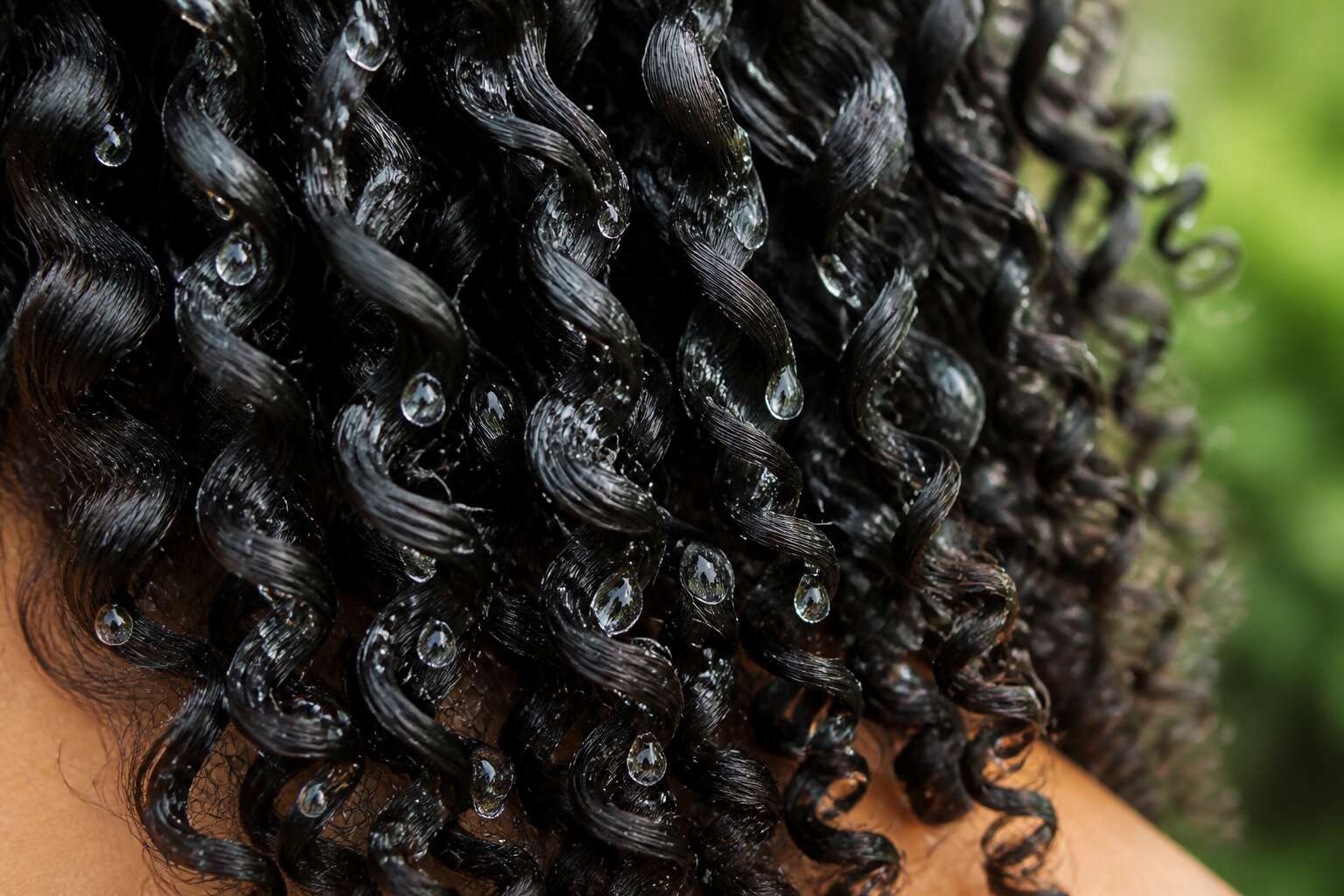
Every strand tells a story through its surface. Porosity, in its simplest terms, is the hair’s ability to absorb and hold onto moisture. This trait is determined by the cuticle, the outer layer of overlapping scales that protects the inner cortex. When those scales sit flat and tight, moisture has a hard time getting in. When they are raised and gaping, water rushes in quickly but often escapes just as fast.
The structure of your cuticle is influenced by several physical realities:
1. Genetics, which dictates the natural shape and density of the scales you are born with.
2. Chemical processing, such as coloring, relaxing, or perming, which lifts the cuticle permanently.
3. Environmental stress, from harsh sun exposure to aggressive brushing, which wears down the protective layer.
This measurement of absorption is the foundation for all hair care decisions. It is the objective starting point. The question of whether can curly hair be low porosity matters because so many assume texture dictates behaviour. In reality, the way a curl responds to water has nothing to do with its shape and everything to do with this physical gatekeeping.
The Three Porosity Levels
Here is the truth that makes hair stylists sigh: only about one in ten people has true low porosity hair. So what about the rest? Medium porosity sits in the middle, where the cuticle lifts just enough to let moisture in and keeps it locked. High porosity is the opposite. Water enters at record speed and leaves just as fast, which is why those strands often feel dry minutes after conditioning.
Can curly hair be low porosity? Absolutely. The curl pattern is a shape, not a permeability rating. A tight coil can have a cuticle that lies snug, while a loose wave can be weather-beaten. Low porosity means the outermost scales are compact, so products sit on the surface. Medium porosity absorbs steadily. High porosity welcomes everything and holds nothing.
If your hair feels like it repels water, you know which camp you are in.
Why Porosity Matters for Curly Hair
Porosity matters for curly hair because it decides how much effort you spend on every wash day. A single head of curls can contain strands with different absorption rates, which explains why one section feels greasy while another thirsts.
When your hair has low porosity, water and oil sit on the surface. The curl pattern remains intact but lifeless, and you find yourself reapplying products without any real effect. This is where the question of can curly hair be low porosity becomes practical, not theoretical.
- It determines how often you need to reset your curl with water or refresh spray.
- It influences which styling agents will hold without building up.
- It tells you whether protein treatments will soften or brick your strands.
Can Curly Hair Have Low Porosity?
The Relationship Between Curl Pattern and Porosity
Many assume tight curls mean low porosity, but this belief collapses under scrutiny. Curl pattern and porosity are distinct properties. So, can curly hair be low porosity? Absolutely. The shape of your follicle has no bearing on how easily water penetrates your strands. A person with type 4 hair might have a smooth, closed cuticle, while another with loose waves could have a raised one. Variation arises from genetics, heat styling, and chemical treatments.
Consider these scenarios:
- A tightly coiled strand can resist water absorption for minutes.
- A wavy strand might absorb moisture instantly if damaged.
Thus, curl type never dictates porosity. Observing how water behaves on your hair offers clarity. The answer remains a definitive yes, but only after individual evaluation.
Debunking Myths About Curly Hair Porosity
Walk into any Johannesburg hair salon and you will hear the same refrain: curly hair is naturally low porosity. The myth persists because many curlies struggle with product buildup and slow drying. Yet porosity has nothing to do with your curl’s shape. It only describes whether your cuticle lies flat or lifts upward.
- Water forms beads and rolls off your strands.
- Conditioner sits on the surface instead of sinking in.
- Your hair stays wet for hours after a wash.
So, can curly hair be low porosity? Absolutely, but confirmation requires personal observation. To know whether can curly hair be low porosity in your specific case, examine how water behaves on a single clean strand. A loose wave can repel water, while a tight coil might absorb it instantly. The answer lives in your own hair, tested with patience.
Real-Life Examples of Low Porosity Curls
My own hair proves the answer. I have tight coils that stay soaking wet for two hours after a wash. A friend with loose waves, however, dries in fifteen minutes flat. Porosity remains independent of curl pattern.
Real-life examples show how this plays out. Consider these cases from my Johannesburg salon chair:
- A woman with 3B curls who cannot get conditioner past her surface layer.
- A teenager with 4A ringlets whose water beads up on the surface.
Both struggle with buildup, yet their curl shapes differ completely. So can curly hair be low porosity? Only a strand test will tell you for sure!
How to Identify Low Porosity in Curly Hair
Wondering can curly hair be low porosity? The answer shows up in how your hair behaves, not in the shape of your coils. To identify low porosity in curly hair, watch a strand after washing. Water that sits in droplets rather than soaking in is a strong clue. Another sign is product sitting on top of the hair, leaving a greasy film. Common indicators include:
- Water beads on the surface for minutes.
- Conditioners feel heavy and never absorb.
- Drying takes hours, even in warm weather.
These signs are independent of curl shape. In my Durban salon, a client with loose waves battled the same buildup as a client with tight ringlets. Porosity reveals itself in the strand, not the pattern. So when someone asks can curly hair be low porosity, the water test provides the evidence.
Testing Your Curly Hair’s Porosity
The Float Test
The float test is a practical starting point for anyone asking can curly hair be low porosity. It requires nothing more than a strand of hair and a glass of water. The way that strand behaves tells you a great deal about your cuticle structure.
- Start with a clean, dry strand.
- Place it gently on the water’s surface.
- Wait four minutes before judging.
If the strand floats, your cuticles are dense and tightly packed, which points to low porosity. If it sinks, the cuticles are more open. I have seen results shift dramatically when product buildup is present, so wash the strand with a clarifying shampoo and let it dry completely before testing. The answer to can curly hair be low porosity often becomes clear in this simple observation!
The Slip Test
The slip test answers can curly hair be low porosity through touch alone. Take a single clean strand between your thumb and index finger. Slide your fingers from tip to root. Low porosity curls feel almost glassy, with no friction catching your skin. High porosity hair snags and stutters along the way.
I prefer this method after a clarifying rinse, because residue masks the true texture. The result is immediate, no waiting required. For many curly haired clients in South Africa, the slip test confirms what the float test suggests. It offers a second opinion from your own fingertips.
- Run the strand slowly to feel every bump.
- Repeat on a few sections, not just one.
Remember, a smooth glide points to tightly sealed cuticles, which is the essence of low porosity. So yes, can curly hair be low porosity? Your fingers already know.
The Spray Bottle Test
The spray bottle test turns water into an oracle. Fill a clean misting bottle with plain water and shower your dry curls from a short distance. Watch how the droplets behave. On low porosity hair, they linger like dew on cold glass, refusing to sink. The strands stay stubbornly separate, each bead holding its shape for several seconds. High porosity hair drinks the moisture instantly, leaving only a darkened patch behind.
I perform this test before any deep conditioning ritual. It explains so much about product failings. If your curls reject hydration, the mystery of can curly hair be low porosity resolves itself right there. The answer sits in every clinging droplet.
For a clearer read:
- Mist three different zones: crown, mid-lengths, and ends.
- Wait ten seconds before touching the hair.
- Low porosity shows beading on all zones.
This method is brutally honest. No steam, no heat, no manipulation. Just water meeting cuticles that refuse to part. The spray bottle test offers visual proof that low porosity curls exist and behave exactly as their structure demands.
Interpreting Your Results
Porosity testing rarely delivers a single unambiguous verdict. You might witness beading from the spray bottle while the float test argues otherwise. This dissonance does not invalidate the process. It reflects hair that varies across its length.
Interpret results holistically. A crown that beads while ends darken quickly points to damage rather than uniform low porosity. The question of can curly hair be low porosity resolves when you examine the entire picture. I repeat tests on clean, product free hair because humidity and recent chemical treatments skew data.
Watch for patterns:
– Water forms visible droplets across all zones.
– Conditioner sits on the strand instead of sinking.
– Drying takes hours even with thin sections.
If these signs repeat across separate occasions, you have your answer. Can curly hair be low porosity? Emphatically, yes! The stubbornness is structure, not failure.
Caring for Low Porosity Curly Hair
Best Products for Low Porosity Curls
Can curly hair be low porosity? It can, and the answer reshapes how you care for your curls. Low porosity strands have sealed cuticles that repel water and oil. Heavy products build up quickly, leaving hair coated but not nourished. My own curls taught me this after years of slathering on shea butter. The best products for low porosity curls are lightweight and water friendly. Here are the categories that work:
- Water-based leave-in conditioners
- Liquid glycerin blends
- Jojoba or grapeseed oil
Every product performs best on soaking wet hair. Warmth matters too! A hot towel over a shower cap encourages the cuticles to open. Your product shelf holds the evidence of how low porosity behaves.
Washing and Conditioning Techniques
The right product shelf is only the beginning. Can curly hair be low porosity? The washing and conditioning routine offers the clearest answer. Warm water lifts the cuticle enough to let moisture through, which is the first lesson. Cold water leaves the strand sealed and the product sitting on the surface.
The routine that works for my own low porosity curls has a simple shape:
- Warm water to start, cool water to finish.
- Clarifying shampoo once a month to clear mineral film.
- Conditioner pressed into drenched hair, never rubbed.
That second point took me years to learn! My curls in Durban’s humidity felt heavy because I skipped the clarifying wash. Now I condition with a squishing motion until the hair feels slippery, then rinse with cool water to close the cuticle.
So can curly hair be low porosity? Wash one curl with warm water and watch the difference. The routine is the proof.
Styling Tips for Low Porosity Hair
A single styling session can reveal more about curl porosity than any laboratory test. The cuticle either accepts moisture or rejects it. For low porosity curls, the rejection shows up as heavy, greasy-feeling strands. I rely on fluid gels and mists. Watery formulas slip into the hair instead of coating it. I apply them to soaking hair, then scrunch upward. The cast forms quickly, yet stays flexible.
Warm air works alongside the right texture. A diffuser on low heat lifts the cuticle enough to encourage absorption. I hover the dryer near my roots to speed drying without frizz. In Durban’s humidity, a lightweight foam prevents the heaviness that dense products cause.
So can curly hair be low porosity? The answer appears in how your curls respond to styling choices.
Avoiding Product Buildup
Low porosity curls reject heavy products before they ever penetrate the shaft. Over time, that rejection leaves a visible film. The question of whether can curly hair be low porosity often surfaces when your strands feel sticky despite fresh washing. This residue comes from silicones and butters settling on the surface instead of absorbing.
A weekly clarifying rinse helps restore balance. Look for sulfate-free shampoos with chelating agents like citric acid. These break down mineral deposits without stripping natural oils. For daily care, skip multiple leave-ins. Layer only one watery formula.
If your hair still feels coated, simplify your lineup:
- avoid butters and oils in stylers
- choose gels with water as the first ingredient
- give your scalp a warm water pre-rinse before shampooing
Heat and Steam Methods
Heat acts gently on low porosity curls. The tight cuticle resists water, but warmth encourages it to open. Steam treatments, applied before cleansing, let moisture slip deeper into the strand. A fifteen minute session with a warm, damp towel wrapped around the hair creates the right conditions.
Common methods include:
- Steaming under a warm shower cap before washing
- Using a hooded dryer on low heat with wet hair
- Misting the hair with water before applying gentle heat
The question of can curly hair be low porosity comes down to care routines. These strands absorb moisture best with warmth, yet they need cool water at the end to seal the cuticle down again. That closing rinse locks in the hydration the steam just delivered.
Common Challenges and Solutions
Why Does My Curly Hair Take Forever to Dry?
Three hours after washing, your hair is still damp. The towel is soaked. This is the daily reality for many who ask whether can curly hair be low porosity. It can, and the drying process reveals why. Low porosity strands keep their cuticles pressed down, almost sealed. Water cannot enter easily. But once it is inside, it has no natural pathway out. The moisture lingers. This becomes a matter of patience, not a flaw in your routine.
- Water clings to the hair shaft because the cuticle resists evaporation.
- Tight coils trap water between strands.
- Durban humidity slows evaporation further.
These factors compound each other. The hair is not broken. It is engineered to hold moisture longer. Understanding this eases the frustration. Your hair is not punishing you. It is functioning as designed.
Dealing with Product Weigh-Down
Product weigh down hits low porosity curls hardest. The sealed cuticle rejects oils and butters before they can nourish. They sit on the surface, creating a greasy film that flattens the curl pattern. This is why people ask can curly hair be low porosity and then blame themselves. The hair is not overreacting. It is rejecting what it cannot absorb.
For South African humidity, the problem intensifies. The thickest products sit on the strand. Water based formulas are the practical answer. They mimic the moisture the hair already holds without adding excess weight. Application method matters too. A smaller amount, emulsified between the palms, outperforms a large scoop applied directly.
Keep the routine simple:
– Use lightweight creams instead of heavy butters.
– Apply products to soaking wet hair for even distribution.
– Rinse with cold water to seal the cuticle.
The goal is less, not more. Low porosity hair holds what it gets. Give it less to hold.
Moisture Retention Strategies
The real challenge with moisture retention is evaporation, not uptake. In South African dry spells, the air pulls water from the strand almost immediately. People ask can curly hair be low porosity because they mist twice daily and still feel the tension. The answer is yes, and the workaround is to shorten the gap between hydration and occlusion.
You must create a thin barrier while the hair is still dripping. Apply a water based leave in, then seal it with a lightweight silicone based serum. This traps the molecules inside before the atmosphere claims them.
- Mist only a small section at a time.
- Seal that section before moving to the next.
- Accept that the hair will never feel slimy, only supple.
It feels counterintuitive to use less water. But the moisture must slide in through patience, not force.
When to See a Professional
Low porosity curls present a recurring puzzle. The cuticles lie flat, so water and oils sit on the surface instead of sinking in. People ask can curly hair be low porosity after trying every product on the shelf. The challenge is timing. In Johannesburg’s humidity or Cape Town’s dry winds, the window for absorption shuts fast. A common solution is to apply treatments on damp hair, not dripping hair. Another is to use heat briefly to lift the cuticle.
Watch for these warning signs:
– Persistent tightness or soreness after styling
– Visible flaking that rinsing does not remove
– Sudden increase in shedding or breakage
If these persist for weeks, see a trichologist. They can examine the scalp and strand structure under magnification. The professional can identify whether the issue is porosity or a deeper condition like protein overload. Sometimes the answer to can curly hair be low porosity is yes, but the true culprit is something else.



0 Comments