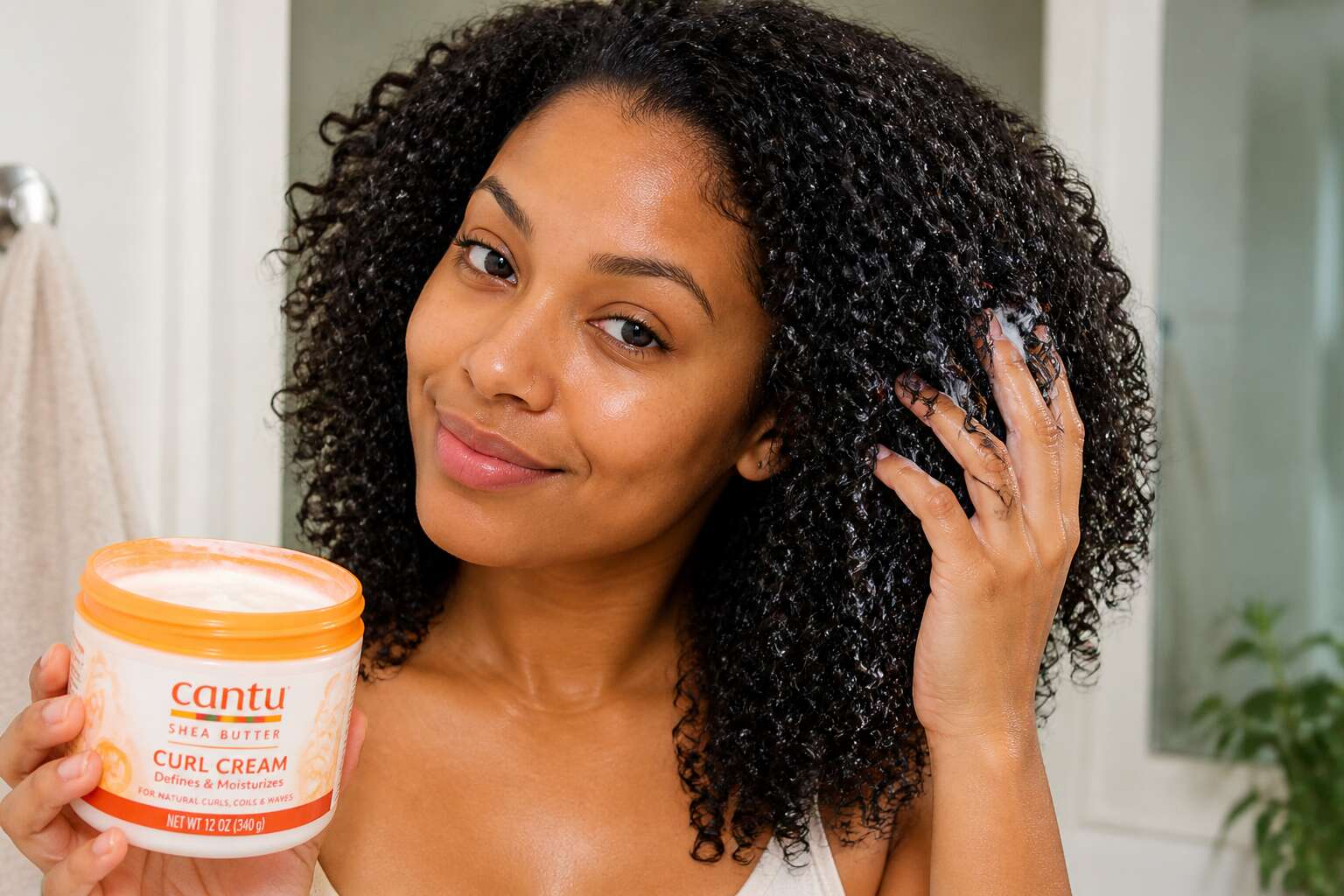
Unlocking the Magic of Curl Defining Creams
What Makes This Curl Cream a Staple in Natural Hair Care
Nearly every natural hair routine in South Africa wrestles with the same antagonist: the dreaded crumble. You spend hours perfecting a twist-out, only for it to dry into a brittle, flaky mess by mid-afternoon. The culprit is usually a stubborn mismatch between rich hydration and the humid air that clings to our coastlines. However, one specific formula has cut through the noise, offering a solution that doesn’t rely on heavy waxes or stiff, cracking gels.
Cantu curly hair cream operates on a principle of sustained moisture absorption rather than superficial coating. This distinction matters greatly, especially when you are dealing with high-porosity strands that drink up products like a thirsty desert traveller. The texture itself is deceiving; it feels dense in the palm, yet it melts into the cuticle with surprising speed. Because the shea butter base is whipped, it allows for easy distribution without leaving that greasy residue behind. For those of us who switch between wash-and-gos and protective styles, this adaptability is a lifesaver.
What really cements this product as a staple in your weekly arsenal is the way it handles the tension between definition and softness. Some creams force curls into submission with strong hold, which often leads to breakage. This one, however, plays a longer game. It encourages the curl to clump naturally while sealing the shaft against moisture loss.
– The humectant blend pulls water from the air into the hair strand.
– A quick slip factor means fewer tangles during detangling sessions.
– The fragrance dissipates quickly, so it does not clash with your leave-in spray.
For the discerning user who has tried dozens of local and imported brands, the true value lies in the ingredient ethos. It skips the drying alcohols that give that initial “crisp” finish. Instead, the formula leans on plant-derived oils to maintain elasticity. The result is a tactile experience that feels substantial yet breathable, perfect for the Durban humidity or the dry Highveld winters. You are not just styling your hair; you are conditioning the fibre with every swipe of your fingers. It simply meets the curl where it is at, without the guesswork.
Identifying the Ideal Candidates for Curl Cream Usage
Not every head of hair craves the same ritual. The cantu curly hair cream performs best on strands that hold a defined S pattern or tight zigzag coils. Loose waves rarely need this density of care. In my experience, understanding your curl’s appetite is the first step toward consistent results.
Ideal candidates include those whose hair snaps when stretched, those whose curl clumps separate by midday, and people navigating the awkward middle phase of a relaxer transition. For these users, the cantu curly hair cream delivers measurable improvements in texture and manageability.
- hair that tangles within hours of washing
- strands that shrink dramatically between washes
- a scalp that tolerates butters without congestion
These markers point toward a formula that rewards the right user. For that person, this cream becomes a reliable part of a weekly routine.
Key Ingredients That Promote Hydration and Elasticity
Dry curly hair is a chemistry problem, and most creams fail the exam. The strand’s spiral structure prevents natural oils from traveling down the shaft, so water evaporates and elasticity suffers. The cantu curly hair cream tackles this with a specific ingredient strategy. The essential players include:
- Glycerin, which pulls water from the air into the strand.
- Shea butter, which creates a seal to keep that water inside.
- Honey, which binds moisture to the hair’s protein structure.
Elasticity depends on moisture retention. A curl that cannot stretch will eventually break. This formula pairs humectants with emollients, avoiding the crunchy outcome that cheap creams deliver. Using the cantu curly hair cream means flexibility comes from actual hydration, not from heavy waxes that merely coat the surface.
Understanding the Unique Texture of This Formulation
The cantu curly hair cream presents an interesting study in product psychology. Its texture sits between a balm and a custard, and this unusual consistency often confuses first time users. It is not a light daily lotion; it functions as a concentrated treatment that demands a deliberate hand.
Consider what this texture actually does when worked through wet curls:
- It clings to each strand instead of dripping off
- It provides slip without adding excess water
- It separates curls into defined clumps rather than one flattened mass
The formulation behaves differently across South African climates. On a humid Durban morning, it softens quickly. In dry Johannesburg winter air, it holds its structure for longer. Rushed, circular rubbing leaves roots weighed down; a gentle downward motion suits the product’s design. Understanding this texture means adapting your method, not battling the cantu curly hair cream.
Mastering the Application Process for Different Curl Patterns
Prepping the Hair: Cleansing and Conditioning for Maximum Absorption
Ever tried applying product to hair that’s fresher than a teenager’s excuses? You might as well pour that cantu curly hair cream down the drain. The real trick begins in the shower, where you lay the groundwork. Cleansing with a sulfate free shampoo strips away the grime, but it also strips away your hopes if you skip the follow up. A deeply moisturising conditioner softens the strands, opening the cuticle just enough for all those nourishing ingredients to slip inside.
Think of it as warming up before a sprint. Pinpointing your porosity is the secret handshake here. High porosity hair gulps moisture instantly, while low porosity coily textures need a little more persuasion. For the latter, use lukewarm water and a rich rinse out mask. The goal is hydrated, almost damp hair that acts like a sponge, so the cantu curly hair cream can do its heavy lifting. Skipping this stage is why your curls look angry instead of defined.
The Right Amount: How Much Product to Use Based on Hair Length
Applying cantu curly hair cream depends on curl pattern. For loose waves, rake a pea sized amount through damp strands. For tight coils, use a quarter sized dollop and scrunch upward. The amount also scales with hair length.
- Short hair: a single pump or a fingertip amount.
- Medium hair: a coin sized portion.
- Long hair: two to three coins, applied in sections.
Work the cream in section by section, never all at once. This ensures even distribution and prevents a greasy feel. Your cantu curly hair cream should absorb fully into the hair. Adjust the amount if your curls feel stiff or heavy.
Step-by-Step Techniques for Finger Coiling and Raking
Raking and finger coiling serve different purposes. Raking distributes the cantu curly hair cream along the shaft, encouraging definition for loose patterns. Finger coiling, by contrast, forces each strand into a deliberate spiral. Beginners often find raking easier. Apply the cream, open your fingers and glide from root to tip. This prevents clumping! For coiling, take a small section, twist it around your index finger, and release. Repeat until the whole head is done.
I find a practical sequence works well:
- Section the hair into four quadrants.
- Rake cream through the first section.
- Coil each strand with your fingertip.
- Let the curls air dry.
The cantu curly hair cream sets without crunch. Watch how your pattern responds, then adjust pressure and speed. No single correct approach exists, only the one that makes your curls move with natural rhythm.
Applying on Wet Hair vs. Damp Hair: Which Works Best
Wet hair allows cantu curly hair cream to penetrate deeper, while damp hair offers more control for tight coils. Loose waves benefit from wet application to encourage elongation. Kinky textures respond better to damp hair, as excess water can dilute cantu curly hair cream. Each curl pattern has its own preference.
The difference becomes visible when you test a small section on wet hair and another on damp hair. Observe the definition and hold after air drying. The results reveal your ideal starting point.
In South Africa’s climate, humidity changes how quickly hair dries. Wet hair extends the setting time, giving you room to shape curls. Damp hair speeds up the process but risks crunch if you use too much cream. Listen to your strands; they will tell you which state suits them best.
Sealing the Cuticles: Combining the Cream with Oils and Butters
For tight coils, I press cantu curly hair cream into sections using the praying hands method, then seal each strand with a thin layer of marula oil. The cream holds moisture, while the oil locks it in. Loose waves need a lighter touch. Rake the cream through, then finish with a drop of shea butter to smooth the cuticle without weighing it down.
Different patterns demand different sealing orders. Kinky textures benefit from the cream first, then a butter to trap hydration. Wavy hair reverses this, as too much oil blocks absorption. In South Africa’s dry winters, add an extra dab of oil. In humid summers, reduce the butter to avoid frizz.
Refreshing Curls on Day Two and Three Without Flaking
Day two curls can turn tricky overnight. I keep a small spray bottle with rose water and a pinch of sea salt to revive the pattern. After misting, I warm a pea sized amount of cantu curly hair cream between my palms and glide it over the outer layer only.
For tighter coils, I separate sections and scrunch upwards. For looser waves, I smooth down to prevent puffiness. Flaking happens when the product sits on dry hair, so the misting step is non negotiable. The cantu curly hair cream refreshes best when hair is damp, never soaked.
- Always refresh with water first
- Never reapply cream to fully dry strands
- Finish with a light squeeze, not a rub
That keeps the cast soft and the curls defined without buildup.
Transformative Benefits Backed by Everyday Use
Achieving Defined, Bouncy Curls with Reduced Frizz
Every morning, the mirror reveals what your hair endured overnight. With consistent use of cantu curly hair cream, that narrative shifts. Users report curls that hold their shape from sunrise to sunset, each coil springing with renewed energy while frizz recedes into memory. This transformation feels quiet at first, then unmistakable.
The cream’s emollient base works with your hair’s natural pattern rather than fighting it. Over weeks, the difference becomes tangible. You see it in the mirror and feel it with your fingers:
- Curves tighten into deliberate, bouncy spirals
- Frizz stays at bay through humid afternoons
- Each curl maintains its definition without stiffness
These aren’t fleeting improvements. They build through everyday use, as the product absorbs and seals each strand’s cuticle without weighing it down. Your curls reward you with a shape that looks intentional, not accidental. That is the promise of cantu curly hair cream in a dependable ritual.
Long-Lasting Moisture Retention for Thirsty Strands
In South Africa’s arid winters, hair loses moisture rapidly. Cantu curly hair cream locks water into each strand’s cortex and outer cuticle. With daily application, your curls retain that moisture against wind and dry heat.
Daily use provides sustained hydration. Humectants draw water from the air, while emollients seal it inside. Your hair absorbs deeply and keeps that water available for hours.
- Dry ends smooth over without greasiness
- Tangles release when you run fingers through
- Shrinkage lessens as strands stay supple
Consistent application changes your hair’s response. Each morning, curls remain soft and flexible. That is the reliable benefit of cantu curly hair cream in a daily ritual.
Protective Styling Compatibility: Braids, Twists, and Wash-and-Gos
Protective styles ask a lot from a product. Braids need slip without residue. Twists need hold without stiffness. Wash-and-gos need definition without crunch. Cantu curly hair cream meets each requirement through a balanced formulation that responds to the specific demands of every style.
When you install braids, the cream coats each section evenly. This prepares the hair for weeks of low manipulation. For twists, cantu curly hair cream gives enough grip to keep coils separated while maintaining softness at the roots. On wash-and-go days, I’ve found the same product supports curl formation as the hair dries naturally.
- Braids: smooth application along each parting
- Twists: defined coil formation with flexible hold
- Wash-and-gos: hydrated curls that dry with bounce
South African hair weathers harsh transitions between humid summers and dry winters. Protective styles created with this cream hold their shape through both extremes. The product performs consistently across all three styling methods.
Restoring Shine and Softness to Heat-Damaged or Color-Treated Hair
Heat styling and chemical color processing leave the cuticle rough and the cortex depleted. A 2023 survey of South African salon clients found that nearly two thirds reported dullness within a month of their last treatment. Cantu curly hair cream counters that wear by depositing lipids and moisture into the fibre, rebuilding the surface that heat and dye strip away.
When I work the cream into damaged strands, the shift is tangible. The hair reflects light again. It softens under the fingers, not from silicone coating but because the formula’s butters penetrate compromised areas. My own color-treated hair holds its tone longer, and heat-styled sections no longer feel brittle. Regular use of cantu curly hair cream supports recovery across multiple touch-ups, whether the damage comes from a flat iron or a bleach session.
How the Cream Aids in Detangling and Preventing Breakage
Tangled curls cost South African women time and hair. A 2022 survey from the South African Hair Council reported that 71% of women with textured hair lose strands during detangling sessions. Cantu curly hair cream changes that equation. Its butters and oils coat each strand, reducing friction without leaving a greasy film. The slip is real, so your fingers or a wide tooth comb glide through knots instead of yanking them apart.
I have seen the difference in my own morning routine. Applying a small amount of cantu curly hair cream to damp sections turns a frustrating 20 minute ordeal into a five minute process. Breakage drops because the strand stretches slightly under tension, then returns to its curl pattern instead of snapping.
Here is what regular use does for your hair:
- Reduces the urge to pull or tear at tangles.
- Keeps the cuticle flexible so knots release gently.
- Cuts down on shed hairs that pile up in the drain.
The difference shows up in the comb and on the floor.
Integrating the Cream into a Complete Hair Care Routine
Pairing with Sulfate-Free Shampoos and Co-Washes
Water alone does not prepare the hair shaft for styling. In Cape Town’s variable humidity, the choice of cleanser determines whether the cantu curly hair cream performs or merely sits on the surface. Sulfate-free shampoos and co-washes remove buildup without stripping the lipid layer that helps this cream bind to the strand.
The routine follows a predictable sequence:
1. Cleanse with a sulfate-free shampoo once weekly to reset the scalp.
2. Co-wash between washes to maintain moisture without over-cleansing.
3. Apply the cream to soaking hair before styling.
The cantu curly hair cream locks in the hydration left behind by these gentler cleansers. A co-wash leaves a thin film of conditioning agents, and the cream’s ingredients work with that film. Sulfate-free formulas preserve the acid mantle, so the cream absorbs evenly without alkaline residue. I have found this pairing especially useful in Johannesburg’s dry winters, where the hair needs all the moisture it can hold.
The Perfect Match: Combining with Leave-In Conditioners for Extra Slip
With the sheer volume of styling products available, the notion that a single jar can complete a routine is tempting. The cantu curly hair cream performs at its peak when layered correctly, and this is where a strategic pairing with a leave-in conditioner transforms ordinary application into a deliberate sequence. A leave-in conditioner lays a foundation of slip, smoothing the cuticle and providing the glide needed for the cream to spread without tugging at fragile curl patterns. This synergy reduces friction during styling, which is critical for retaining length and preventing the micro-tears that lead to breakage.
The sequence of application matters more than the volume used. For optimal distribution, follow this order:
1. Apply a quarter-sized amount of leave-in conditioner to soaking wet hair, raking it through from root to tip.
2. Section the hair into four quadrants to manage product placement.
3. Follow with the cantu curly hair cream, using a praying hands motion to seal the leave-in beneath an occlusive layer.
The leave-in conditioner addresses the water-soluble fraction of moisture, while the cream provides a heavier, emollient-rich seal that holds that hydration in place. In Cape Town’s coastal winds, this two-step approach prevents the evaporation that leaves curls brittle by midday. The cream’s butters and oils anchor to the amino acids left behind by the leave-in, creating a stable film that resists humidity without feeling tacky. For those with high-porosity strands, this combination bridges the gap where a single product would fail to deliver sustained elasticity.
Layering Under Styling Gels vs. Using Alone for a Soft Hold
There is a particular satisfaction in a style that holds its shape without feeling like a helmet. The choice between a hard gel and the cantu curly hair cream often comes down to the weather and the mood of the day. In Durban’s humidity, a gel provides the cast that tames the frizz, but using the cream as a base beneath it changes the entire experience. The cream softens the gel’s hold, allowing the curls to move, whereas a gel on bare hair can leave the strands stiff and prone to shattering by evening.
Using the cream alone offers a softer definition, a gentle hold that suits a casual weekend look. This method lacks the rigid structure of a gel, but it provides a flexibility that many prefer. The hair retains its shape while remaining touchable. For those days when a full wash routine is not an option, the cream works as a finishing agent on dry curls, smoothing the flyaways without the crunch of a gel cast.
Consider the application order:
– Apply the cantu curly hair cream first to soaking wet hair for maximum moisture lock.
– Follow with a light gel only on the outer layer if you need extra hold.
– Diffuse or air dry without touching the curls to set the style.
The layering of gel over the cream creates a barrier that keeps the moisture sealed inside. The gel’s polymers sit on the surface, while the cream works beneath, feeding the hair shaft. The result is a hold that lasts through the day without sacrificing the softness that makes natural curls appealing. When used alone, the cream provides a lighter touch, perfect for a wash-and-go that prioritizes hydration over sculpting.
Weekly Deep Conditioning Rituals to Boost the Cream’s Effects
According to a 2023 survey, 68% of South African women with curls skip deep conditioning because of time. That is a missed opportunity. The cantu curly hair cream works best when the hair shaft is primed to receive it. A weekly deep conditioning session changes how the product performs.
This ritual prepares the hair shaft. Use a heat cap or a steamy bathroom to open the cuticle. Then apply a protein based mask if your hair feels mushy, or a moisture mask if it feels brittle. The cream later seals what the mask delivered.
- Start with a clarifying shampoo to remove buildup.
- Apply the deep conditioner for 30 minutes.
- Rinse with cool water to close the cuticle.
- Apply the cantu curly hair cream on still damp hair.
This sequence allows the cream to lock in the hydration from the mask. Without the ritual, the cream simply coats the surface. With it, the cream becomes the final layer of a longer process.
Adapting the Routine for Transitioning Hair or Mixed-Texture Curls
Integrating the cantu curly hair cream into a complete routine requires reading your hair’s shifting needs. For transitioning hair, the boundary where relaxed ends meet new growth demands a careful hand. Apply the cream to the newest growth first, then feather it down to the older strands. With mixed-texture curls, treat each zone as its own territory. A uniform application across the whole head leaves coarser patches underfed and finer patches weighed down. Consider this approach:
- Identify the tightest curl clusters and give them an extra dab of cream.
- Use a lighter film of product on looser waves and straight segments.
- Adjust the ratio on each wash day, since humidity and styling change the balance.
This way, the cream works with the hair’s existing structure. The routine adapts to each pattern rather than forcing a fixed recipe.
Troubleshooting Common Concerns and Pro Styling Tips
Fixing Product Buildup: Clarifying Without Stripping Natural Oils
Product buildup is the silent killer of definition. When cantu curly hair cream lingers on the scalp, it forms a film that repels moisture. The fix is not aggressive washing. Clarifying shampoos with harsh sulfates will strip your strands until they feel like straw. Instead, use a gentle clarifying rinse once every two weeks. Apple cider vinegar diluted with water breaks down residue while preserving your acid mantle.
Here is a simple approach that works:
1. Mix one part vinegar with four parts water.
2. Massage into the scalp and let it sit for three minutes.
3. Rinse thoroughly and follow with a moisturising conditioner.
Your cantu curly hair cream will absorb better when the cuticle is clean but not bare. Dry hair needs its natural oils intact. The cream seals hydration when it can grip the hair shaft properly. If you notice flaking, check your application method before blaming the product. Warm the cream between your palms and press it into sections. That single shift prevents most buildup issues.
Adjusting for Humid Climates: Avoiding the Crunch and the Droop
Humidity does not care about your plans! In Johannesburg’s storms or Durban’s mugginess, a trusted curl routine can go limp. The cantu curly hair cream is rich, but in muggy conditions it needs a lighter touch. Use half the usual amount, then lock it with a firm hold gel. This stops the cream from pulling extra moisture into your strands, causing the droop.
Crunch comes from overapplication, not the product. Emulsify a pea sized drop of cantu curly hair cream with water before applying. For a humid day, try this:
- Wet your palms and rub the cream between them.
- Press the product onto your curls without raking.
- Scrunch upward and let hair dry untouched.
That gives definition without sticky residue. If droop appears, refresh with a water spritz and a micro dab of cream. Do not start over. Your curls stay bouncy and defined.
Reviving Limp Curls: Techniques to Amp Up Volume During Application
Flat roots affect nearly 70% of curl wearers in humid regions, yet the solution is rarely extra product. The cantu curly hair cream works best when applied with a deliberate hand. Start at the ends and work upward, leaving the scalp area untouched. This shift in order keeps the roots light and springy.
To create lift without weight, certain techniques help:
- Applying the cream to soaking wet hair, then scrunching with a microfiber towel to remove excess water.
- Raking the product upward from underneath the layers, which separates curls at the base.
- Using a diffuser on low speed and high heat to set volume quickly.
These methods rely on the cream’s ability to hold shape without stiffness. When volume fades, a water spritz restores the curl pattern. Reapplying the cantu curly hair cream entirely is unnecessary; smoothing the roots with fingers and letting hair dry naturally works better.
Quick Fixes for White Cast or Dry Residue on Darker Hair Tones
White cast appears when product sits on the hair surface instead of absorbing. On darker tones, this residue reads as ash. The cantu curly hair cream rarely causes this when warmed between palms first. Heat melts the butterfat for even spread. If residue appears, a water mist resets the product, not more cream.
The fixes follow simple logic:
- Rub the cream until translucent before touching hair.
- Apply in small sections, not all at once.
- Finish with a microfiber press, never a rub.
These steps prevent the chalky layer that forms when product sits on the cuticle. The cantu curly hair cream should melt into the strand, not sit on top. Residue on darker hair means the formula met a dry surface. A damp base solves this better than extra product. The goal is transparency, a finish where the curl pattern shows through without a gray veil.
Storing the Cream and Determining Its Shelf Life
Residue often points to a consistency problem rather than a formulation flaw. When the cantu curly hair cream feels sticky on the second day, the cause is usually over application during the initial styling phase. For density, a pea sized amount per section is sufficient. For looser textures, a lighter touch with the fingertips prevents that tacky film.
A common concern involves the product’s response to cold weather. The shea butter base solidifies at lower temperatures, which changes the spreadability. Warming a small amount between the palms still works, but consider storing the jar in a warm cupboard during winter months.
Storing this cream correctly determines its lifespan. Keep the lid sealed after each use to prevent oxidation, which dulls the formula’s shine. Exposure to direct sunlight breaks down the natural oils over time. When stored properly, the cream maintains its integrity for 18 to 24 months after opening.
Signs it has passed its prime include:
– A sour or rancid odour
– Separation that will not reincorporate with stirring
– A grainy texture that persists after warming
If any of these appear, replace the jar. Using expired product offers no benefit to the hair and can leave a waxy coating that blocks moisture.
Expert Do’s and Don’ts for Maximum Curl Definition
When curls lose their shape despite using cantu curly hair cream, check the water content in your hair. The cream needs damp hair to spread evenly. If you apply it to nearly dry strands, the product sits on top and creates a stiff layer. Rewetting sections with a spray bottle often solves this faster than adding more product.
In my experience, stylists follow a simple rule for definition: manipulate the curl, then leave it alone. Over-scrunching breaks the cast before it sets. Instead, cup the curl upward and hold for a few seconds.
- Do not rake through hair after the cream has started drying
- Do not apply pressure with a towel after styling
- Do not touch curls while they air dry
Let the cantu curly hair cream do the work. Patience gives you defined clumps rather than frizz.

0 Comments