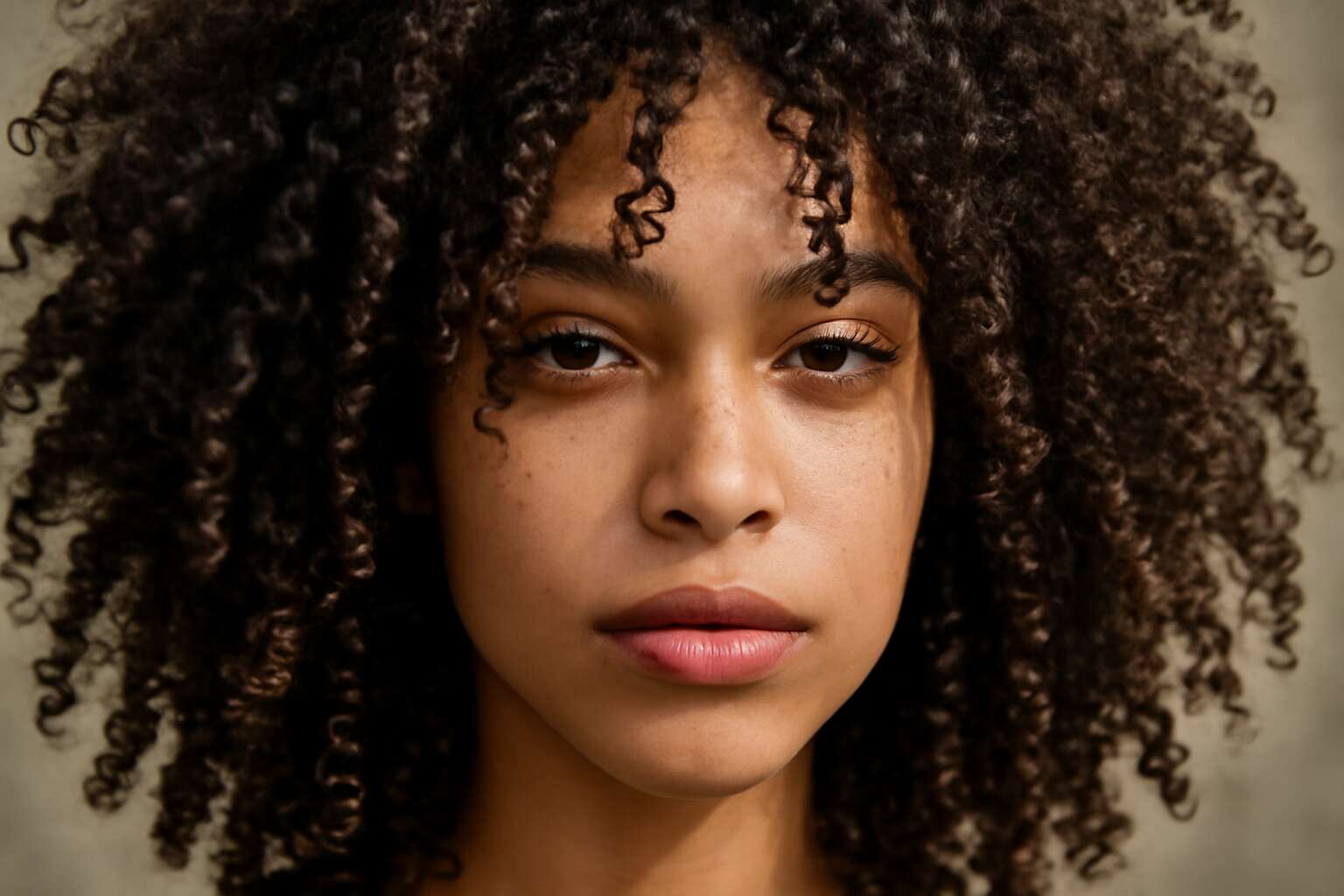
What defines curly hair in modern terms
Key characteristics that distinguish curls, waves, and coils
Texture, not length, defines modern curls—bold, evolving, unapologetic! Curly hair has evolved from rigid boxes into a living spectrum where texture takes center stage. In modern terms, curly hair definition rests on how strands spring back, coil, or kiss the air in soft shapes. It’s not about perfect rings or length; it’s about pattern, moisture behavior, and how each strand negotiates gravity in a South African light.
Key characteristics that distinguish curls, waves, and coils in modern terms:
- Curls: tight, springy spirals that rebound when hydrated and styled with intent
- Waves: gentle S-shaped patterns with looser definition and more movement
- Coils: dense, compact spirals with noticeable shrinkage and high texture vocabulary
This modern taxonomy helps stylists and wearers communicate needs and celebrate individuality.
Popular terminology and how it evolved
Texture isn’t a trend; it’s the plot twist of hair history. The curly hair definition has learned to wink at the camera and stroll into salons with its own vocabulary. “Curly hair definition isn’t a box you check; it’s a climate you live in,” a savvy South African stylist jokes, and the room agrees.
- From rigid labels to pattern-first language, the conversation centers on how the curls actually behave.
- From universal length goals to a vibrant spectrum of texture, elasticity, and shrinkage.
- From a single ideal to many personalities—curly, coily, kinky, and wavy are different ways of describing the same drama.
In popular terminology, the definition itself has evolved into a practical shorthand that signals moisture needs and styling expectations. In South Africa, this language helps salons connect with diverse textures under one umbrella.
Why a clear definition matters for care and styling
Across South Africa, nearly 70% of curl-prone clients tell me they’re navigating a maze of products before they find something that truly fits. The curly hair definition isn’t a box to tick; it’s a living climate—patterns, moisture needs, and daily textures that shift with the seasons.
Think of it as a map that guides care and styling. In modern terms, it centers on how hair behaves, not what the label says, and it invites a more honest conversation about your routine.
- Pattern-first language that respects the true shape of each curl
- Porosity and moisture strategies tailored to your climate
- Elasticity and shrinkage as practical signals for care
I’ve watched rural mornings where hair carries the weather of dawns and storms; a clear curly hair definition helps stylists read that weather, choosing tools and products that honor texture rather than erase it. When definition meets routine, confidence grows.
Common myths related to curl definitions
Across South Africa, nearly 70% of curl-prone clients chase a product path that never quite fits. The modern curly hair definition is not a box to tick; it’s a living map—governed by moisture, pattern, and the daily texture that shifts with the weather.
- Myth: Curly hair definition is a single texture; reality: it ranges and shifts with moisture.
- Myth: The curly hair definition is fixed by season; reality: it flexes with climate and routine.
- Myth: Any product marketed for curls will work for everyone; reality: climate-tailored routines win.
When the curly hair definition is honored rather than boxed by labels, tools and products align with the hair’s own weather—producing confidence without erasure.
Curl pattern classification and descriptors
Understanding curl types from 2A to 4C
Curls aren’t a single texture; they’re a spectrum from loose 2A waves to tight 4C coils. In the curly hair definition, patterns from 2A to 4C map a range that shapes moisture needs, shrinkage, and how light travels along each twist—relevant across South Africa’s climate, from Cape Town’s humidity to inland dryness.
Key descriptors bring these patterns to life:
- Pattern type: 2A, 3B, 4C—well-defined shapes along the strand
- Coil diameter: loose versus tight spirals
- Density: curls per square inch
- Porosity: rate of moisture absorption and release
- Stretch and shrinkage: length retention when dry
Describing hair with these terms reframes conversations around texture as a spectrum, not a verdict, and helps explain why styling choices should match the curl’s natural rhythm in varied SA environments.
Waves, curls, and coils: a practical guide
“Texture is a spectrum, not a verdict,” a Cape Town stylist once whispered, and SA’s climate makes that truth vivid—humidity in summer and inland dryness kissing every twist. I hear that whisper in my studio.
Curls aren’t a single shape; they map a range from 2A to 4C, with waves, curls, and coils described by pattern type, coil diameter, density, porosity, and how far they stretch or shrink. In practice, I map waves, curls, and coils in conversation with you.
In everyday language, this becomes curly hair definition that guides wash days and styling—matching moisture needs to Cape Town humidity or inland dryness.
Across SA, this pattern-aware approach lets you read light and shade on every twist, turning routine into a discovery rather than a compromise.
Texture and diameter: how they influence curl behavior
Curl pattern classification is a compass for the curious mind, translating a tangle of names into a navigable map. Texture describes the hair’s surface—soft or bristled—while diameter marks the coil’s thickness, from slender threads to sturdy spirals. Together, they choreograph how your curls behave, bend, and rebound—the curly hair definition in action.
Consider these descriptors that illuminate the dance:
- Texture: fine, medium, or coarse strands and how they take up moisture
- Diameter: thin, medium, or thick coils that determine spring and shrinkage
- Pattern type: loose waves to tight spirals influence drying time
- Porosity and density: moisture movement and curl packing shape behavior
Across South Africa, humidity on the coast and inland dryness turn this reading into living texture—an invitation to listen to each twist rather than chase a one-size-fits-all shape. This curly hair definition grows richer in SA climates.
Humidity and weather effects on curl pattern
Curls answer to weather; in South Africa, humidity on the coast and dry inland air redraw the curl map. The curly hair definition becomes a living glossary worn on the head—a compass for moisture, bounce, and shrinkage, not a rigid prescription!
Curl pattern classification becomes the handwriting of the strand. From loose waves to tight spirals, patterns narrate how hair dries, stretches, and sets. This is how the curly hair definition reveals itself as a flexible spectrum rather than a single stereotype.
- Humidity levels alter curl pattern by swelling or tightening coils.
- Temperature and air movement affect drying time and frizz.
- Porosity and density modulate how moisture travels through strands.
- Coastal versus inland climates create distinct texture experiences across SA.
Recognizing these shifts invites a nuanced reading of the curl—a conversation between climate and coil rather than a single silhouette.
Biological and physical basis of curly hair
Hair shaft structure and follicle shape
One in three people worldwide sports curls, a clue that hair science is not a lottery but a geometry lesson. Understanding curly hair definition begins at the root: the follicle’s tilt and the hair shaft’s cross-section shape steer corkscrew patterns rather than straight lines.
Biologically, the shaft’s keratin fibers coil into a twist that affects surface texture. The cross-section is often oval rather than round, so the cuticle lies unevenly and the cortex maps a gentle spiral. In South Africa’s humid climate, this anatomy often shows its flair as curls springing with life. For a quick primer, consider these factors:
- Elliptical cross-section of the hair shaft
- Asymmetric cortex orientation
- Curved follicle angle
Disulfide bonds and how they shape curl
Biology writes the script behind the curl, and the curly hair definition hinges on a twist in the cortex and stubborn disulfide bonds that hold it together. Keratin strands braid into a corkscrew, and the shaft’s geometry dances with light, especially in South Africa’s humid climate where curls seem alive with movement.
Disulfide bonds—covalent links between cysteine residues—lock the curl pattern in the cortex. Hydrogen bonds, sensitive to moisture, modulate flexibility, so the coil shifts with humidity while remaining intact. This chemistry, layered with the keratin network, crafts a persistent spiral rather than a straight strand.
- Disulfide cross-links lock curl patterns in the cortex
- Moisture-driven hydrogen bonds modulate flexibility
- Keratin network and cross-sectional geometry guide the spiral
This geometry underpins the curly hair definition as a harmony of chemistry and form, a secret language visible in every twist.
Role of moisture, cuticle health, and elasticity
The curly hair definition isn’t just about shape—it’s a living negotiation between moisture, the cuticle, and the elasticity of each strand. In South Africa’s humid mornings, the cortex meets a tug-of-war as water at the surface shifts how the coil holds its twist. Biology wears its own signature: light catches the corkscrew, and every strand seems to move with the weather.
Key players in this biology include:
- Moisture balance maintains hydrogen-bond networks without swelling the shaft.
- Cuticle health stays intact to reduce frizz and preserve shine.
- Elasticity governs recovery, letting curls rebound after bends and sets.
When those forces align with the keratin network and cortex geometry, the spiral becomes a visible, living language of form.
Genetic and ethnic variations in curl patterns
“Curl is a dialogue between moisture and memory,” a seasoned stylist once whispered. The curly hair definition isn’t only about coils; it’s biology speaking in curls. It emerges from the way the follicle’s angle, the cortex’s geometry, and the keratin network choreograph a twist that breathes with climate and movement.
Genetic and ethnic variations in curl patterns show up as different coil tightness, diameter, and pattern direction. In South Africa’s diverse tapestry, this biology translates to a spectrum from soft waves to tight corkscrews, each strand a signature of heritage.
- Follicle angle and shape influenced by ancestry influence how a curl forms
- Pattern distribution and coil density vary among populations
- Keratin and bond distribution interact with cortex to determine curl tightness
Understanding this biology helps us honor individuality in care and style while acknowledging the living language of the coil.
Applying the definition to routines and products
How to assess your curl at home for better styling
Curl texture is a map, not a mystery, and the curly hair definition acts as the compass. In South Africa, humidity can swing from sea-breeze days to dry inland afternoons, so the way a curl behaves under real conditions becomes your best guide. “Your curl tells you what it needs,” a Cape Town stylist reminds us.
Apply that compass to routines and products by letting moisture lead and shaping products to your curl pattern. This definition informs choices—hydration-forward cleansers, lightweight creams, and gentle sealants often suit our climate. Consider these categories:
- Leave-in conditioners
- Hydration-first moisturizers
- Sealants or light oils
To assess your curl at home for better styling, observe how the strand holds its shape after wash and gentle styling, how it shrinks when dry, and how humidity shifts frizz and bounce. A quick, calm check can reveal whether your routine stays true to the curl’s natural pattern.
Choosing cleansers, conditioners, and stylers based on curl needs
When your curls meet the day, the routine should serve the curl, not overpower it. In South Africa’s shifting humidity, your shower choices become tiny acts of faith.
Understanding the curly hair definition helps you tailor cleansers, conditioners, and stylers to your climate and pattern. Let moisture lead, choosing hydration-forward formulas that respect your curl’s natural bounce.
What to reach for, in practice:
- Leave-in conditioners – moisture-preserving concepts for curl care
- Hydration-first moisturizers – products that support moisture balance
- Sealants or light oils – agents that help lock in hydration
In a land of variable weather, your curl tells you what it needs, and your products answer.
Techniques to define curls and minimize frizz
Curl patterns shift with the SA climate, but a clear curly hair definition guides routine choices. A trusted stylist once said, “Curly hair is a weather diary—what it tells you today shapes what you use tomorrow.” When you align products with moisture and structure, frizz is tamed rather than fought. In practice, apply this definition to routines by keeping hydration at the fore and selecting light sealants that hold bounce rather than flatten it.
Techniques to define curls and minimize frizz follow a rhythm: damp-diffuse, gentle scrunch, and deliberate layering. The curly hair definition surfaces in practice when you tune steps to your texture. Consider these concepts:
- Hydration as the anchor for curls
- Light sealing to preserve bounce
- Gentle handling and pattern-aware drying
- Weather-aware routine adjustments
Maintenance tips to preserve curl definition overnight
South Africa’s shifting climate makes curly hair definition your nightly forecast. Hydration stays the anchor and light sealing preserves bounce, so your curls wake up ready to perform rather than revolt. It’s not about fighting weather; it’s about tuning routines and products to your texture.
- Hydration as anchor—moisture-rich products keep strands plump.
- Light sealing to preserve bounce without flattening.
- Gentle handling and pattern-aware drying to minimize frizz.
Overnight, this approach translates into a smoother morning look aligned with SA’s tempo. Sleep on satin or silk, avoid friction, and let your curl pattern rise with confidence—and a hint of mischief.


0 Comments